
TL;DR
A smart home electrical panel adds monitoring and control to your circuit breakers so you can see and manage power use in real time. On Siesta Key, salt air and humidity put extra stress on the sensors and communication boards these panels rely on. This guide covers what a smart panel does, what NEC Article 750 says about energy management systems, what it costs to install in Sarasota, and why coastal grade protection matters more here than almost anywhere else in Florida. Call (941) 799-2279 for a free estimate before your next remodel or EV charger install.
Introduction
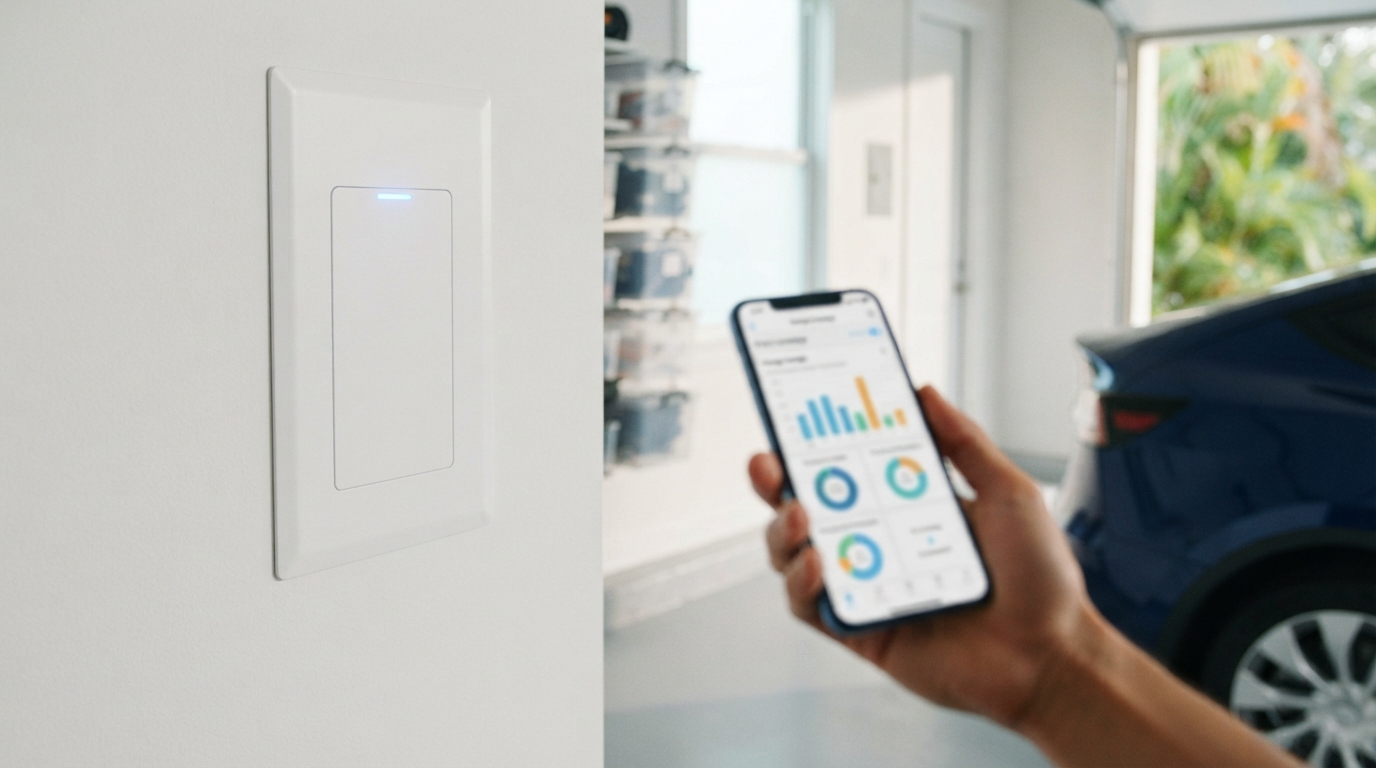
A smart home electrical panel replaces the guesswork of a standard breaker box with real time monitoring and remote control. Instead of walking to the garage to check a tripped breaker, you check an app. Instead of guessing which circuit is drawing power, you see it live.
Siesta Key homeowners are adding EV chargers, pool equipment, and whole home automation faster than most Sarasota County panels were built to handle. A smart panel can manage that load without a full service upgrade in many cases. It can also warn you the moment a circuit starts behaving oddly, which matters on a barrier island where salt air corrosion often causes electrical problems long before a breaker actually trips. That early warning is worth more here than in almost any inland Florida market.
This guide explains what a smart panel is, how it differs from a standard panel, and why the same coastal conditions that corrode copper wiring and aluminum terminals also threaten the delicate sensors inside a smart panel. We will also cover cost, permitting, and whether a smart panel makes sense for your Siesta Key or Sarasota home.
What Is a Smart Home Electrical Panel?
A smart home electrical panel is a breaker panel built with monitoring and control hardware that tracks and manages your home’s electrical circuits in real time. It replaces or upgrades a standard panel and connects to an app so you can see power use, get alerts, and shut off individual circuits remotely.
The National Electrical Code addresses this technology directly. NEC Article 750 defines an energy management system as equipment that can “monitor and/or control an electrical load or a power production or storage source,” according to a code summary from Electrical License Renewal. That covers the monitors, controllers, and timers built into most smart panel products on the market today.
A smart panel is not just a fancier breaker box. It is a small computer bolted to the wall of your garage or utility closet, and that changes what it needs to survive on a barrier island.
How Is a Smart Panel Different From a Standard Breaker Panel?
A standard breaker panel only interrupts power when a circuit is overloaded or shorted. A smart panel adds circuit level monitoring, remote shutoff, and automated load management on top of that basic safety function.
Standard panels are almost entirely mechanical. A breaker trips, you flip it back, and that is the extent of the interaction. A smart panel adds a layer of electronics: current sensors on each circuit, a communication board that talks to your wireless home network, and a small processor that logs and reports everything.
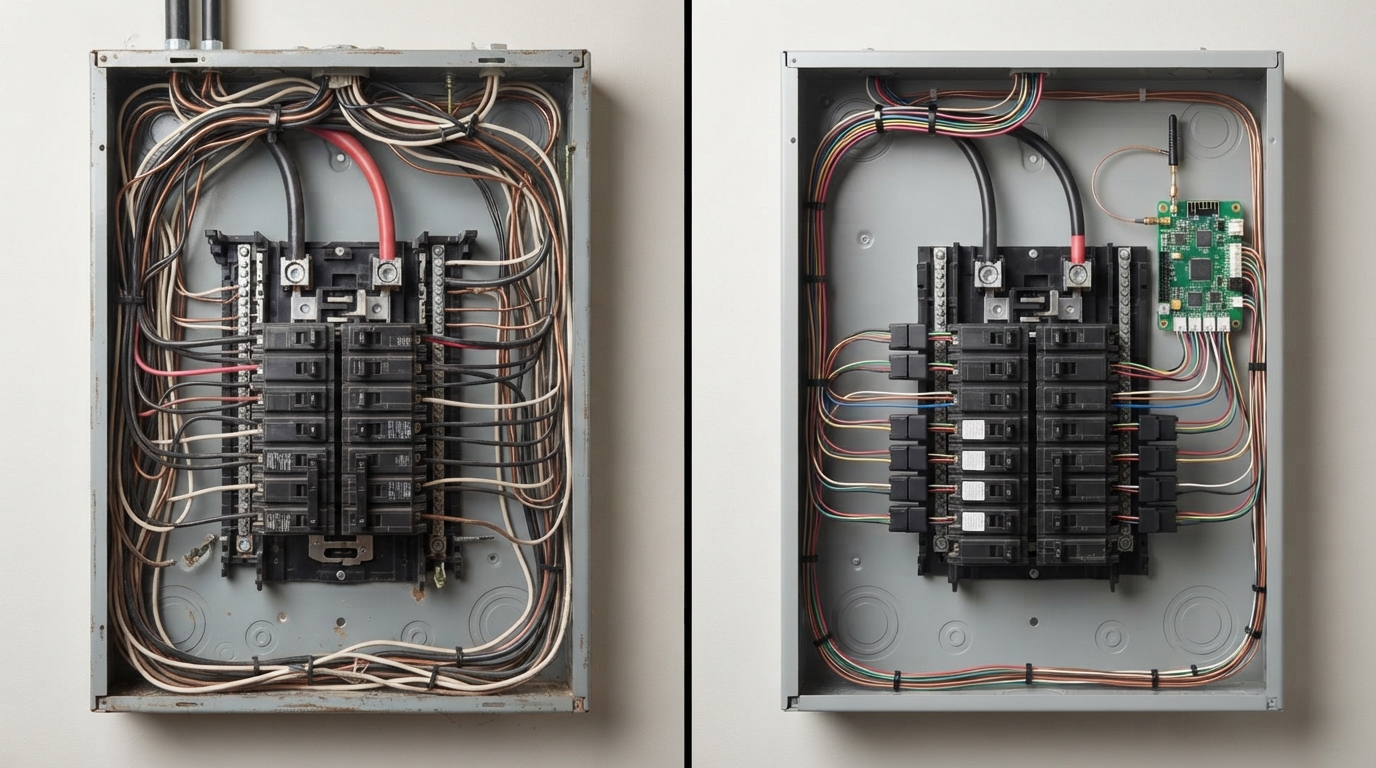
That processor typically stores months of usage history, so you can spot a slow developing problem, such as a circuit drawing more current every week, long before it ever trips a breaker or causes a visible failure.
That extra electronics layer is exactly what makes coastal installation different. A traditional breaker has almost nothing for salt air to damage beyond the metal contacts and lugs already addressed by marine grade electrical installation practices. A smart panel adds circuit boards, sensors, and wireless radios, all of which are more sensitive to humidity and airborne salt than a simple mechanical switch.
Why Salt Air Makes Smart Panel Protection Even More Important on Siesta Key
Every electrical component on Siesta Key deals with airborne salt and constant humidity. Smart panels raise the stakes because their sensors and communication boards are more delicate than the mechanical parts inside a standard breaker.
Salt residue left behind after humid air evaporates on a circuit board can form microscopic conductive paths across the surface. According to LabTestCert’s review of marine electronics failure, this buildup often does not cause a dramatic failure right away. Instead, it shows up first as “intermittent faults, sensor drift, or communication errors that appear and disappear depending on moisture levels.”
That is a serious problem for a device whose entire job is accurate monitoring. A smart panel with corroded sensors might report the wrong load, miss a genuine overload warning, or randomly drop its app connection during a storm, which is exactly when you need it working correctly.
This is why a Siesta Key installation should never treat a smart panel like a plug and play upgrade from a big box store. It needs sealed enclosures, corrosion resistant terminations, and the same salt air corrosion precautions used on every other piece of coastal electrical equipment in your home.
Can a Smart Panel Help Manage an EV Charger and Pool Equipment on an Older Service?
Yes. A smart panel can allocate power dynamically between high draw circuits like an EV charger, pool pump, and air conditioner, which can let some homes avoid a full electrical service upgrade.
A Level 2 EV charger alone can draw 30 amps or more, and older Siesta Key homes were rarely wired with that kind of headroom to spare. A smart panel monitors total demand and can pause or throttle lower priority circuits automatically, so your charger, pool heater, and kitchen appliances are not all trying to draw full power from a 100 or 150 amp service at the same time.
This does not always eliminate the need for an upgrade. A home already flagged by our guide to signs you need a panel upgrade, such as a panel with visible corrosion or frequent nuisance tripping, usually needs a real panel replacement first. Once that work is done, a smart panel or add on monitoring device becomes a genuine option for the EV charger installation most Siesta Key homeowners are already planning.
Do Smart Panels Help During Sarasota’s Hurricane Season?
Yes. A smart panel can shed non essential circuits automatically when you switch to generator or battery power, which stretches your backup power further during a storm outage.
NOAA’s outlook for the 2026 Atlantic season, which runs June 1 through November 30, calls for 8 to 14 named storms, including 3 to 6 hurricanes and 1 to 3 major hurricanes, based on reporting from CBS News. Even a below average season still means real risk for a barrier island community.
A smart panel paired with a generator can automatically prioritize your refrigerator, sump pump, and medical equipment while shutting down circuits like a pool heater or extra water heater that a portable generator was never sized to run. That kind of automated load shedding is worth reviewing alongside your home’s whole home surge protection and your seasonal hurricane season electrical checklist every year before storm season peaks in August through October.
How Much Does a Smart Electrical Panel Cost to Install in Sarasota?
A smart electrical panel typically costs more than a standard panel upgrade, with equipment alone often running from roughly 2,500 to several thousand dollars before labor and permitting.
National guidance from EnergySage’s smart panel comparison puts smart panel equipment costs well above a standard breaker box, before installation labor is added. Sarasota County adds its own layer on top of equipment cost. The county currently enforces the 2020 National Electrical Code under the 2023 Florida Building Code 8th Edition, confirmed directly on the Sarasota County Building Division site, and any panel work needs a permit and inspection regardless of how advanced the panel itself is.
For most Siesta Key homeowners, the real comparison is not smart panel versus nothing. It is smart panel versus a standalone electrical panel upgrade cost that solves capacity and safety first, with monitoring added later if it still makes sense.
Is a Smart Panel Worth It for a Siesta Key Home?
A smart panel makes the most sense for homes that already have EV charging, pool equipment, or extensive automation, and that need better visibility into how those systems share power. It is a poor substitute for fixing an aging or corroded panel first.
Waterfront and luxury properties on Siesta Key are the clearest fit. These homes tend to run more high draw equipment at once and their owners are more likely to already use home automation for lighting, security, and climate control. Our luxury waterfront electrical guide covers the broader electrical planning that a smart panel fits into.
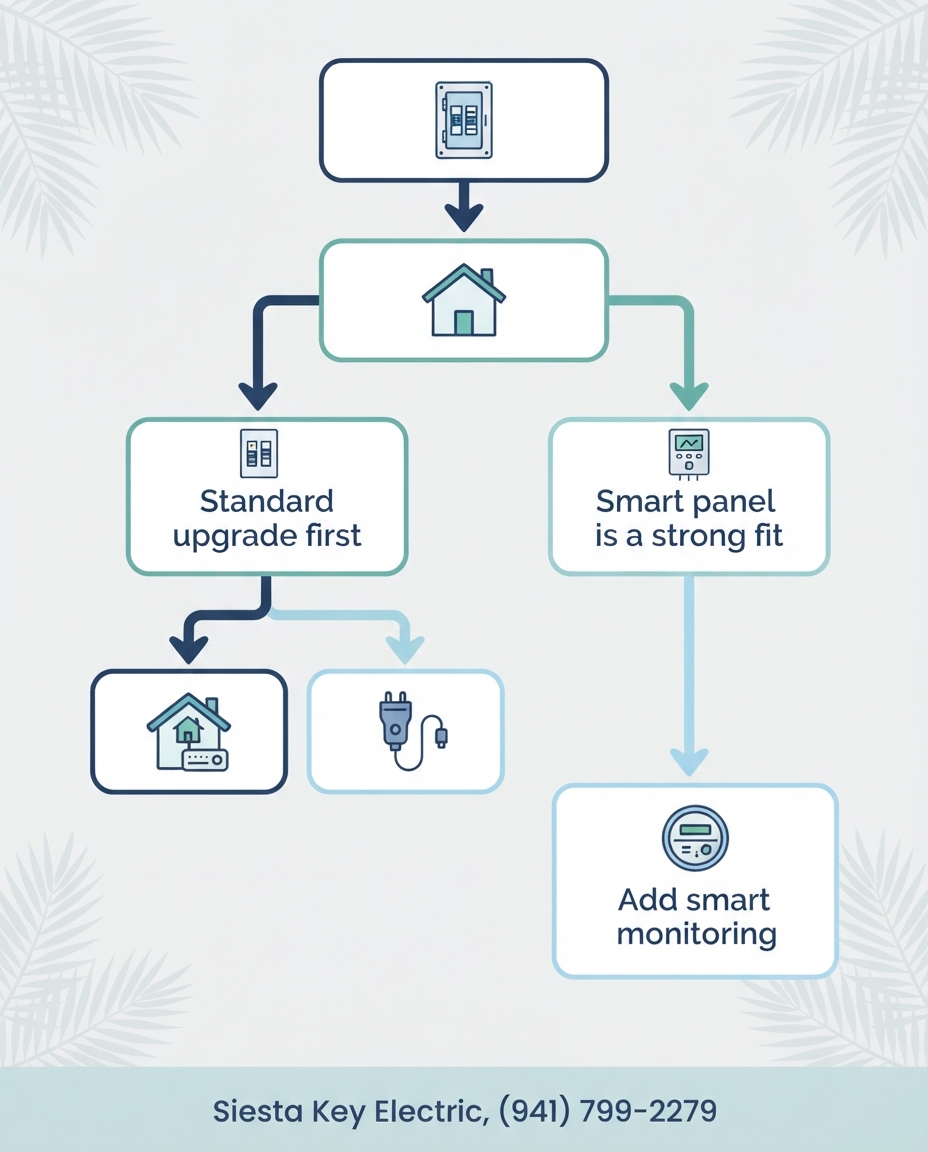
A smart panel is a genuinely useful upgrade when the underlying electrical system is sound and coastal grade. It is not a fix for a panel that is already failing, and it is not worth installing without corrosion resistant hardware built for salt air exposure.
Conclusion
A smart home electrical panel gives you real time visibility into how your Siesta Key home uses power, and it can help manage an EV charger, pool equipment, or storm backup power without always requiring a full service upgrade. The tradeoff is that its sensors and communication boards are more sensitive to salt air and humidity than the mechanical parts inside a standard breaker.
Coastal grade protection is not optional here. It is the difference between a smart panel that reports accurate data for years and one that starts throwing false alerts within a single storm season.
Siesta Key Electric installs and services smart panels with the same corrosion resistant standards we use on every coastal electrical project. With hurricane season still active through November, now is a good time to have your panel and backup power plan reviewed together. Call (941) 799-2279 or request a free estimate, and we will help you decide whether a smart panel, a standard upgrade, or both make sense for your home.
Related reading: For more help with your home, see our guides on planning circuits for a new home, cutting high energy bills on Siesta Key, and structured cabling for smart homes.
Frequently Asked Questions
What is NEC Article 750 and does it apply to smart panels?
NEC Article 750 is the section of the National Electrical Code that defines energy management systems, including the monitors and controllers built into smart panels, according to Electrical License Renewal’s code summary. It applies to most modern smart panel products sold today.
Do I need a permit to install a smart electrical panel in Sarasota County?
Yes. Sarasota County requires a permit and inspection for panel work under the 2020 NEC and 2023 Florida Building Code, confirmed on the Sarasota County Building Division site, regardless of whether the panel is a standard model or a smart panel.
Can a smart panel replace the need for a full panel upgrade?
Sometimes, but not always. A smart panel can manage load better on an existing service, but a panel already showing corrosion, burn marks, or frequent tripping needs a real upgrade first, not just added monitoring.
Are smart panels reliable in Florida’s humidity and salt air?
They can be, but only with coastal specific protection. Salt residue can create conductive paths on circuit boards that cause sensor drift and communication errors over time, so a smart panel installed without sealed enclosures and corrosion resistant hardware is a real risk on Siesta Key.
How much does a smart panel cost compared to a standard panel upgrade?
Smart panel equipment generally costs more than a standard panel, and Sarasota permitting and labor apply either way. Most homeowners are better served comparing a smart panel against a standard electrical panel upgrade based on their actual load needs rather than cost alone.
Need a licensed electrician on Siesta Key? Siesta Key Electric handles home electrical work and commercial electrical service across Sarasota County. Call (941) 799-2279 for a free estimate.