

TL;DR: Hurricane season electrical preparation in Sarasota means checking your generator, your surge protection, and your outdoor outlets before the next storm forms, not after one is already offshore. This guide covers generator readiness and safe interlock wiring, whole home surge protection, weatherproofing panels and outdoor outlets, what to do with your power during and right after a storm, and when to call a licensed electrician instead of handling something yourself. Call Siesta Key Electric at (941) 799-2279 for a free estimate today.
It is late August, and hurricane season electrical preparation in Sarasota should already be finished, not just starting. Florida’s storm season runs through the end of November, and the busiest stretch of Gulf activity usually falls right about now. If your generator has not been tested, your surge protection has not been checked, and your outdoor outlets still have the wrong covers, the calm days left to fix that are running out.
Siesta Key sits on a barrier island, where salt air, storm surge, and high wind all threaten the same electrical system at once. A panel that would last decades in an inland Florida neighborhood can fail years early here, and a storm often exposes weaknesses that salt air has already been working on quietly for months. Preparing your electrical system for hurricane season in Florida is not a one time task. It is a habit that protects your home, your family, and the investment you have made in your property.
This checklist walks through what to check right now, mid season, before the next storm gets a name.
How Do I Get My Generator Ready for Hurricane Season?
Getting a generator ready for hurricane season means testing it under load, confirming it has a code compliant transfer switch or interlock kit, storing fuel safely, and placing carbon monoxide alarms on every floor of your home. A generator that has not been tested since last season is a gamble you do not want to take once a storm is offshore.
Every fall we get calls from Siesta Key homeowners whose generators would not start the moment they needed them most. A generator that sits untouched for a year can develop stale fuel, a dead battery, or a clogged carburetor, and none of those problems show up until the power is already out.
If you run a portable generator, it should never be wired directly into your home’s panel without a transfer switch or interlock kit. The National Electrical Code requires transfer equipment that keeps the standby source and utility power from connecting at the same time, since backfeeding a panel without proper transfer equipment can push power out through the transformer and onto lines that utility crews believe are dead. That is not a shortcut worth taking, for your family or for the linemen working to restore power to your street.
Run through this before the next storm watch is issued:
- Start the generator and let it run under load for at least 20 minutes
- Confirm the transfer switch or interlock kit is installed, labeled, and working correctly
- Check that fuel is fresh and stored in approved, clearly labeled containers away from the house
- Install or test battery operated carbon monoxide alarms outside sleeping areas and on every floor
- Plan generator placement more than 20 feet from doors, windows, and vents before you need it
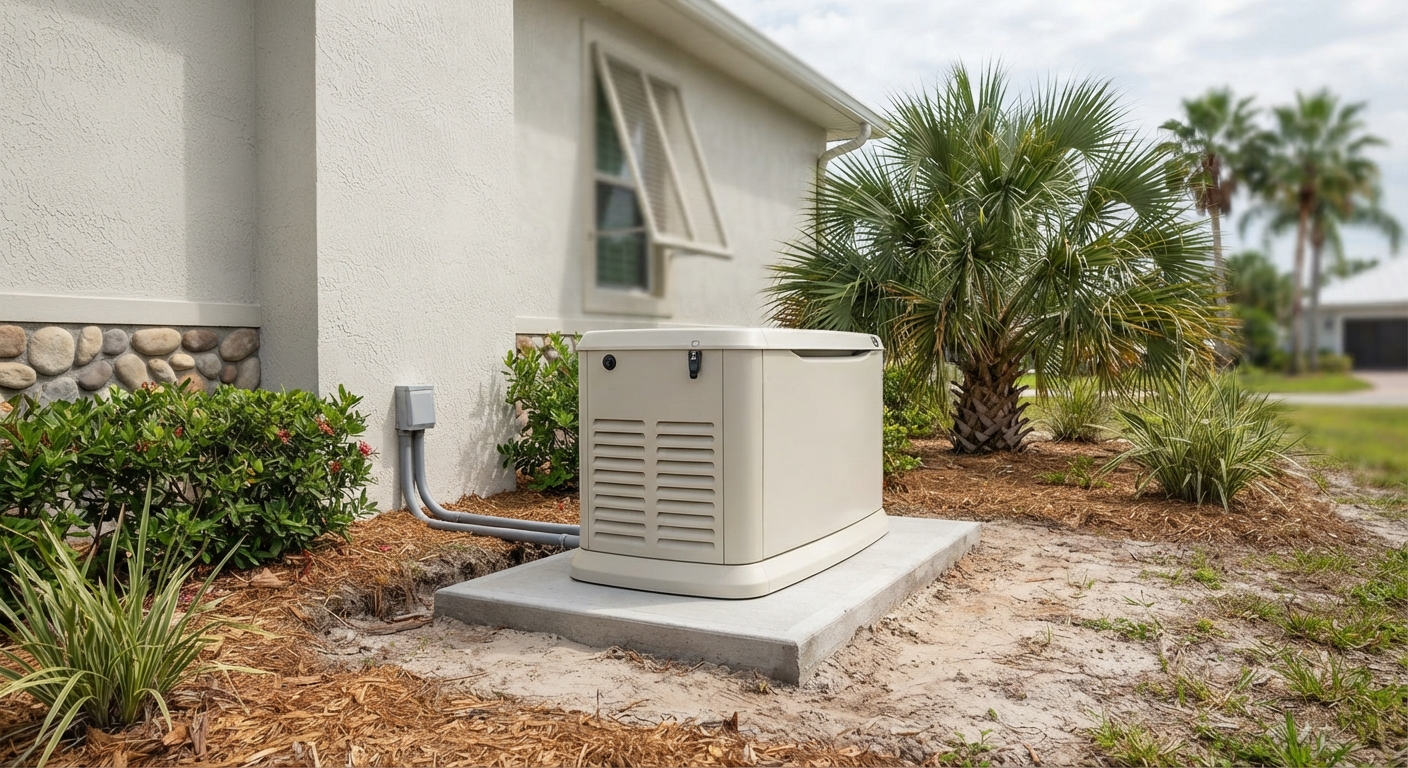
If you are installing a standby generator for the first time this season, our generator installation services include code compliant transfer equipment and corrosion resistant components built for barrier island conditions, part of what we call the Siesta Key Standard.
Does a Whole Home Surge Protector Protect Against Storm Related Power Surges?
Yes. A whole home surge protection device installed at your panel absorbs voltage spikes from lightning strikes and from the power surges that happen when utility crews restore electricity after an outage, protecting your appliances, HVAC system, and electronics in one move instead of relying on individual plug in strips.
Sarasota sees frequent lightning through the summer storm season, and a direct or nearby strike can push a surge through your electrical service in a fraction of a second. The same thing happens on a smaller scale when power comes back on after an outage, since the grid does not always restore power smoothly.
Plug in surge strips only protect what is plugged into them, and they do nothing for your air conditioner, water heater, or pool equipment. A whole home surge protection system installed at the panel covers everything connected to your home’s wiring at once. Recent National Electrical Code updates now require a surge protective device on new and upgraded residential services, which says a lot about how seriously the industry now treats this risk.
If your Siesta Key or Sarasota home does not already have whole home surge protection, hurricane season is the wrong time to find out the hard way what a lightning strike does to an unprotected panel.
How Do I Weatherproof My Outdoor Outlets and Electrical Panel Before a Storm?
Weatherproofing outdoor outlets before a storm means confirming every exterior receptacle has a while in use cover and GFCI protection, and weatherproofing your panel means sealing penetrations and, in flood prone areas, making sure equipment sits above the elevation Florida law requires. These are code requirements, not optional upgrades, and Sarasota inspectors check for them.
The National Electrical Code requires outdoor receptacles in wet locations to have a weatherproof while in use cover that protects them whether or not something is plugged in, along with GFCI and weather resistant rated devices. A standard flip up cover that only closes when nothing is plugged in does not meet this standard, and it will not keep wind driven rain out of the box during a storm.
For homes in flood zones, which includes large parts of Siesta Key and the surrounding barrier islands, the Florida Building Code requires electrical equipment to sit at or above the flood elevation set for that property. There is a narrow exception for pool and spa equipment, which can sit lower if it is elevated as much as practical, anchored against flotation, and protected by GFCI. Everything else, including your main panel and meter, needs to stay above that line.
Before a storm arrives, walk the outside of your home and check every outlet cover, seal any gaps around conduit entering the house, and confirm your panel door closes and latches fully. If your residential electrical safety inspection is overdue, this is the season to schedule one.
What to Unplug and Secure Before the Storm Arrives
Once a storm watch is issued for Sarasota County, your electrical prep shifts from maintenance to shutdown. Unplugging sensitive equipment protects it even if your surge protection holds, and it only takes a few minutes.
The National Weather Service recommends unplugging electronics, small appliances, and anything you can live without for a few days, and unplugging refrigerators and freezers too if flooding is a real risk for your property. It feels excessive right up until the one time it saves an appliance.
- Unplug televisions, computers, and small appliances not in use
- Unplug window units and portable electronics that cannot be moved to higher ground
- Move power strips, chargers, and battery backups off the floor in flood prone rooms
- Turn off and unplug pool and spa equipment before storm surge or heavy rain arrives
- Charge phones, laptops, and battery packs fully before the storm makes landfall
If you live in an evacuation zone, Sarasota County’s hurricane preparedness resources cover what else to prepare beyond your electrical system, including your disaster supply kit and evacuation route.

What Should I Do With My Home’s Power During and Immediately After the Storm?
During the storm, stay away from your panel and avoid running generators or major appliances unless it is a genuine emergency. Immediately after, treat every downed line as live, keep any generator running outdoors only, and wait for full daylight before inspecting anything electrical outside your home.
Once winds pick up, it is not the time to flip breakers or troubleshoot a flickering circuit. If you lose power, that is often the safer outcome, since it removes the risk of a surge hitting a live system during the worst of the storm.
After the storm passes, downed power lines are the biggest immediate danger. The National Weather Service is direct about this: stay far away from any downed line, whether it is on the ground, tangled in a tree, or hidden under standing water, and report it instead of moving it yourself. Water and electricity travel together far better than most people expect.
If you are running a generator, keep it outside, more than 20 feet from doors, windows, and vents, and never run it in a garage even with the door open. Once utility power returns, watch for flickering lights or a burning smell, which can mean your system took damage during the storm.
When Should I Call a Licensed Electrician Instead of Handling It Myself?
Call a licensed electrician anytime you see water inside your panel, smell burning, notice breakers that will not reset, or are not completely sure a generator connection is wired correctly. Testing a generator, checking outlet covers, and unplugging electronics are safe for most homeowners. Panel work, flooded equipment, and wiring damage are not.
There is a real line between hurricane season electrical preparation you can do yourself and the work that needs a license. Testing your generator, checking cover plates, and unplugging equipment are all reasonable weekend tasks. Opening a panel, working near a flooded meter base, or reconnecting a generator without a proper transfer switch are not, no matter how confident you feel with a screwdriver.
If your home took on any water during the storm, do not restore power to affected circuits yourself. Submerged electrical equipment needs to be inspected before it goes back into service, which is exactly the situation our electrical inspection after flooding service is built for.
When in doubt, the safest call is the one you make to a licensed professional before you touch anything.
The Siesta Key Standard for Storm Ready Electrical Systems
Generic electrical work does not hold up well on a barrier island. Salt air corrodes ordinary hardware years before it would fail inland, and that corrosion often hides the exact weaknesses a storm goes looking for. That is the thinking behind what we call the Siesta Key Standard: corrosion resistant materials, marine grade hardware, and installation techniques built specifically for Gulf Coast conditions, not borrowed from a mainland job site. You can read more about how salt air affects electrical systems in our detailed guide.
A panel, generator connection, or surge protection system installed to that standard is simply more likely to still be working the morning after a storm. If you are not sure how your residential electrical system would hold up, an inspection now costs far less than an emergency call during the next storm.
Get Your Electrical System Storm Ready Today
Hurricane season electrical preparation in Sarasota comes down to three things: a generator you have actually tested, whole home surge protection at your panel, and outdoor outlets and panels that meet code for wet and flood prone locations. Skip any one of those and you are gambling with a storm that could still be weeks away from making landfall.
We are in the middle of an active season right now, and the forecast can change in a matter of days. If your electrical system has not been checked this year, do not wait for the next storm watch to find out what needs attention. Request a free estimate or call Siesta Key Electric at (941) 799-2279. As a family owned and operated, licensed and insured coastal electrical specialist, we would rather help you prepare now than respond to an emergency later.

Related Reading
Storm season is also a good time to check the age of your home’s safety devices. See our guide on when dated smoke detectors need replacing.
Own a portable generator? Our guide to generator interlock kit installation compares interlocks and transfer switches, with Sarasota costs and code rules.
Frequently Asked Questions
How long can a portable generator power a Sarasota home during an outage?
Most portable generators run 8 to 12 hours on a single tank of gas, so plan on refueling at least once a day. Keep several days of properly stored fuel on hand, since storm outages in Sarasota can last well beyond a single day. Rotate fuel through your car or lawn equipment through the season so it stays fresh.
Do I need a permit for a generator transfer switch or interlock kit in Sarasota County?
Yes. Any permanent generator connection, including an interlock kit or transfer switch, requires a permit and inspection under the Florida Building Code. A licensed electrician handles this paperwork as part of the installation, and skipping it can create problems with your homeowners insurance later.
Is it safe to use a portable generator in the rain?
Not without protection. A portable generator needs a dry, open, outdoor space, ideally under a generator specific canopy that allows airflow but blocks rain, and it should never run inside a garage or under a tarp that traps exhaust. Water and an ungrounded generator are a dangerous combination, so keep it dry and always more than 20 feet from your home.
What is the difference between a plug in surge protector and whole home surge protection?
A plug in surge strip only protects whatever is plugged into it and offers no protection for hardwired appliances like your air conditioner or water heater. Whole home surge protection installs at your electrical panel and protects everything connected to your home’s wiring at once, which is part of why the National Electrical Code now requires it on new and upgraded residential services.
How soon after a hurricane should I have my electrical system inspected?
If your home took on any water, or you noticed flickering lights, breakers that will not reset, or a burning smell after the storm, schedule an inspection right away, before you restore power to affected circuits. Even without visible damage, a post storm inspection is worth scheduling within a few weeks, especially if you are in a flood zone or storm surge came close to your property.
Need a licensed electrician on Siesta Key? Siesta Key Electric handles home electrical work and commercial electrical service across Sarasota County. Call (941) 799-2279 for a free estimate.