
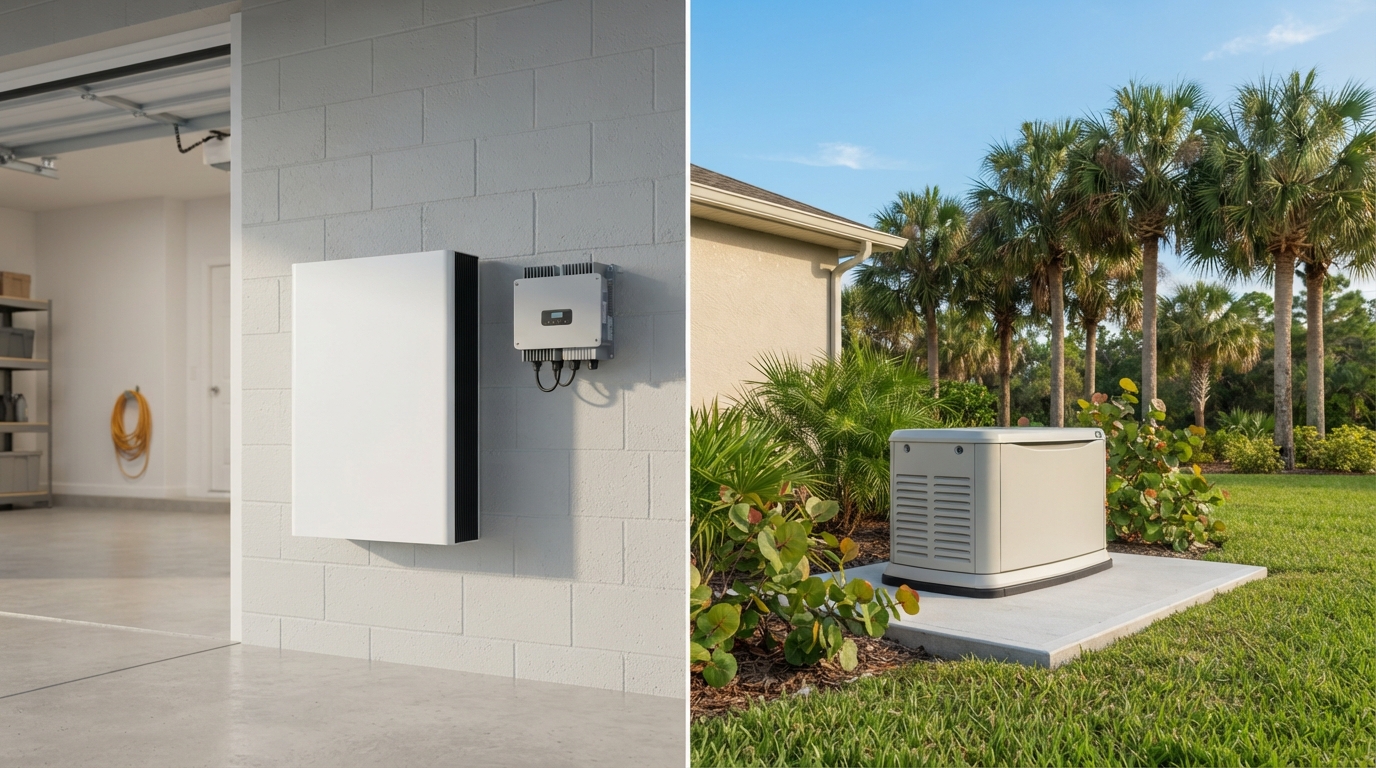
TL;DR: Battery backup systems run quietly and switch on instantly, but most only power essential circuits for 8 to 24 hours before they need sunlight or grid power to recharge. Standby generators cost less upfront and can run for days on propane, but need fuel delivery and more maintenance. On Siesta Key, salt air adds corrosion risk to both systems. Call (941) 799-2279 for help choosing and installing the right one for your home.
Battery backup vs generator is the question we hear most as hurricane season builds on Siesta Key. Both systems keep your lights on when the grid goes down, but they solve different problems, and picking the wrong one leaves you either overpaying or underprepared.
A standby generator burns fuel and can run for days. A battery backup system stores power silently and recharges from the grid or solar panels, but most residential setups only carry essential circuits for a matter of hours. Neither choice is universally better. The right one depends on your budget, your outage tolerance, and how often Siesta Key loses power for more than a day at a time.
Salt air adds another layer most buying guides never mention. Corrosion affects the wiring and connection points on both systems, just in different places. This guide compares runtime, cost, maintenance, and what changes when you live this close to the Gulf.
Battery Backup or Generator: What’s the Real Difference?
A generator makes its own electricity by burning fuel, usually propane or natural gas, for as long as fuel keeps flowing. A battery backup system stores electricity ahead of time, usually charged from the grid or solar panels, and releases it during an outage until the stored charge runs out.
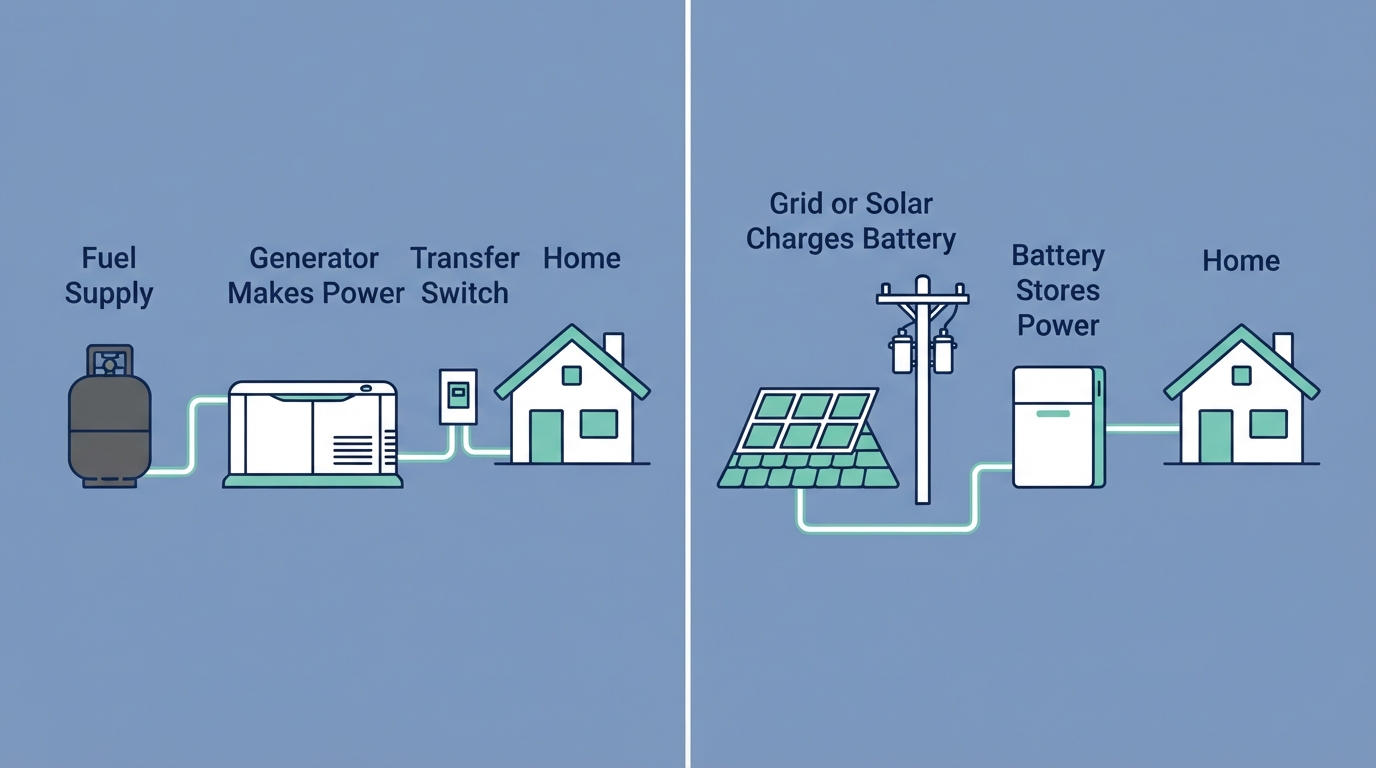
That difference drives everything else: cost, runtime, maintenance, and how each system behaves during a multi day outage. A generator is essentially a small power plant installed at your home. A battery system is closer to a very large power bank wired directly into your panel.
How Long Can Each One Actually Power Your Home?
A standby generator on a 500 gallon propane tank can run continuously for 5 to 22 days depending on your electrical load, according to fuel consumption data from propane generator manufacturers. A typical whole home battery system covers essential circuits for 8 to 24 hours before it needs to recharge.

A 20 kilowatt generator burning propane at half load uses roughly 1.5 gallons an hour, which works out to about 11 days of runtime on a 400 usable gallon tank. Light load stretches that past 18 days, while running the home at full capacity can cut it to under a week.
Battery systems size differently. A standard 13.5 kilowatt hour battery supporting 1.5 kilowatts of essential loads, think refrigerator, some lighting, and a few outlets, typically provides about 9 hours of power. Larger 20 to 40 kilowatt hour systems extend that further, but even the largest residential setups are built for hours, not days, unless paired with solar panels that can recharge them during daylight.
Upfront Cost and Installation: Battery Backup vs Generator
Cost is where the two systems diverge the most. A 22 kilowatt standby generator installation runs around $14,000, while a comparable 20 kilowatt hour battery system runs closer to $28,000, roughly double, according to installation pricing compiled for 2026.
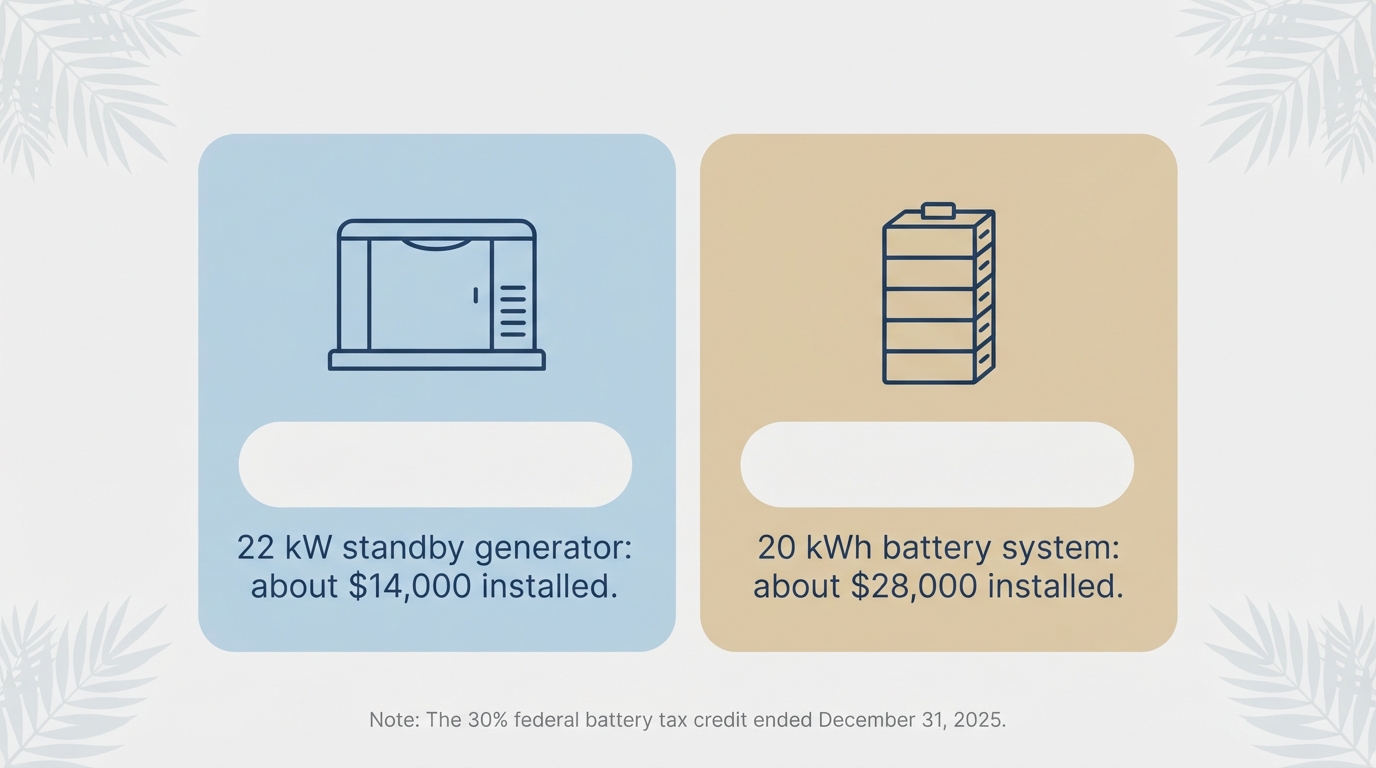
The federal tax credit that used to offset battery costs is no longer part of the equation. The 30 percent residential credit for battery storage ended for any system placed in service after December 31, 2025, so battery pricing in 2026 reflects the full installed cost for a cash or loan purchase.
Installation for either system requires an electrical permit and a load calculation from a licensed electrician. Generators also need a gas line permit and required clearances from windows, doors, and the property line. Battery systems often need a structural review for wall or garage mounting and must meet fire code limits on stored capacity.
Which One Handles a Multi Day Outage Better?
A standby generator handles a multi day outage better in almost every case, since it can run continuously as long as fuel is available and can be refueled. A battery system without solar panels to recharge it is built for short outages measured in hours, not the multi day outages common after a major hurricane.
Siesta Key has gone days without grid power after major storms. A generator sized for your home’s full load, including air conditioning, keeps running the entire time. A battery only system covering essential circuits will need the grid back, or a solar array to recharge it, well before a multi day outage ends.
Why Salt Air Changes the Maintenance Math for Both Systems
Salt air does not care which system you choose. It attacks exposed metal, wiring connections, and control boards on a generator’s enclosure just as readily as it corrodes the terminals and inverter housing on a battery system.
Heat adds a second problem specific to batteries. Research on lithium ion battery aging shows that high temperatures accelerate capacity loss and can trigger electrolyte breakdown inside the cells, exactly the conditions a battery enclosure faces mounted on an exterior wall in Florida.
A generator’s moving parts, like the engine block and exhaust system, are built to handle heat by design. A battery’s chemistry is not, which is why placement and ventilation matter more for battery installations on Siesta Key than they do 30 minutes inland. Either system needs marine grade hardware and corrosion resistant connections to hold up here, not the standard hardware a mainland Sarasota installer would use.
Can You Run Both Together?
Yes, and for many Siesta Key homes it is the better answer than choosing one system alone. A battery handles the frequent short outages that barrier island power lines see during a normal storm, starting instantly and running silently. A generator takes over automatically if the outage stretches past what the battery can cover.
This hybrid setup costs more upfront than either system alone, but it solves the actual problem better than either one does by itself: instant, quiet power for short outages, and unlimited runtime for the multi day outages that follow a direct hurricane hit.
Which Is Right for Your Siesta Key Home?
Choose a generator if you want unlimited runtime through a multi day outage and a lower upfront cost. Choose a battery system if quiet operation, no fuel storage, and short outage coverage matter more to you than running your whole home through a week without power. Many homeowners end up installing both.
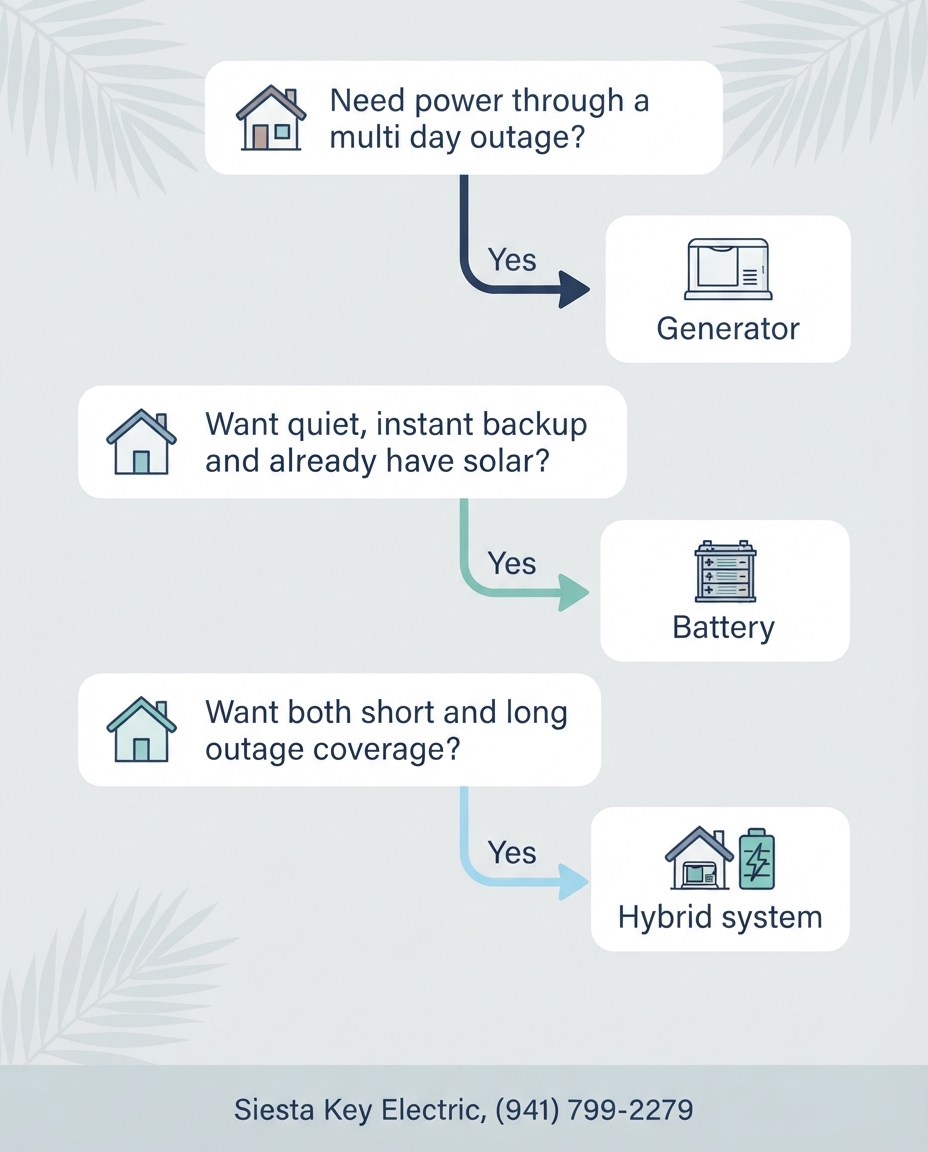
A generator is usually the more practical choice for a full time Siesta Key residence that needs air conditioning and full home coverage through a multi day outage. If that sounds like your home, our guide to backup generator installation on Siesta Key covers sizing and fuel types in more detail. A battery system fits better as an addition to solar panels already on the roof, or for a homeowner who mainly wants quiet, instant backup for short outages.
Either way, the electrical work behind the system matters as much as the system itself. Correct sizing, panel capacity, transfer equipment, and corrosion resistant connections determine whether your backup power actually works when you need it, not just when it is brand new. Our hurricane season electrical checklist covers the rest of what a coastal Sarasota County home should check before the next storm.
Get the Backup Power Decision Right Before Storm Season
Battery backup and generator systems solve different problems, and the right choice depends on how long Siesta Key typically loses power and what you are willing to spend to cover it.
A generator wins on runtime and cost. A battery system wins on quiet, instant backup for shorter outages, especially paired with solar. Either one needs installation work built for salt air, not a generic inland install.
Siesta Key Electric handles the electrical side of both generator and battery backup installations, from load calculations and permitting to corrosion resistant connections built for the coast. Call (941) 799-2279 for a free estimate, or request one online. With hurricane season still active, scheduling now beats scrambling after the next storm watch.
Frequently Asked Questions
Can I install a battery backup system without solar panels?
Yes. A battery system can charge from the grid alone and still provide backup power during an outage. Pairing it with solar lets it recharge during a multi day outage instead of running out, which is the main advantage solar adds.
How long does a whole home generator last?
A well maintained standby generator typically lasts 20 to 30 years, though salt air exposure on Siesta Key can shorten that without corrosion resistant hardware and more frequent service. Our generator maintenance checklist covers the schedule we recommend for coastal homes.
Do battery backup systems switch on automatically during an outage?
Yes. Like a generator with an automatic transfer switch, most battery backup systems switch over within milliseconds of a grid outage, often too fast to notice.
Is a generator or battery backup better for a vacation rental?
A generator is usually the more reliable choice for a vacation rental, since guests need full home coverage, including air conditioning, and an unattended property cannot rely on someone monitoring a battery’s remaining charge.
Can I get a permit for a battery backup system in Sarasota County?
Yes. Battery backup installations require an electrical permit and load calculation through Sarasota County, the same as a generator installation. A licensed electrician handles this as part of the installation.
Need a licensed electrician on Siesta Key? Siesta Key Electric handles home electrical work and commercial electrical service across Sarasota County. Call (941) 799-2279 for a free estimate.