
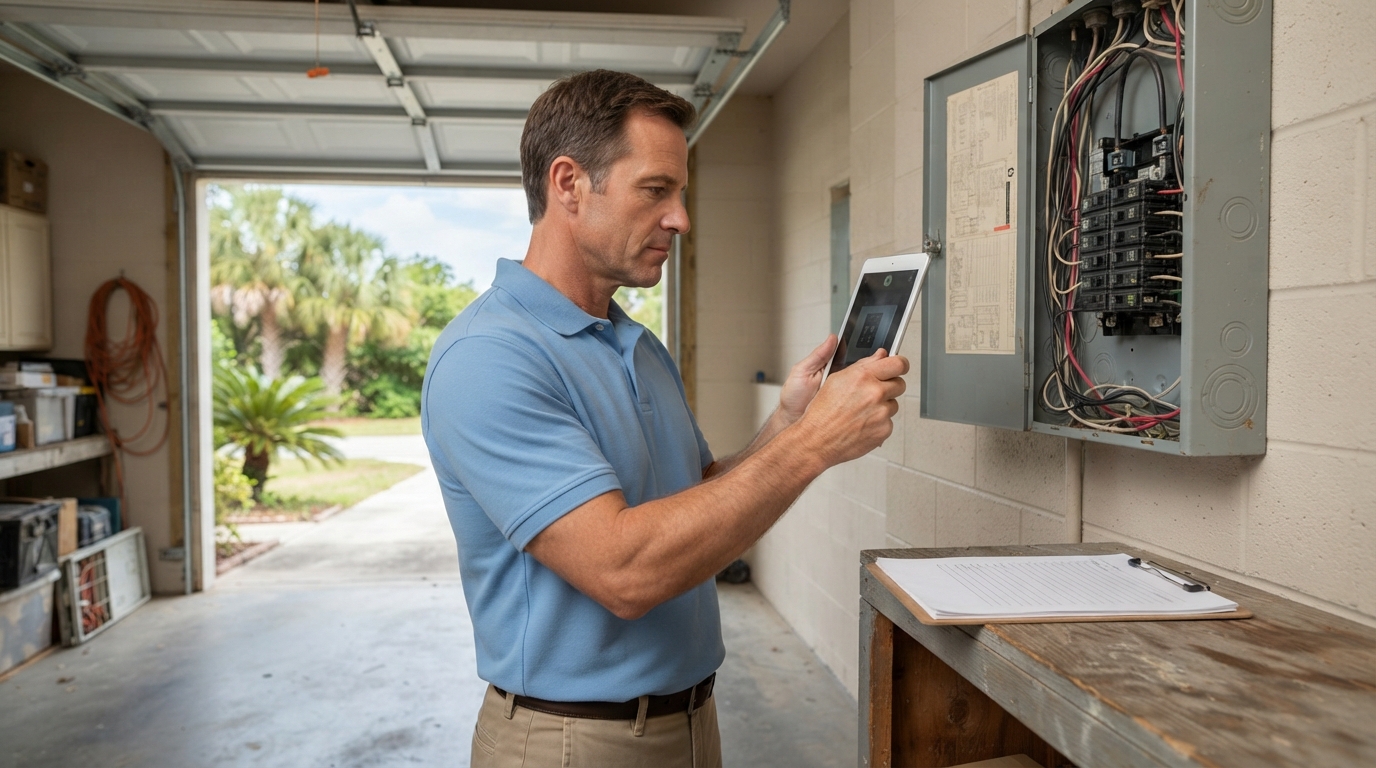
TL;DR: A Florida 4 point inspection checks four systems: roof, plumbing, HVAC, and electrical. The electrical section looks at wiring type, panel age and brand, breaker condition, and safety hazards like exposed wiring or missing GFCI protection. Older Siesta Key homes fail more often because salt air speeds up panel corrosion years ahead of the manufacturer’s timeline. A licensed electrician can catch and fix these issues before your inspection date. Call (941) 799-2279 for a free estimate.
A Florida 4 point insurance inspection can decide whether your policy renews or gets cancelled. Insurers order this inspection on homes older than 20 years to check four systems: roof, plumbing, HVAC, and electrical. The electrical section causes more failed inspections on Siesta Key than almost anywhere else in Sarasota County.
Salt air eats through copper wiring and panel connections faster here than it does ten miles inland. A panel that would pass in a mainland subdivision can fail on a barrier island home of the same age.
This guide walks through what the electrical portion of a 4 point inspection actually checks, which panel brands cause automatic red flags, and how to get ahead of the inspector before your renewal date arrives. Storm season adds pressure too. Insurers often request a fresh report after a wind or water claim, right when Sarasota homeowners can least afford the delay.
What Is a 4 Point Inspection and Why Florida Insurers Require It?
A 4 point inspection is a limited home inspection that checks the age and condition of your roof, electrical system, plumbing, and HVAC system. Florida insurers, including Citizens Property Insurance, require it on homes older than 20 years before they will offer or renew coverage.
As homes age, the Florida CFO’s four point inspection guide explains, the risk of system failure rises and claims become more likely. Insurers use the report to catch problems before they turn into water damage, fire, or a denied claim.
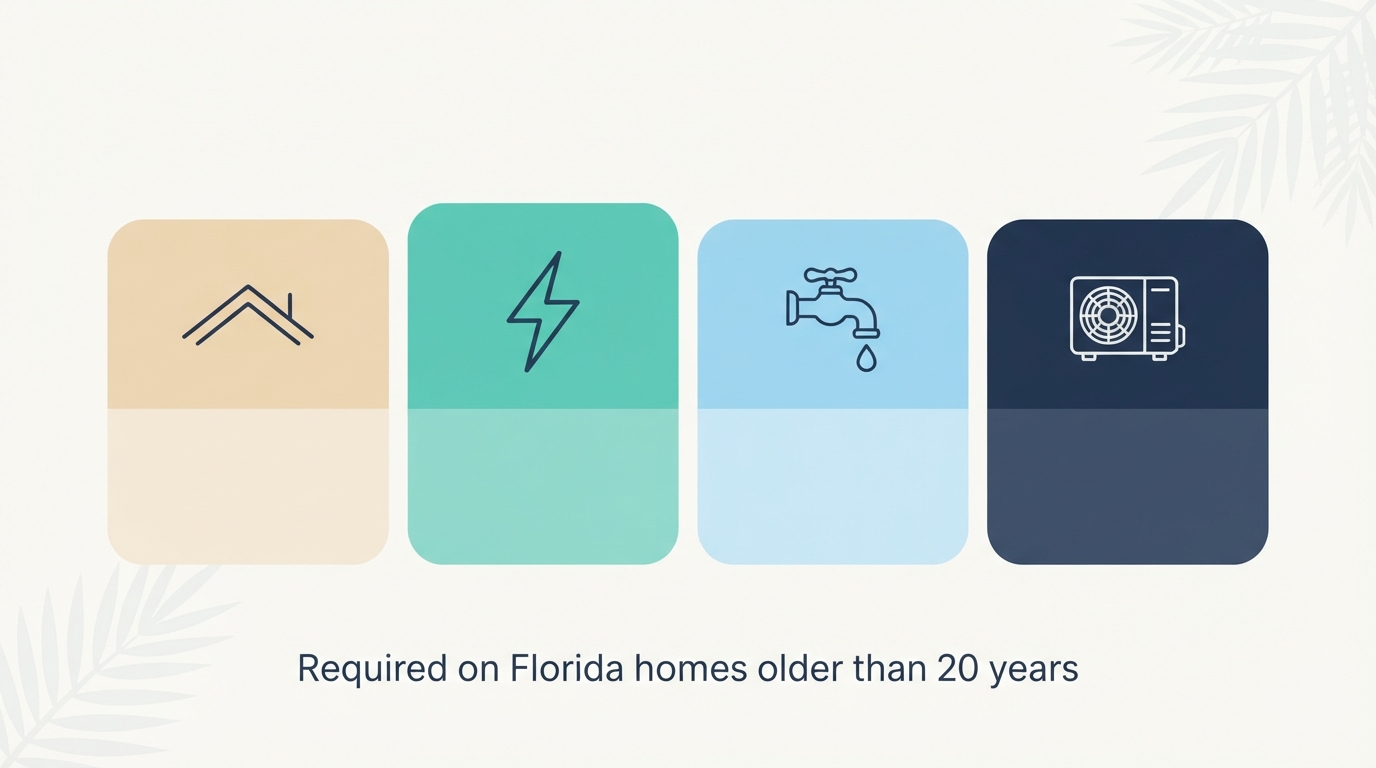
Citizens Property Insurance requires the inspection on all property owner, dwelling, and mobile home applications for properties more than 20 years old, according to its own inspections page. Private insurers often follow the same 20 year rule, though some request one earlier on coastal properties.
What Does the Electrical Section of a 4 Point Inspection Check?
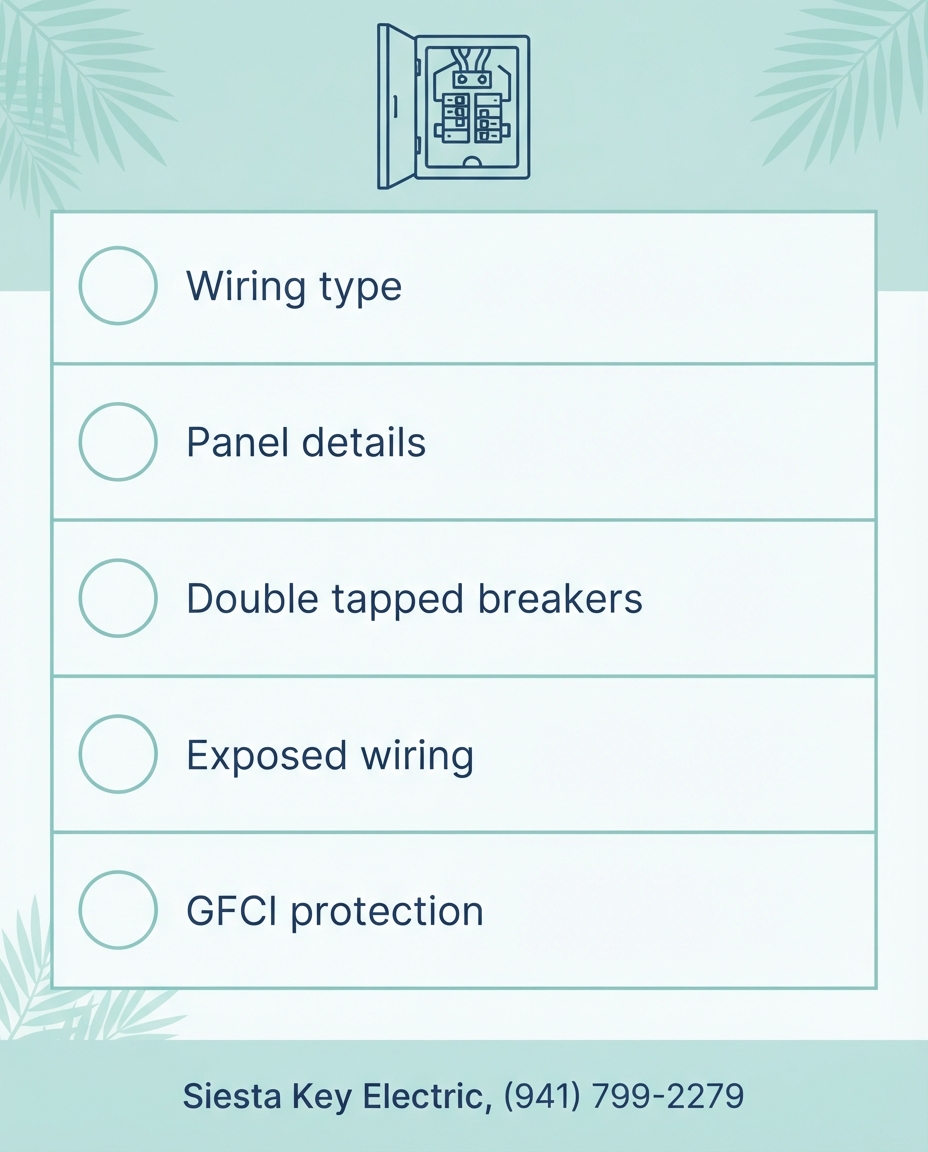
The electrical portion checks the type and age of your wiring, the condition and brand of your panel, and any visible safety hazards such as exposed wiring, double tapped breakers, or missing GFCI protection. Inspectors photograph the open panel and record the manufacturer.
Inspectors typically look at:
- Wiring type: copper, aluminum, or older knob and tube
- Panel age, brand, and amperage rating
- Breakers that are double tapped, corroded, or overheated
- Any exposed, frayed, or DIY wiring
- GFCI protection in kitchens, bathrooms, and outdoor outlets
The Florida CFO’s guide confirms the report must include photographs of open electrical panels and their doors, so inspectors cannot pass a panel from memory. Citizens’ own instructions ask inspectors to document the age, type, and condition of the wiring on every application.
The Panel Brands That Almost Always Fail: FPE, Zinsco, and Federal Pacific
Three panel brands cause more failed inspections than any other single item on this list: Federal Pacific Electric (FPE), Zinsco, and their various renamed successors. Both brands stopped production decades ago, but thousands of their panels are still installed in older Sarasota County homes.
A 1982 investigation by the Consumer Product Safety Commission tested Federal Pacific breakers and found that none were failure-free across every amperage rating tested, according to Inspectapedia’s summary of the CPSC findings. Some breaker types failed to trip during an overload more than half the time. A breaker that will not trip cannot stop a fire.
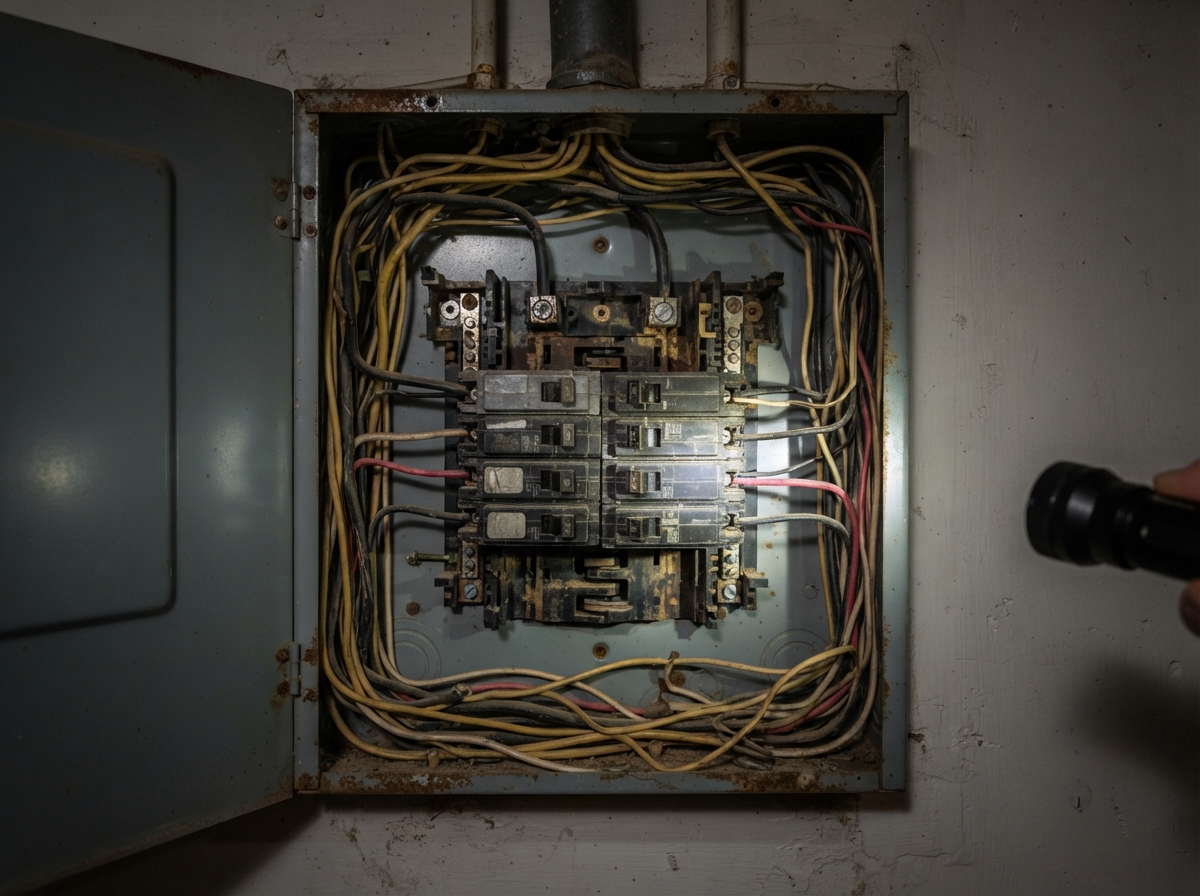
If your panel carries either brand, expect an automatic fail on the electrical section. Replacement is the only fix insurers accept. Our panel upgrade cost guide for Sarasota homes covers what typically drives the price up or down on a barrier island property.
How Salt Air Speeds Up the Corrosion Inspectors Are Trained to Catch
Salt air is not just an inconvenience on Siesta Key. It is a chemical process that attacks copper wiring, aluminum terminals, and panel hardware every day a home sits this close to the Gulf.
Sodium chloride particles settle on metal surfaces and speed up oxidation. A panel connection that would last 25 years in a mainland Sarasota subdivision can show green corrosion or heat damage in half that time on a waterfront property. That corrosion is exactly what a 4 point inspector is trained to flag, and it is exactly what our approach to salt air corrosion is built to prevent.
Electrical failure is already a leading cause of home fires nationwide. NFPA data attributes an average of 44,880 home fires each year to electrical failure or malfunction, with aging systems and worn insulation among the leading causes. Coastal corrosion adds years to that aging process without adding years to the calendar.
Will My Siesta Key Home Pass the Electrical Inspection?
Homes built before the 1990s are the most likely to fail, especially those with original panels, aluminum branch wiring, or knob and tube wiring still active anywhere in the house. Homes without GFCI protection in wet locations also fail routinely.
Aluminum branch wiring installed before 1972 carries a documented risk. The Consumer Product Safety Commission found that homes with this wiring are 55 times more likely to develop a fire hazard connection than copper wired homes. That risk alone is enough to trigger a fail.
Knob and tube wiring is another clear example. InterNACHI notes that many insurance companies refuse to insure houses that have knob and tube wiring due to the risk of fire. Some insurers make exceptions once a licensed electrician certifies the system as safe.
On Siesta Key, the more common failure point is a panel nearing 25 to 30 years old that has never been opened for a real inspection. Add a decade of salt air exposure, and what looks fine from the outside can already be failing on the inside.
What Happens After a Failed Inspection, and How Fast Can It Be Fixed?
A failed electrical section does not mean an automatic cancellation. Most insurers give homeowners a window, often 30 to 60 days, to make repairs and submit a passing re-inspection.
The clock moves faster than most homeowners expect. A licensed electrician needs time to diagnose the panel, order parts, schedule the work, and coordinate a follow up report. Waiting even a week to make the first call can push repairs past the deadline.
This deadline pressure hits property managers and vacation rental owners especially hard. A single 4 point failure on a rental property can affect a policy covering multiple units. We work directly with property managers across Sarasota County to schedule repairs around guest turnover and get homes re-inspection ready fast.
How to Prepare Your Electrical System Before the Inspector Arrives
Have a licensed electrician open and inspect your panel before your 4 point inspection is scheduled. Fix any FPE, Zinsco, or corroded connections, add GFCI protection where it is missing, and keep documentation of any recent electrical work.
The 2023 National Electrical Code expanded where GFCI protection is required, including nearly every kitchen receptacle and most outdoor outlets. A home without that protection can fail the electrical section even if the panel itself is in good shape.
Sarasota County requires all electrical repairs to meet the 2020 National Electrical Code, the same baseline your inspector uses to judge whether a fix is compliant.
If your home took on any wind or water exposure during storm season, ask your electrician to check the panel and grounding system at the same time. Insurers frequently request a fresh 4 point report after a storm claim, and a proactive inspection now can save a scramble later. Our hurricane season electrical checklist covers what to check before the next storm reaches Sarasota County.
Protect Your Coverage Before the Inspector Arrives
A 4 point inspection is really an electrical health check with an insurance deadline attached. On Siesta Key, salt air adds a variable that mainland electricians rarely account for, and it is the reason older coastal panels fail more often and sooner than their inland counterparts.
Three things matter most: know your panel brand before the inspector does, treat any corrosion or missing GFCI protection as a fail waiting to happen, and call for a pre-inspection review before your renewal date, not after a cancellation notice arrives.
Siesta Key Electric has spent years protecting Gulf Coast homes from exactly this kind of corrosion driven failure. Call (941) 799-2279 for a free estimate, or request a free estimate online. If storm season has you facing a re-inspection deadline, ask about scheduling priority for insurance related repairs.
If your inspector flags single strand aluminum wiring, our guide to aluminum wiring in Sarasota homes explains the repairs insurers accept.
Related reading: See our guide on the cost to replace knob and tube wiring if your Sarasota home still has the original system.
Frequently Asked Questions
Do I need a 4 point inspection every year?
No. Most insurers only require one when you first apply for coverage on a home older than 20 years, or after a major claim. Some companies request a new one every few years on coastal properties. Check your renewal notice for the exact requirement.
Can an electrician fix everything flagged on my 4 point inspection?
An electrician handles every item related to wiring, panel condition, and GFCI protection. Roof, plumbing, and HVAC items on the same report need a roofer, plumber, or HVAC technician. Many homeowners coordinate all three trades at once to meet a single deadline.
What if my panel is a Federal Pacific or Zinsco brand?
Expect an automatic fail on the electrical section. Both brands have documented breaker failure rates that insurers will not accept, so replacement with a modern, code compliant panel is the standard fix.
Does homeowners insurance require GFCI outlets?
Insurance policies do not directly require GFCI outlets, but a 4 point inspection will flag their absence in kitchens, bathrooms, and outdoor areas as a hazard. That flag can affect whether the inspection passes.
How long do I have to fix issues before my policy is cancelled?
Timelines vary by insurer, but 30 to 60 days is common after a failed inspection. Contact your insurance agent for your exact deadline, and schedule electrical repairs early since panel replacements often require permitting.