
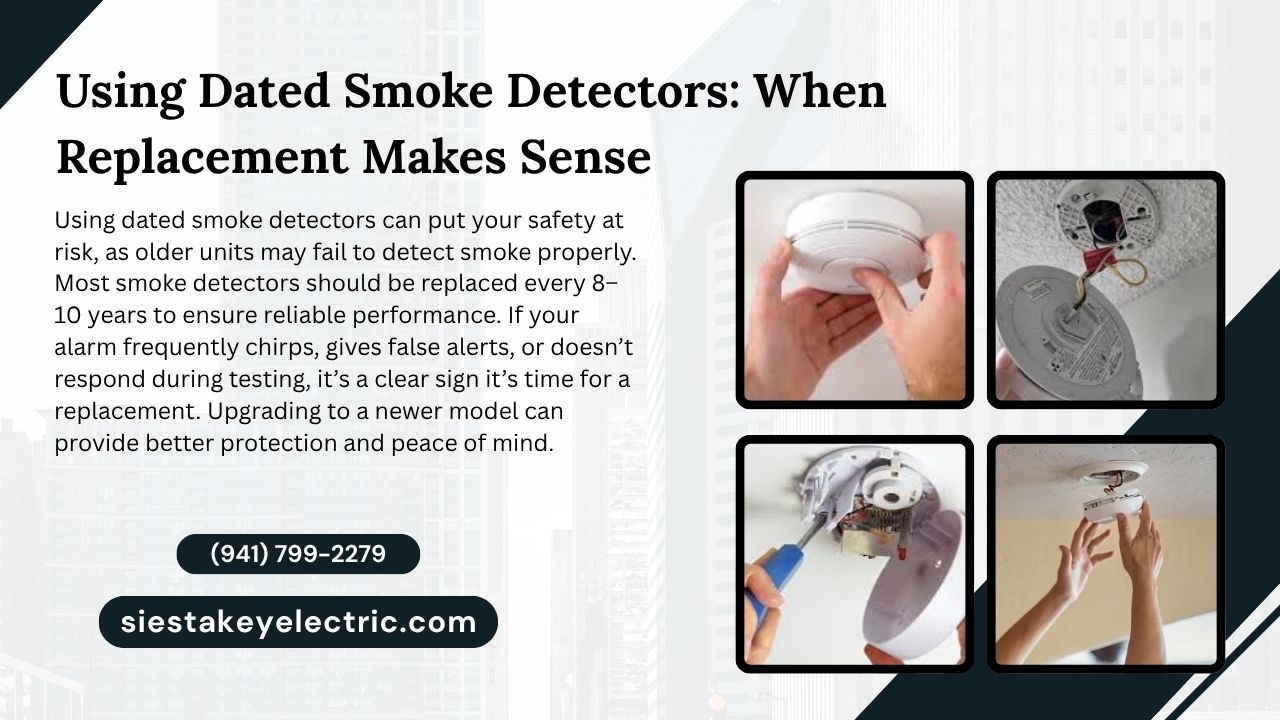
Outdated smoke detectors can create a false sense of safety in your home. While they may appear to be working, the internal sensors inside these devices gradually lose effectiveness over time. According to the National Fire Protection Association and the U.S. Consumer Product Safety Commission, most smoke alarms are built to perform reliably for around 10 years. After that, their ability to detect smoke quickly can decline without obvious warning.
Many homeowners continue relying on aging devices, assuming they are protected. In reality, those detectors may already be nearing failure.
At SiestaKeyElectric.com, we help homeowners evaluate older smoke alarm systems and determine whether repair or full replacement is the safer option. In many homes, upgrading outdated detectors is one of the simplest and most effective ways to improve overall safety.
Why Aging Smoke Detectors Become a Risk
Smoke detectors rely on sensitive components to identify smoke particles in the air. Over time, these components weaken due to:
- Dust and debris accumulating inside the unit
- Humidity and temperature changes affecting electronics
- Natural wear of internal components
- Reduced sensitivity of smoke detection chambers
Even if your smoke alarm still sounds during testing, it may not respond fast enough in a real emergency. Fire conditions develop quickly, and even a few seconds of delay can matter.
This is why experts recommend replacing smoke detectors before failure occurs, not after.
Warning Signs Your Smoke Detector Needs Replacement
Most smoke detectors show signs before they stop working completely. Recognizing these early can prevent serious risks.
Look for:
- Frequent false alarms
- Beeping even after changing the battery
- Yellowing or visible aging of the device
- Test button not responding
- Weak or delayed alarm sound
If you notice any of these issues, replacing the unit is usually the best solution to restore dependable protection.
The 10-Year Replacement Rule
One of the most important safety guidelines is simple:
Replace smoke detectors every 10 years
You can usually find the manufacturing date printed on the back of the device. If you cannot locate the date, it is safest to assume the detector is outdated and replace it.
Over time, internal sensors naturally degrade even if the device appears functional. This is why waiting for failure is not recommended.
Replacing detectors on schedule ensures:
- Faster smoke detection
- More accurate alerts
- Reduced risk of failure during emergencies
Smoke Detector Age |
Condition |
Action Needed |
| 0–5 years | Fully reliable | No replacement needed |
| 6–10 years | Moderate wear | Test regularly, plan upgrade |
| 10+ years | High risk | Replace immediately |
Carbon Monoxide: A Hidden Danger in the Home
Smoke detection alone is not enough. Carbon monoxide (CO) is a colorless, odorless gas that cannot be detected without a proper alarm. It is produced by fuel-burning appliances, vehicles, and generators.
It is produced by common household sources such as:
- Gas stoves
- Furnaces
- Water heaters
- Generators
- Vehicles in attached garages
The Centers for Disease Control and Prevention reports that over 400 people die each year in the United States from unintentional carbon monoxide poisoning.
Installing carbon monoxide detectors is essential because they warn you of a gas you cannot see or smell, often before you would notice any symptoms.
This makes CO detectors just as important as smoke alarms.
Modern combination smoke and carbon monoxide detectors provide:
- Continuous air monitoring
- Early warning before gas levels become dangerous
- Improved accuracy compared to older units
Upgrading to newer models is a simple but highly effective safety improvement.
Types of Smoke Detectors You Should Know
Not all smoke detectors work the same way. Understanding the differences can help you choose the right system for your home.
Type |
Best For |
Weakness |
Recommendation |
| Ionization | Fast flaming fires | False alarms | Older homes only |
| Photoelectric | Smoldering fires | Slight delay in flames | Best all-around choice |
| Combination | Smoke + CO detection | Slightly higher cost | Modern homes |
| Smart detectors | Smart homes | Requires WiFi | Premium safety option |
1. Ionization Smoke Detectors
- Respond quickly to fast-flaming fires
- More sensitive to small smoke particles
- Common in older installations
2. Photoelectric Smoke Detectors
- Better for slow, smoldering fires
- Less likely to produce false alarms
- Recommended for modern homes
3. Combination Smoke and CO Detectors
- Detect both smoke and carbon monoxide
- Space-saving solution
- Increasingly popular in newer homes
4. Smart Smoke Detectors
- Connect to mobile apps
- Send alerts to your phone
- Can integrate with home automation systems
At SiestaKeyElectric.com, we often recommend upgrading to photoelectric or combination smart detectors for improved protection.
When Replacement Makes the Most Sense
While some minor issues can be fixed, full replacement is often the safest option.
You should replace your smoke detector if:
- It is more than 10 years old
- It fails regular testing
- You are unsure of its age
- It has been exposed to smoke, moisture, or damage
- You are renovating your home
- You recently moved into an older property
Old homes often have outdated systems that do not meet modern safety standards. A full inspection can help identify hidden risks.
Warning Sign |
Risk Level |
Action |
| Constant beeping | Medium | Replace battery or unit |
| Yellow discoloration | High | Replace immediately |
| Failure during test | Critical | Replace immediately |
| Weak alarm sound | High | Replace unit |
Why Smoke Detectors Fail Without Warning
Some problems are not visible but still affect performance.
Common hidden issues include:
- Moisture entering sensor chambers
- Dust blocking airflow inside the detector
- Electrical wear in internal circuits
- Damage during renovations or painting
Because these issues develop slowly, regular inspection is essential.
Even a properly installed detector can lose efficiency over time without obvious signs.
Maintenance Tips to Extend Detector Life
Proper maintenance can help ensure your smoke detectors work reliably throughout their lifespan.
Follow these simple steps:
- Replace batteries at least once per year
- Test alarms every month
- Clean dust from vents and openings
- Check for discoloration or physical damage
These small habits significantly reduce the chance of failure.
Cost of Smoke Detector Replacement
Many homeowners delay replacement because they assume it is expensive. In reality, it is one of the most affordable safety upgrades.
Typical costs include:
- Basic smoke detector: low to moderate cost
- Combination smoke and CO detectors: slightly higher
- Smart detectors: higher initial cost but longer-term value
Professional installation ensures:
- Correct placement
- Proper wiring (for hardwired systems)
- Full system testing
Hiring a licensed electrician also reduces the risk of installation errors.
DIY vs Professional Installation
Some battery-powered detectors can be installed by homeowners. However, professional installation is recommended when:
- Hardwired systems are involved
- Multiple detectors are interconnected
- You are unsure about placement
- Electrical wiring is outdated
Our professional electricians ensure the system is installed according to safety codes and fully operational. We provide inspection and installation services to help homeowners upgrade safely and efficiently.
Benefits of Upgrading to Modern Detectors
Modern smoke and carbon monoxide detectors offer significant improvements over older models.
Key benefits include:
- Faster and more accurate detection
- Reduced false alarms
- Interconnected alarms throughout the home
- Smart alerts sent to mobile devices
- Long-life sealed batteries
Upgrading is not just about replacing old devices, it is about improving overall home safety.
Ensure Home Safety with Timely Smoke Detector Replacement
Smoke detectors are one of the most important safety devices in any home, but they are not permanent. Over time, their internal components degrade, reducing their ability to respond quickly in emergencies.
Replacing outdated detectors every 10 years, maintaining them properly, and upgrading to modern technology can significantly improve your home’s safety.
If you are unsure about the condition of your current system, a professional inspection can help identify risks and recommend the right upgrades.
For homeowners looking for reliable electrical safety services, SiestaKeyElectric.com provides expert guidance on smoke detector replacement, inspection, and installation to ensure your home stays fully protected.
Florida Code Requirements for Interconnected Smoke Alarms
Replacing a single smoke detector is not always as simple as swapping one unit for another. Florida Building Code and the National Electrical Code set specific placement and interconnection rules, and they matter most when you are remodeling, adding a bedroom, or replacing an entire system.
Every Bedroom and Every Level Needs Coverage
Current code requires a smoke alarm inside every bedroom, immediately outside each sleeping area, and on every level of the home, including basements. A single detector in a hallway is not enough for a home with bedrooms on different floors or at opposite ends of the house.
Interconnection Is Required in Most New Installs
When alarms are interconnected, every unit sounds at once if one detects smoke, so a fire starting in a garage or living room wakes people sleeping in a bedroom down the hall. Florida code requires interconnection for new construction and most major renovations, either hardwired with a battery backup or through wireless interconnection on modern battery-powered units.
If you are replacing more than one detector or remodeling a section of your home, this is the point where upgrading to an interconnected system, instead of standalone units, brings your home in line with current expectations even if the whole house is not required to be retrofitted at once.
Placement Rules That Are Easy to Get Wrong
Smoke alarms should sit on the ceiling or high on a wall, since smoke rises and collects there first. Keep alarms at least 10 feet from cooking appliances to avoid nuisance false alarms, and avoid mounting them directly in the airflow of a supply vent or ceiling fan, which can pull smoke away from the sensor before it triggers.
A licensed electrician can confirm your current smoke alarm layout meets these placement and interconnection rules, and correct any gaps as part of a broader residential electrical safety inspection. Call (941) 799-2279 or contact Siesta Key Electric for a free estimate on interconnected smoke alarm installation.
Frequently Asked Questions (FAQ)
Q1.How often should smoke detectors be replaced?
A.Every 10 years, even if they appear to be working properly.
Q2.Can a smoke detector last longer than 10 years?
A.It may still function, but performance and reliability decrease significantly after 10 years.
Q3.Why does my smoke alarm keep beeping?
A.Most commonly due to low battery, dust buildup, or internal sensor failure.
Q4.Do I need both smoke and carbon monoxide detectors?
A.Yes. Smoke detectors alone cannot detect carbon monoxide, which is a silent and dangerous gas.
Q5.Where should smoke detectors be installed?
A.In bedrooms, hallways, and every level of the home, including basements.