
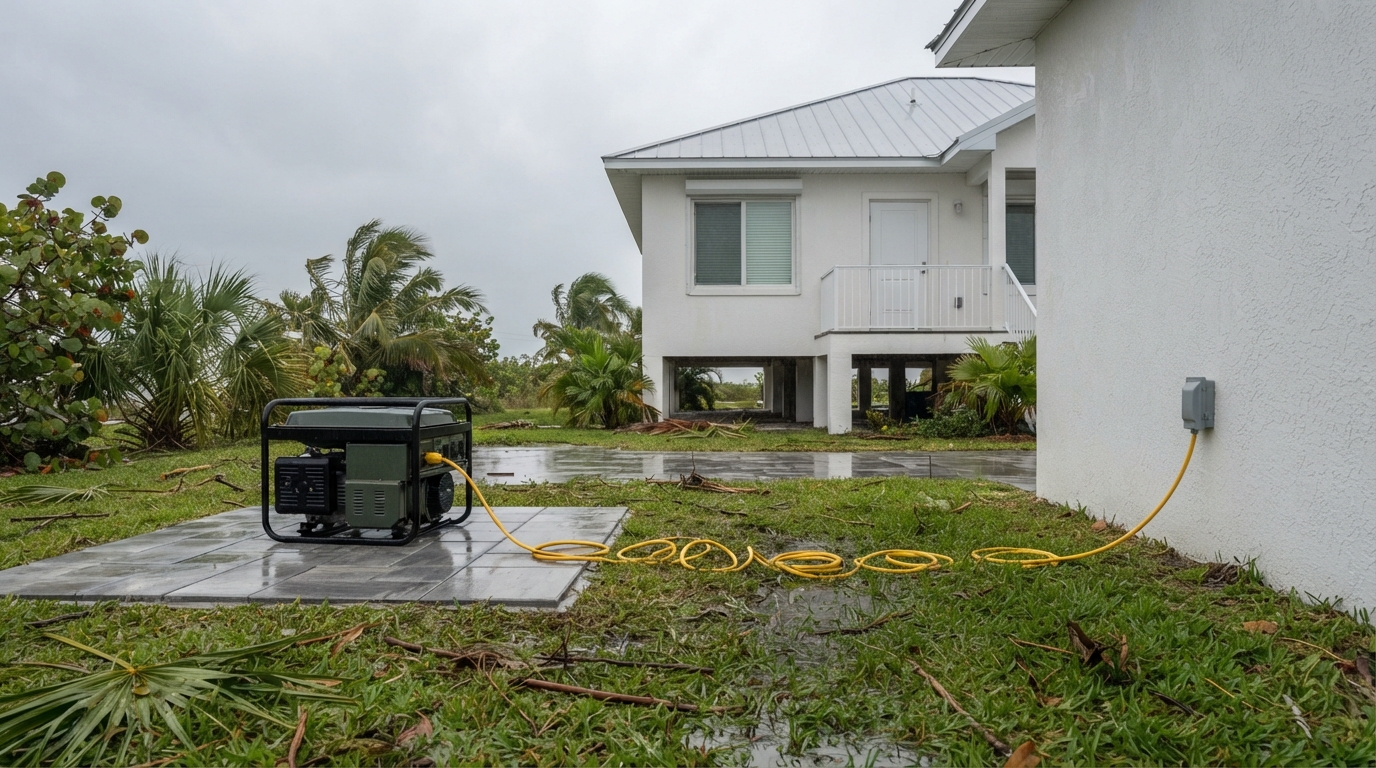
TL;DR: A generator interlock kit installation lets you run your home’s circuits from a portable generator safely, and it usually costs about $400 to $850 installed. A transfer switch costs more but adds convenience or automatic operation, and either option stops dangerous backfeed onto utility lines. On Siesta Key, add a corrosion resistant inlet box and keep equipment above flood level. Call Siesta Key Electric at (941) 799-2279 for a free estimate.
Generator interlock kit installation is the lowest cost way to connect a portable generator to your Sarasota home without extension cords running through the house. An interlock kit is a small metal plate on your electrical panel. It makes it impossible to turn on the main breaker and the generator breaker at the same time.
That one mechanical rule does a big job. It keeps generator power from flowing back onto the street lines, where it can injure utility crews. It also keeps the grid from slamming into your generator when power returns.
Storm season on the Gulf Coast runs through the fall, and many Siesta Key homeowners already own a portable generator. The weak link is usually the connection, not the generator. This guide explains how an interlock kit works, how it compares with a transfer switch, what each option costs, and what Florida code expects.
Siesta Key Electric is a family owned, licensed electrical contractor serving Siesta Key and Greater Sarasota County. We install interlock kits, manual transfer switches, and automatic transfer switches, all built to the Siesta Key Standard for salt air.
What Is a Generator Interlock Kit?
A generator interlock kit is a panel mounted device that lets a portable generator feed your home’s breaker panel through a dedicated generator breaker. A sliding plate blocks the main breaker whenever the generator breaker is on. Your home can only draw from one source at a time.
A complete interlock setup has four parts. The interlock plate mounts on the panel cover. A backfed generator breaker sits in a panel slot next to the main.
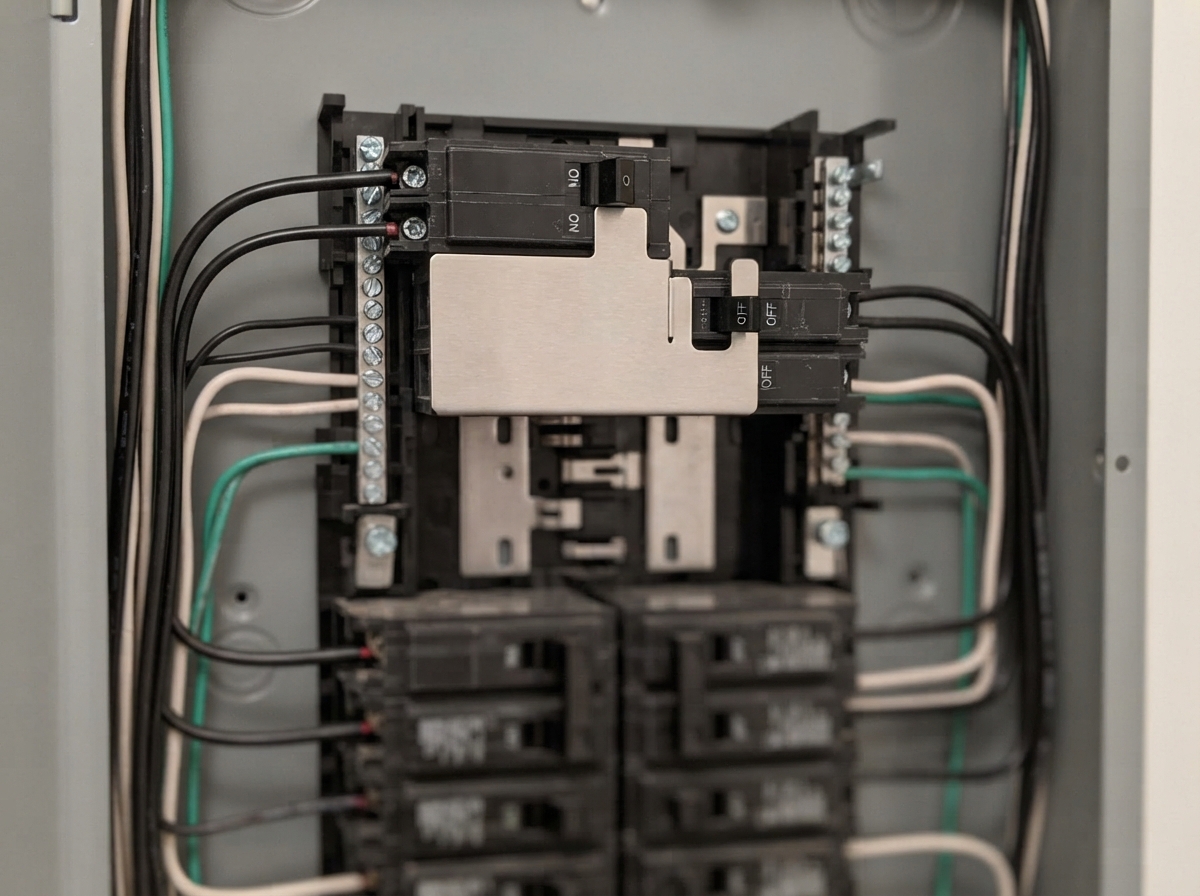
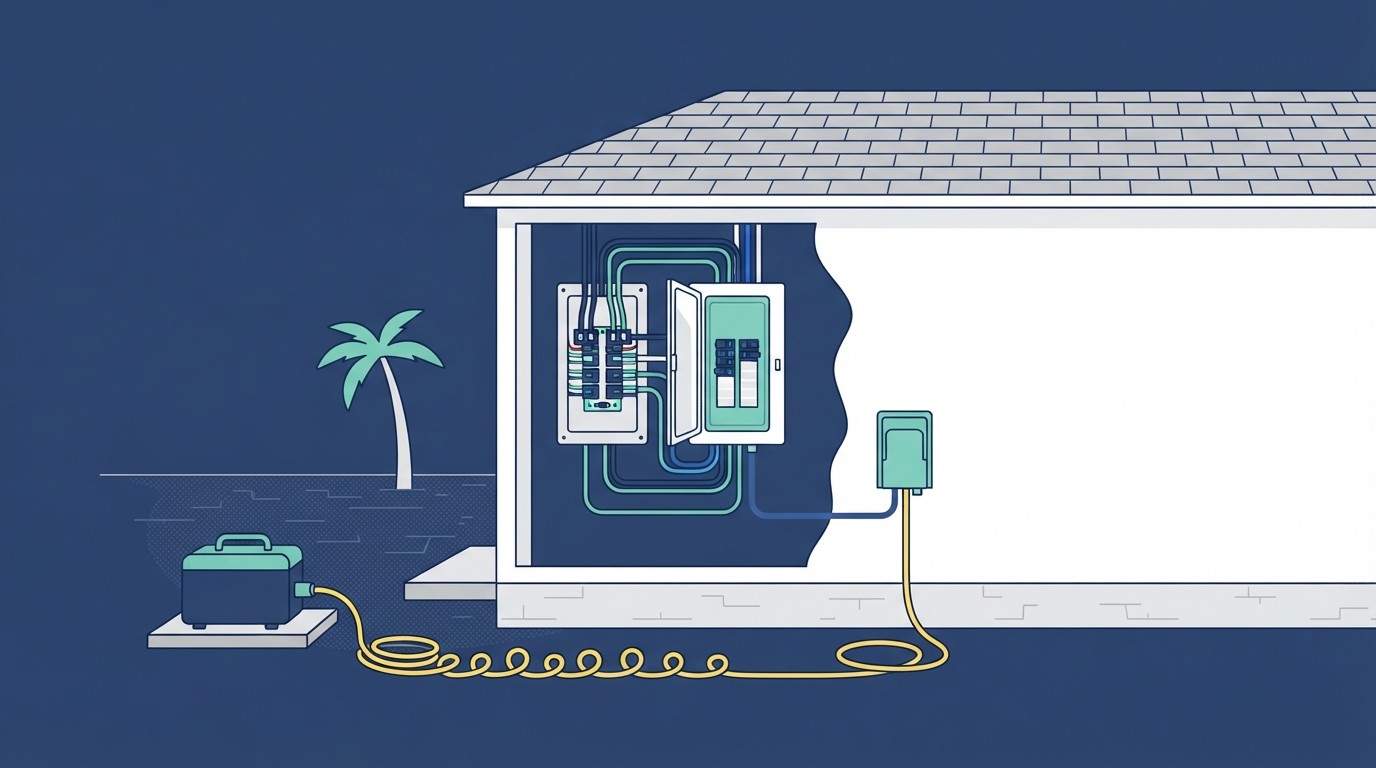
An outdoor power inlet box gives the generator cord a safe place to plug in. A heavy duty cord connects the generator to that inlet.
During an outage, you roll the generator outside, plug it into the inlet, and start it. Then you switch off the main, slide the plate, and turn on the generator breaker. You choose which circuits to run by turning individual breakers on or off.
The kit must match your panel’s brand and model. An interlock plate that does not fit your specific panel is not a safe substitute, which is one reason this job belongs with a licensed electrician.
Generator Interlock vs Transfer Switch: What Is the Difference?
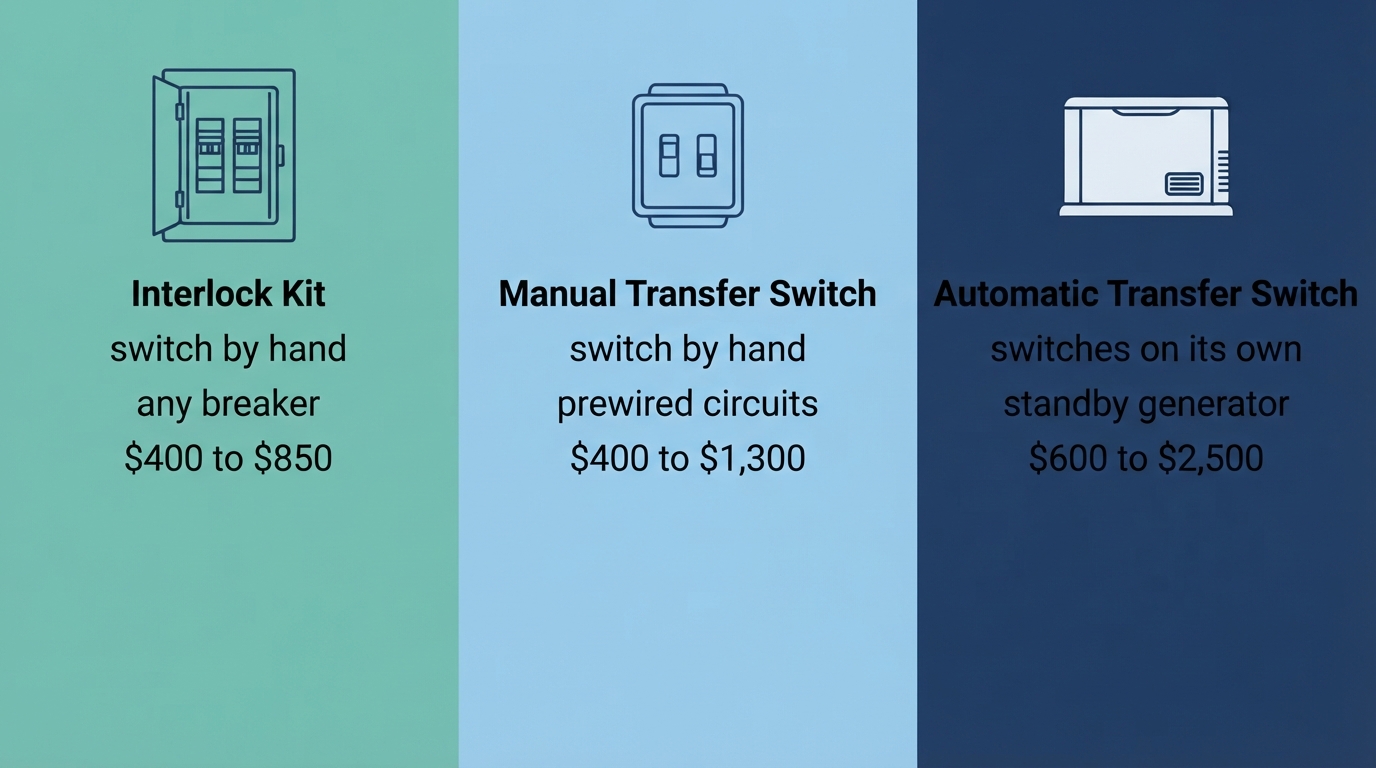
A generator interlock uses your existing panel and lets you power almost any circuit, while a transfer switch adds a separate switching device with a set number of pre wired circuits. Both prevent backfeed. The difference is cost, flexibility, and whether the switching happens by hand or automatically.
| Feature | Interlock kit | Manual transfer switch | Automatic transfer switch |
|---|---|---|---|
| How it switches | You move the main and generator breakers by hand | You flip switches on a separate unit | Switches on its own when power fails |
| Circuits available | Any breaker in the panel | Only the circuits wired to it | Selected circuits or the whole home |
| Best match | Portable generator | Portable generator | Permanent standby generator |
| Typical installed cost | $400 to $850 | $400 to $1,300 | $600 to $2,500 |
An interlock gives you the most flexibility for the lowest price. You can run the refrigerator in the morning and the well pump in the afternoon, as long as you stay within the generator’s capacity.
A manual transfer switch is a good fit when you want a simple, labeled set of circuits that anyone in the family can operate. An automatic transfer switch is the standard choice for a permanent standby generator, because it starts the system without anyone at home. That matters for seasonal residents who are away during storm season.
How Much Does Generator Interlock Kit Installation Cost in Sarasota?
Generator interlock kit installation usually costs about $400 to $850 with the kit and labor included, according to HomeGuide’s transfer switch cost guide. A manual transfer switch runs about $400 to $1,300 installed, and an automatic transfer switch about $600 to $2,500, per Angi’s 2026 cost data.
The table below shows the typical pieces of an interlock job and what each one adds.
| Item | Typical cost |
|---|---|
| Interlock kit, installed | $400 to $850 |
| Outdoor power inlet box | $20 to $100 |
| Heavy duty generator cord | $30 to $350 |
| Electrical permit | $50 to $350 |
HomeGuide lists the inlet box, cord, and labor ranges, and Angi lists the permit range. These are national planning ranges, not a quote.
A few things push the price up. An older or full panel may not have the open slot an interlock needs, and some panels have no listed interlock at all. In that case the fix may be a panel upgrade, which our guide to electrical panel upgrade cost covers in detail. A long run from the panel to the inlet location also adds wire and labor.
Is a Generator Interlock Kit Legal in Florida?
Yes, when it is installed correctly and permitted. Florida county guidance on optional standby systems under NEC Article 702 requires manual transfer equipment to include an interlock device suitable for the intended use, and it prohibits backfeeding through household outlets. A listed interlock kit on a compatible panel meets that requirement.
A Volusia County residential generator installation guide spells out the same expectations most Florida building departments apply. It calls for a listed power inlet as the connection point, a load calculation under NEC Article 220, and permanent signs at the service that identify the standby power source.
Sarasota County enforces the 2023 Florida Building Code and the 2020 National Electrical Code, according to the Sarasota County Building Division. Siesta Key Electric pulls the electrical permit for every interlock and transfer switch we install, so the work is inspected and documented.
That documentation matters later. A permitted, inspected installation is easier to explain to an insurer or a buyer than a connection nobody can verify.
Why Is Backfeeding a Generator Dangerous?
Backfeeding means sending generator power into your home wiring without an interlock or transfer switch, often through a homemade double male cord. That power can travel out through your meter onto utility lines. FPL warns that it can severely injure or kill a neighbor or a utility crew working to restore power.
Backfeeding also puts your own home at risk. Generac’s support team explains that when utility power returns while a generator is still connected, the two sources can start a fire or destroy appliances and the generator itself.
FPL’s guidance is direct: do not wire a generator straight into your breaker box, and hire a licensed electrician to connect it through a transfer switch. An interlock kit gives you that same protection at a lower cost.
Placement is the other half of generator safety. The Consumer Product Safety Commission advises running portable generators outdoors only, at least 20 feet from the home, with exhaust pointed away from windows, doors, and vents. We place your inlet box so the cord reaches a safe spot without running the generator in a garage or under a lanai.
Coastal Details That Matter on Siesta Key
The inlet box lives outside, and on a barrier island that means constant salt air. A standard steel box and exposed screw terminals can corrode within a few seasons. When the next storm arrives, a corroded inlet may not make a clean connection, or it may overheat under load.
The Siesta Key Standard means we use corrosion resistant inlet boxes, stainless steel mounting hardware, sealed conduit fittings, and corrosion inhibitor on the terminals. Our guide to salt air electrical damage explains why these details matter, and our marine grade electrical installation guide covers the materials.
Flood elevation matters too. The Florida Building Code requires electrical equipment in flood hazard areas to sit at or above the required elevation, according to a Florida Division of Emergency Management summary of Section R322. On low lying lots, we mount the inlet and any transfer equipment high enough to stay dry and to meet code.
We also check the panel itself. A panel with corroded bus bars or loose connections is not a safe place to add a generator breaker, and we will tell you before the job starts.
Which Option Fits Your Siesta Key Home?
The right choice depends on the generator you own or plan to buy, and on who will be home during an outage.
Choose an interlock kit if you already own a portable generator, want flexibility over which circuits run, and will be home to operate it. It is the lowest cost path to safe backup power.
Choose a manual transfer switch if you want a short list of labeled circuits that is simple for anyone in the household to use.
Choose a standby generator with an automatic transfer switch if you want power to return on its own, especially for a seasonal home or a vacation rental. Our guide to whole house generator installation cost breaks down that bigger investment, and our hurricane season electrical checklist covers the rest of your storm prep.
Get Your Generator Connection Ready Before the Next Storm
Generator interlock kit installation gives Sarasota homeowners safe, code compliant backup power for a few hundred dollars. A transfer switch adds convenience, and an automatic transfer switch paired with a standby generator adds hands free protection.
On Siesta Key, the details decide how well the system holds up. A corrosion resistant inlet, stainless hardware, and equipment above flood level keep the connection working when you need it most.
Storm season is still underway, and permits take time. Call Siesta Key Electric at (941) 799-2279 or request a free estimate to get your generator connection installed and inspected before the next storm. You can also learn more about our generator installation services.
Frequently Asked Questions
How much does it cost to install a generator interlock kit?
Generator interlock kit installation usually costs about $400 to $850 with the kit and labor, according to HomeGuide. An outdoor inlet box, a generator cord, and a permit add to the total. Panels that need upgrades to fit an interlock cost more.
Is a generator interlock kit as safe as a transfer switch?
Yes, when it is listed for your panel and installed correctly. Both devices make it impossible for the utility and the generator to feed your home at the same time. The main difference is that an interlock relies on you to switch breakers by hand.
Do I need a permit for a generator interlock in Sarasota County?
Yes. A generator interlock changes your home’s electrical service, so it needs an electrical permit and inspection. Sarasota County enforces the 2020 National Electrical Code for this work.
Can I plug my generator into a wall outlet instead?
No. Plugging a generator into a household outlet with a double male cord is called backfeeding. FPL warns that it can injure or kill utility workers, and it can also start a fire in your home.
How far from the house should a portable generator run?
The Consumer Product Safety Commission recommends at least 20 feet from the home. Point the exhaust away from windows, doors, and vents, and never run a generator in a garage.
Need a licensed electrician on Siesta Key? Siesta Key Electric handles home electrical work and commercial electrical service across Sarasota County. Call (941) 799-2279 for a free estimate.