
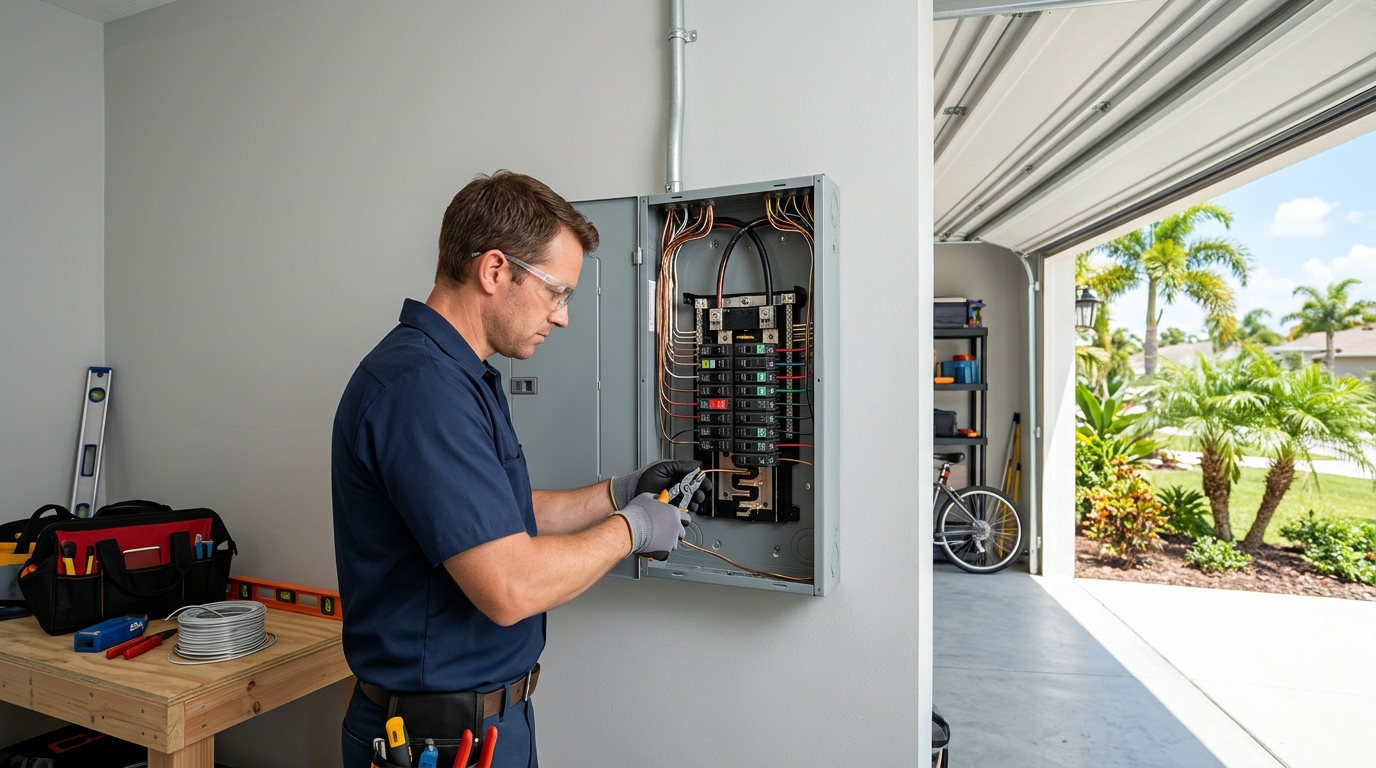
TL;DR: Subpanel installation cost in Sarasota runs about $800 to $2,500 for a basic 60 to 100 amp subpanel, and $2,000 to $4,500 or more for a 150 to 200 amp subpanel feeding a detached garage, dock, or guest casita. Siesta Key homes near salt water need a corrosion resistant, NEMA 4X rated enclosure for any outdoor or dock mounted subpanel. Call (941) 799-2279 for a free estimate before you add an EV charger, generator, or pool equipment circuit.
Subpanel installation cost in Sarasota depends on amperage, distance from the main panel, and whether the subpanel sits indoors or outside near salt air. A basic 60 to 100 amp subpanel for a workshop or home addition typically runs $800 to $2,500 installed. A larger 150 to 200 amp subpanel feeding a detached garage, dock, or guest house can run $2,000 to $4,500 or more once trenching, permits, and a weatherproof enclosure enter the picture.
Salt air changes the math here in a way mainland installers often miss. A subpanel mounted outdoors, on a dock pedestal, or near a pool pump needs an enclosure and hardware built to handle salt laden humidity for years, not just pass inspection once.
This guide breaks down what drives subpanel installation cost in Sarasota, when a subpanel makes more sense than a full panel upgrade, and why the right enclosure rating matters here more than almost anywhere else in Florida.
How Much Does Subpanel Installation Cost in Sarasota?
A basic 60 to 100 amp subpanel installed indoors costs about $800 to $2,500 in Sarasota County, based on national labor and materials averages from Homewyse adjusted for local rates. A larger 150 to 200 amp subpanel, or one needing a long conduit run, typically costs $2,000 to $4,500 or more.
Several factors push the price up or down:
Amperage and breaker space. A small 60 amp subpanel for a workshop costs far less than a 200 amp subpanel sized to run a guest casita’s lighting, outlets, and an EV charger together.
Distance from the main panel. Every extra foot of conduit and feeder cable adds cost, especially when the run crosses a driveway, pool deck, or seawall and needs to be trenched.
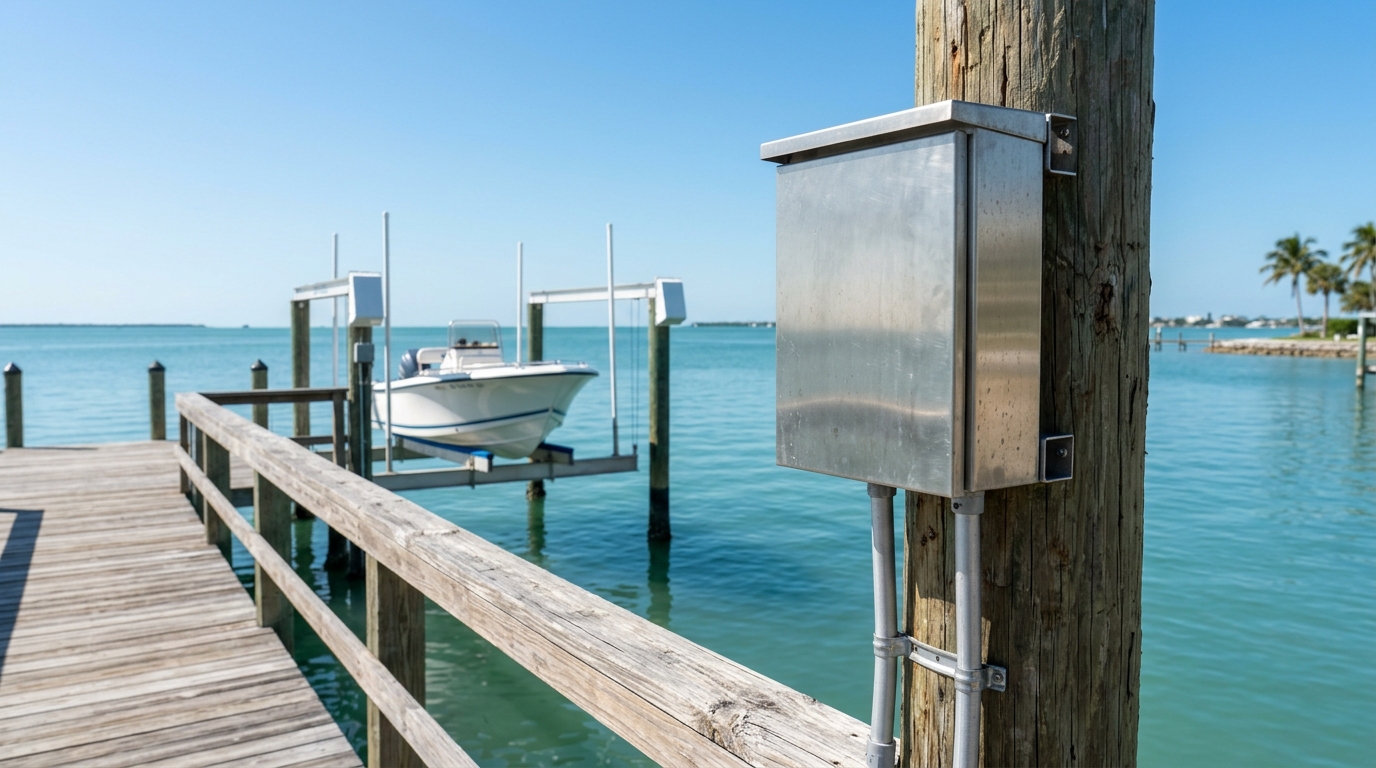
Indoor versus outdoor and dock mounted locations. An outdoor or dock pedestal subpanel on Siesta Key needs a NEMA 4X rated, corrosion resistant enclosure rather than a standard indoor load center.
Permits and inspection. Sarasota County requires a permit and inspection for subpanel work under the current 2020 NEC and 2023 Florida Building Code, 8th Edition, which adds a modest line item to the total.
The table below gives a general range for planning. Every property is different, so a firm number requires an on site look at your main panel and the run to the new subpanel location.
| Subpanel Type | Typical Cost Range |
|---|---|
| 60 to 100 amp, indoor, short run | $800 to $2,500 |
| 100 to 150 amp, detached garage or workshop | $1,800 to $3,500 |
| 150 to 200 amp, dock, guest casita, or pool house | $2,000 to $4,500+ |
| Upgrade to NEMA 4X marine grade enclosure | Add $200 to $600 |
What Is an Electrical Subpanel and Why Would a Siesta Key Home Need One?
A subpanel is a smaller breaker panel fed by a single large circuit from your main electrical panel, giving a detached structure or a high demand area its own set of breakers. Instead of running a separate long circuit back to the main panel for every new outlet, an electrician runs one feeder to the subpanel and splits power out locally.
Siesta Key and Sarasota County homeowners usually add a subpanel for one of a few reasons. A detached garage, workshop, or guest casita needs its own lighting and outlet circuits. A pool equipment pad or dock needs power close to the water without a dangerously long branch circuit. An EV charger, generator transfer switch, or a kitchen addition pushes an older main panel past its available capacity.
A subpanel also isolates problems. If a breaker trips repeatedly in a detached structure, you can troubleshoot it at the subpanel instead of walking back to the main panel.
How Salt Air Affects Outdoor and Dock Subpanels on Siesta Key
A subpanel installed outdoors, on a dock, or near a pool on Siesta Key sits in one of the harshest corrosion environments an electrician will wire. Salt laden air carries sodium chloride particles that settle on exposed metal, and that salt film pulls moisture out of the humid Gulf Coast air even on a dry looking day, keeping terminals, lugs, and breaker contacts damp far longer than a standard enclosure is built to handle.
Enclosure rating is the first line of defense, and it is also where installers cut corners. A standard NEMA 3R enclosure is rated for rain and snow, but NEMA ratings explained by Electrical Power and Control show it carries no corrosion resistance rating at all. A NEMA 4X enclosure, built from stainless steel or a non metallic composite, is rated for salt spray and chemical exposure, the standard the Siesta Key Standard calls for on any dock, pool, or exterior subpanel install.
Beyond the enclosure, the hardware matters too. Stainless steel mounting screws, dielectric grease on lugs and terminals, and sealed cable entry fittings all slow the corrosion clock. A subpanel built this way costs a little more up front, but it avoids the overheating, nuisance tripping, and premature breaker failure that a standard inland grade panel develops within a few storm seasons on a barrier island property.
What Size Subpanel Do You Need: 60 Amp vs 100 Amp vs 200 Amp?
Most workshops, small additions, and single appliance circuits need only a 60 amp subpanel, while a detached garage, dock, or guest casita with multiple circuits usually needs 100 amp or more, and a subpanel supporting a generator transfer switch, EV charger, and pool equipment together often needs the full 200 amp.
A 60 amp subpanel typically covers lighting, a few outlets, and maybe one appliance circuit. It is the right size for a small workshop or a single room addition with modest electrical needs.
A 100 amp subpanel handles a detached garage, a dock with lighting and a boat lift, or a guest casita with normal household circuits. This size gives enough headroom for a few future additions without another upgrade.
A 150 to 200 amp subpanel fits a property running several demanding loads from one location: an EV charger, pool equipment, and a guest house or pool house together. Your electrician should run a load calculation on the main panel and the new subpanel together, since an undersized main service can bottleneck even a correctly sized subpanel.
Do You Need a Permit for a Subpanel in Sarasota County?
Yes, Sarasota County requires an electrical permit and inspection for subpanel installation. The county enforces the 2020 National Electrical Code under the 2023 Florida Building Code, 8th Edition, and a subpanel counts as new electrical equipment, not a simple repair.
Skipping the permit is a real risk on Siesta Key. An unpermitted subpanel can surface during a sale, an insurance renewal, or a four point inspection, and an insurer can treat unpermitted work the same way they treat aging wiring: a reason to decline or non renew a policy. A licensed electrician pulls the permit and documents the work so it holds up at closing.
The feeder also has its own grounding and bonding rules. NEC coverage of feeders to a subpanel or detached structure requires a dedicated equipment grounding conductor run with the feeder, and it warns against bonding neutral to ground at the subpanel, since that creates a parallel neutral path that can send stray current onto metal piping. This is exactly the kind of detail a permitted, inspected job catches early.
Subpanel vs a Full Panel Upgrade: Which One Fixes Your Problem?
A subpanel fixes a capacity or distance problem for a specific area of your property, while a full panel upgrade fixes an aging, undersized, or unsafe main panel that cannot support more load anywhere in the home. The two solve different problems, and a good electrician checks both before recommending either one.
If your main panel still has open breaker slots and enough capacity, but a detached structure needs power far from the panel, a subpanel is usually the right call. If your main panel is already full or cannot support the load anywhere in the house, a full panel upgrade comes first, sometimes followed by a subpanel once the main panel has room.
Several warning signs point toward a main panel upgrade rather than a subpanel: frequent breaker trips across the whole house, a panel brand with a known failure history, or a panel already at its rated capacity. An electrician should check main panel capacity first, every time, before pricing a subpanel.
Where Siesta Key Homeowners Use Subpanels Most
Siesta Key and Sarasota County properties tend to need subpanels for a few specific, repeat situations tied to coastal and waterfront living.
EV charger circuits in a detached garage. A Level 2 EV charger installed in a detached garage or carport almost always needs its own subpanel rather than one long dedicated circuit.
Dock and boat lift power. A dock or boat lift needs lighting and lift power close to the water, and marina wiring rules favor a properly rated subpanel over one long branch circuit across a seawall.
Generator critical loads panels. A generator interlock or transfer switch setup often uses a dedicated subpanel to isolate the circuits that stay powered during an outage.
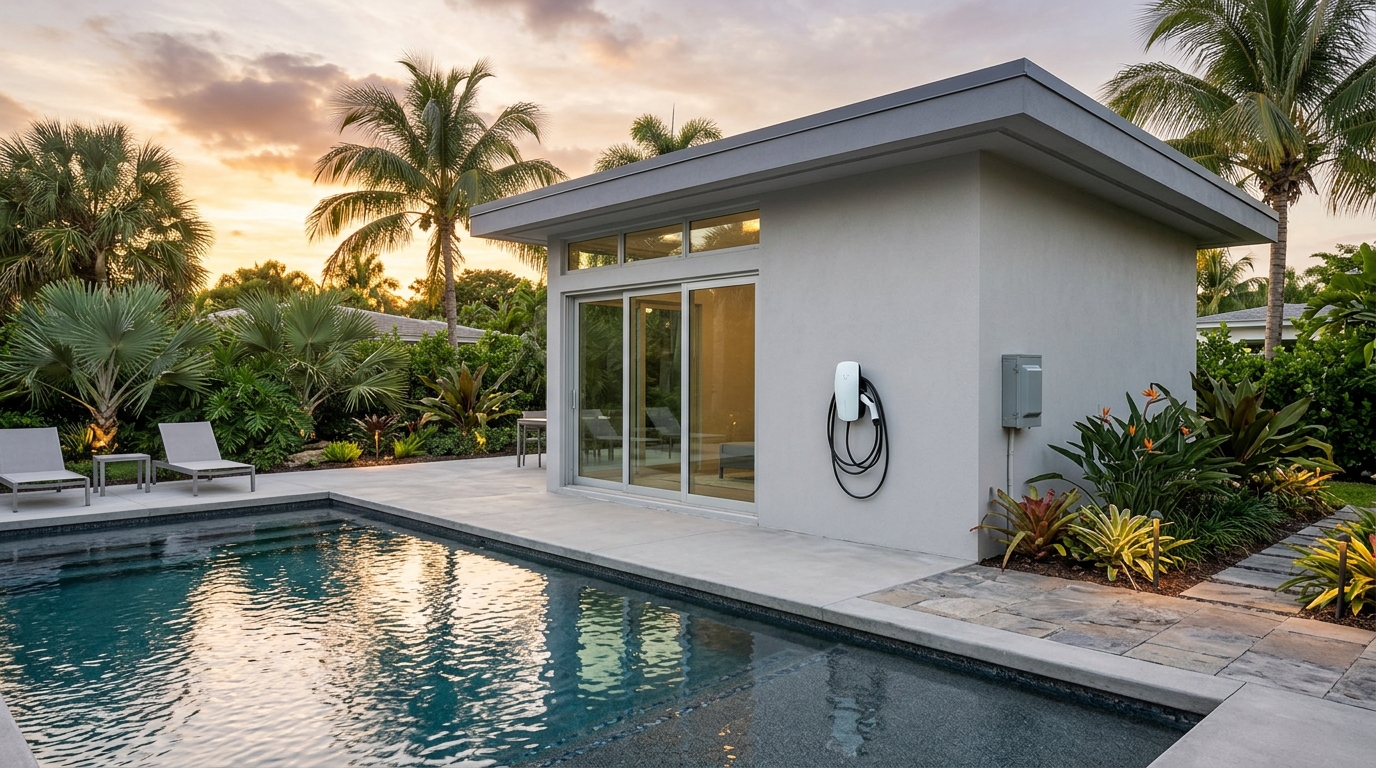
Guest casitas and pool houses. A detached guest casita or pool house needs its own lighting and outlet circuits, and a subpanel is usually more cost effective than running many individual circuits back to the main house.
Luxury waterfront additions. Larger waterfront properties adding an outdoor kitchen or an expanded dock and boat house need a subpanel sized for real future growth, not just today’s load.
Protect Your Investment With a Subpanel Built for Siesta Key
Subpanel installation cost in Sarasota depends on amperage, distance, and location, but on a barrier island the enclosure rating and hardware matter just as much as the price. A correctly permitted, marine grade subpanel protects a detached garage, dock, guest casita, or pool equipment pad for years, while a standard inland grade panel can start failing within a few storm seasons.
Three things to remember before adding any subpanel on Siesta Key: confirm your main panel has the capacity, choose a NEMA 4X enclosure for any outdoor or dock location, and pull the permit so the work holds up at insurance renewal.
Hurricane season runs through November, and a subpanel feeding a generator is not the project to rush or skip permitting on. Call Siesta Key Electric at (941) 799-2279 for a free estimate, sized and built to the Siesta Key Standard.
Frequently Asked Questions
How much does it cost to add a subpanel to an existing house in Sarasota?
Most homeowners pay $800 to $2,500 for a basic 60 to 100 amp subpanel, and $2,000 to $4,500 or more for a larger subpanel feeding a detached structure, based on Homewyse national cost data adjusted for Sarasota County permit and labor rates. The exact cost depends on amperage, distance from the main panel, and whether the location is indoors or exposed to salt air.
Can I add a subpanel without upgrading my main panel?
Yes, as long as your main panel has enough unused capacity and open breaker slots to safely feed the new subpanel. An electrician runs a load calculation first, since an undersized or already full main panel usually needs a panel upgrade before it can support a new subpanel.
Does a subpanel on a dock or outdoors need a special enclosure?
Yes, a dock or outdoor subpanel on Siesta Key should use a NEMA 4X rated enclosure built from stainless steel or a corrosion resistant composite. A standard NEMA 3R enclosure handles rain but has no corrosion resistance rating, which is not enough protection against salt air.
Do I need a permit to install a subpanel in Sarasota County?
Yes, Sarasota County requires an electrical permit and inspection for subpanel installation under the 2020 NEC and 2023 Florida Building Code. Skipping the permit can create problems later during a home sale, insurance renewal, or four point inspection.
How long does subpanel installation take?
A straightforward indoor subpanel with a short feeder run usually takes a single day. A subpanel requiring trenching to a detached garage, dock, or guest casita can take one to three days, depending on distance and the county inspection schedule.
Need a licensed electrician on Siesta Key? Siesta Key Electric handles home electrical work and commercial electrical service across Sarasota County. Call (941) 799-2279 for a free estimate.