
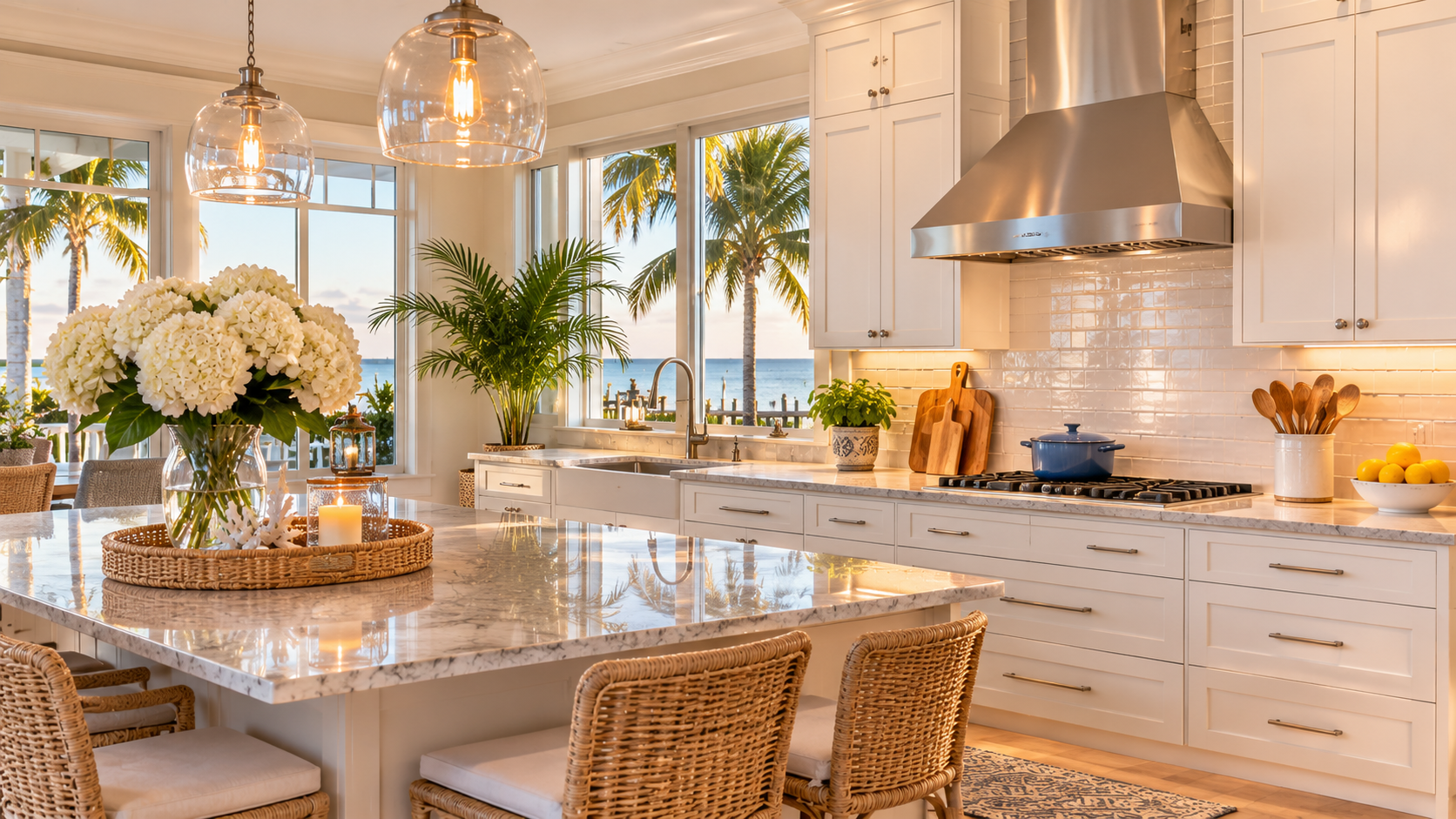
TL;DR: Range hood installation cost in Sarasota runs from about 300 to 2,500 dollars depending on the hood type and whether a new dedicated circuit is needed. Most homes need a 15 to 20 amp circuit, GFCI protected outlets, and a county permit if new wiring goes in. Salt air and kitchen humidity wear out range hood motors faster on Siesta Key than inland, so corrosion resistant parts matter. Call Siesta Key Electric at (941) 799-2279 for a free estimate before you buy a hood that your current wiring cannot support.
Range hood installation cost in Sarasota depends on more than the price tag on the hood itself. A new vent hood often needs its own circuit, a GFCI protected outlet, and sometimes a permit before an electrician can even mount the bracket. Skip that step and you risk a tripped breaker, a failed inspection, or a hood that pulls more power than your kitchen wiring can safely deliver.
Siesta Key and Sarasota kitchens face a problem most mainland installers never think about. Salt air drifts in through open windows and lanai doors for most of the year, and it settles into motor housings and electrical connections. A range hood that would last fifteen years in Ohio can start failing in five near the Gulf. Getting the wiring right the first time, with parts built for this coastline, protects your kitchen investment.
This guide breaks down what a new range hood actually costs to wire in Sarasota, what the electrical code requires, and when salt air changes the plan.
How Much Does Range Hood Installation Cost in Sarasota?
Range hood installation cost in Sarasota typically runs 300 to 2,500 dollars for the electrical and mounting work alone, not counting the hood itself. A simple under cabinet swap on an existing circuit sits at the low end. A new ducted hood that needs a dedicated circuit, duct run, and permit sits at the high end.
The price swings on three things: whether you already have a working circuit in the right spot, whether the hood needs new ductwork through the roof or wall, and whether your panel has room for one more breaker. A kitchen remodel that moves the range to a new wall almost always pushes the job toward the higher end, since new cable has to run through finished walls or cabinets.
| Job type | Typical electrical cost |
|---|---|
| Swap on existing circuit, same location | 300 to 600 dollars |
| New dedicated circuit, accessible attic or crawl space | 600 to 1,200 dollars |
| New circuit plus wall or ceiling fishing, finished kitchen | 1,200 to 2,000 dollars |
| New circuit, subpanel has no open slots | 2,000 to 2,500 dollars |
These figures cover licensed electrical work only. Carpentry, ductwork, and the hood unit itself are priced separately by the installer or contractor doing that part of the job. For a broader look at how circuit work is priced for other kitchen appliances, see our appliance circuit cost guide.
What Electrical Work Does a New Range Hood Need?
Most range hoods draw 5 to 7 amps and run safely on a 15 to 20 amp circuit, according to Proline Range Hoods. The outlet or hardwired connection also needs to sit on a circuit sized for the hood’s full load, including the light and any built in heat lamp.
A plug in hood can often share a circuit with a microwave or other small kitchen appliance if the combined draw stays well under the breaker rating. A hardwired hood with a larger motor, especially a high powered island or commercial style unit, usually needs its own circuit so it never competes with the toaster or coffee maker for amperage. Your electrician checks the hood’s nameplate rating against the panel before running any new wire, the same step we walk through on our appliance circuit installation page.
An overloaded shared circuit is one of the most common appliance circuit problems we see in older Sarasota kitchens, so it is worth ruling out before adding one more draw to it.
Every kitchen receptacle in a Sarasota home, including any outlet that feeds a plug in range hood, falls under the same rule: ground fault protection for every 125 to 250 volt receptacle up to 50 amps in the kitchen, according to EC&M’s breakdown of current kitchen code requirements. That GFCI protection catches a ground fault before it reaches you, which matters even more in a humid Gulf Coast kitchen where moisture collects faster than it does inland.
Does a Range Hood Need a Dedicated Circuit?
A range hood does not always need its own dedicated circuit, but a licensed electrician recommends one for any hood with a motor over about 300 watts or any hood that also runs heat lamps. Proline Range Hoods recommends a dedicated 20 amp breaker for safety, even though code does not always force that choice.
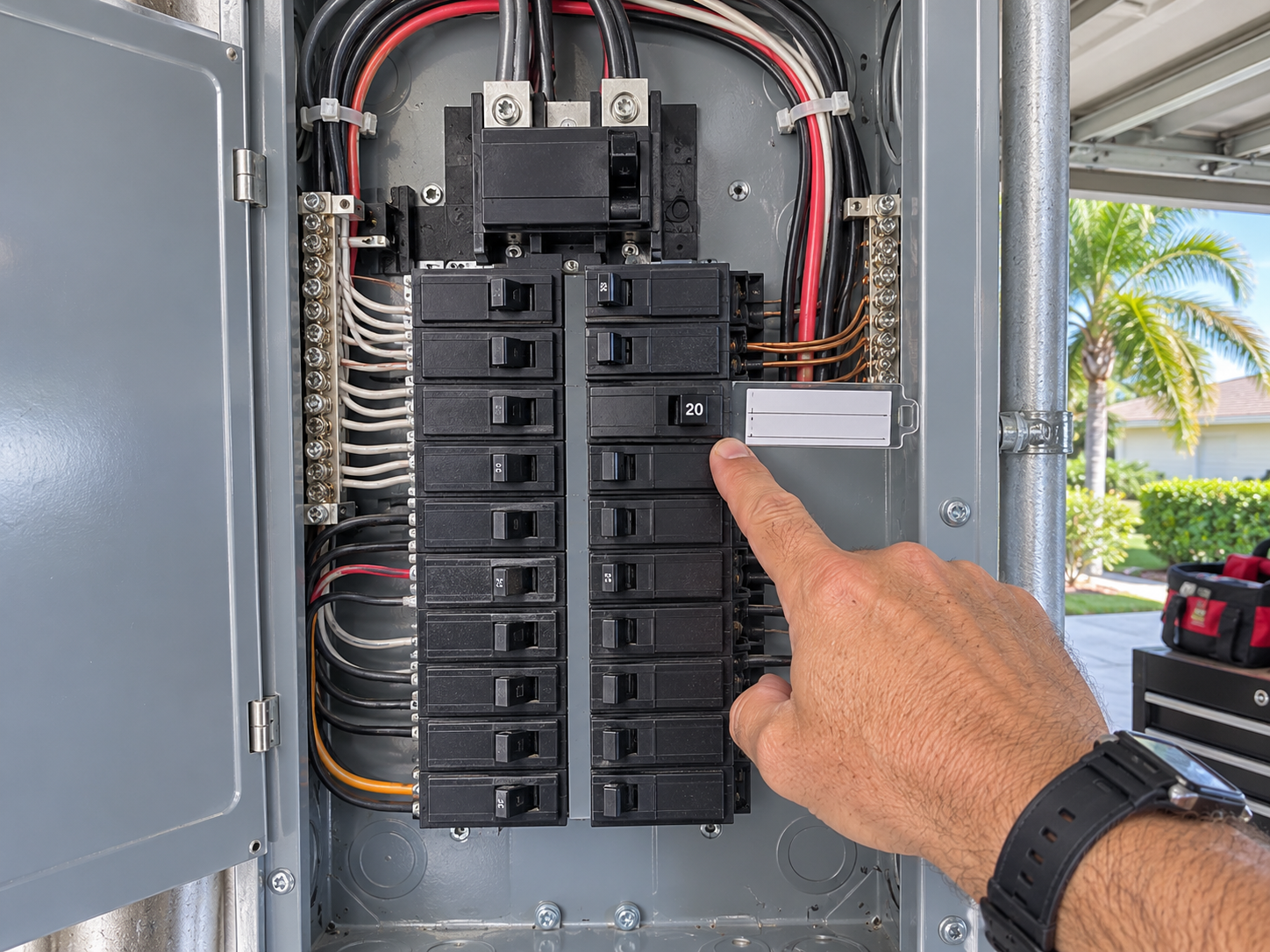
A dedicated circuit protects the hood motor from voltage dips caused by other kitchen appliances cycling on and off. It also means a tripped microwave breaker will not shut off your exhaust fan mid cook, which matters most during a hot Florida summer. Your electrician checks the hood’s manual first, since manufacturers sometimes require a dedicated circuit to keep the warranty valid.
Why Salt Air and Kitchen Humidity Shorten a Range Hood’s Life on Siesta Key
A range hood on Siesta Key works harder than the same unit forty miles inland. Salt laden air moves through open windows, screened lanais, and HVAC intakes for most of the year, and that salt settles on motor windings, control boards, and the metal contacts inside wall switches and outlets near the kitchen. Combine that with the humidity a Gulf Coast kitchen generates during normal cooking, and standard grade electrical components corrode years ahead of their rated lifespan.
Siesta Key Electric uses marine grade wiring connectors, corrosion resistant outlet boxes, and sealed junctions on every kitchen circuit installed near an exterior wall or an open floor plan that connects to a lanai. This is the same approach detailed on our marine grade electrical installation page, applied to the kitchen instead of the dock or pool equipment pad. A range hood circuit built this way keeps working years after a standard inland installation would start tripping or failing.
When Do You Need a Permit for a Range Hood Installation in Sarasota?
Sarasota requires an electrical permit any time a new circuit or subpanel is added, which covers most range hood installations that need dedicated wiring. PermitMint’s guide to Sarasota electrical permits lists a typical permit fee of 50 to 200 dollars and a review timeline of about one week, under the Florida Building Code, 8th Edition.
A simple swap that reuses an existing circuit in the same location may not need a new permit, since replacing equipment at an existing outlet is treated differently than adding one. Any job that involves new wire, a new breaker, or moving the circuit to a different wall should be confirmed with Sarasota’s Development Services office before work starts. Your electrician pulls the permit as part of the job on any installation that needs one.
What Is Makeup Air and When Does Your Kitchen Need It?
A range hood exhausting more than 400 cubic feet per minute needs a makeup air system under Section M1503.4 of the residential code Florida’s building code is built on, according to Fantech’s explanation of makeup air requirements. Makeup air replaces the volume of air the hood pulls out of the house, so the kitchen does not run negative pressure against the rest of the home.
This matters more on Siesta Key than inland. A kitchen running negative pressure pulls replacement air from wherever it can find it, including gaps around windows and doors facing the Gulf. During humid months, that pulled in air can carry enough moisture to feed mold growth inside walls and cabinets. A properly sized makeup air damper, installed by an electrician who understands the ductwork side of the job, keeps a high powered hood from working against your home’s humidity control.
Range Hood Installation Cost by Type and Venting Style
The hood style you choose changes both the installation labor and the electrical scope. A recirculating hood with a charcoal filter needs no ductwork and usually the simplest wiring, since it just vents filtered air back into the kitchen. A fully ducted hood that vents to the exterior needs ductwork through a wall, ceiling, or roof, which usually means more labor and sometimes a longer electrical run to reach the new location.
Under cabinet hoods are the least expensive to wire, since they sit close to an existing outlet in most kitchens. Wall mount and island hoods often cost more because they need new cable runs through finished surfaces or across an open ceiling, especially in a kitchen that was not originally designed around a vent hood. A kitchen remodel that relocates the range to an island almost always needs new circuits for the hood, the cooktop, and sometimes a disposal, which is the kind of multi circuit work our guide to electrical work in kitchen remodels covers in more detail.
Hire a Licensed Sarasota Electrician for Your Range Hood Wiring
Range hood installation cost in Sarasota comes down to three things: whether you already have a usable circuit, whether the hood needs a permit, and how much salt air and humidity your kitchen is exposed to. A hood wired with standard parts on an exterior facing kitchen wall on Siesta Key will not last as long as one wired with corrosion resistant components built for this coastline.
Siesta Key Electric handles the full job: sizing the circuit to your hood’s nameplate rating, pulling the permit when one is required, and using marine grade materials on any kitchen circuit exposed to Gulf Coast air. Our residential electrical services cover every step from the panel to the outlet. Call (941) 799-2279 for a free estimate before you buy a new range hood, so you know exactly what the wiring side of the job will cost.
Frequently Asked Questions
Can I install a range hood myself without an electrician?
You can mount some plug in hoods yourself if an outlet already exists in the right spot. Any hood that needs a new circuit, a hardwired connection, or work inside your electrical panel should go to a licensed electrician, both for safety and because Sarasota requires a permit for new circuit work under the Florida Building Code.
What size breaker does a range hood need?
Most range hoods need a 15 to 20 amp breaker, since the hood itself typically draws only 5 to 7 amps, according to Proline Range Hoods. A larger commercial style or island hood with a bigger motor may need a higher rated circuit, which your electrician confirms against the hood’s nameplate.
Does my range hood outlet need GFCI protection?
Yes. Every kitchen receptacle rated 125 to 250 volts up to 50 amps needs ground fault protection, which covers any outlet feeding a plug in range hood, according to EC&M’s summary of current kitchen electrical code. Our guide to GFCI outlets explains how this protection works.
Why do range hoods fail faster on Siesta Key than inland?
Salt laden Gulf air corrodes motor windings, control boards, and electrical contacts faster than it does forty miles inland, especially in a kitchen connected to an open lanai. Standard grade parts corrode years ahead of schedule, while marine grade wiring and sealed connections hold up far longer in this environment.
Do I need a permit to replace an old range hood with a new one?
Not always. Replacing a hood at an existing outlet in the same location is often treated as equipment replacement rather than new wiring, so it may not need a permit, according to PermitMint’s Sarasota permit guide. Adding a new circuit, moving the hood’s location, or installing a hardwired unit where none existed usually does require one.
Related reading: Planning more ventilation work? See our guide to whole house fan installation cost in Sarasota.
Need a licensed electrician on Siesta Key? Siesta Key Electric handles home electrical work and commercial electrical service across Sarasota County. Call (941) 799-2279 for a free estimate.