
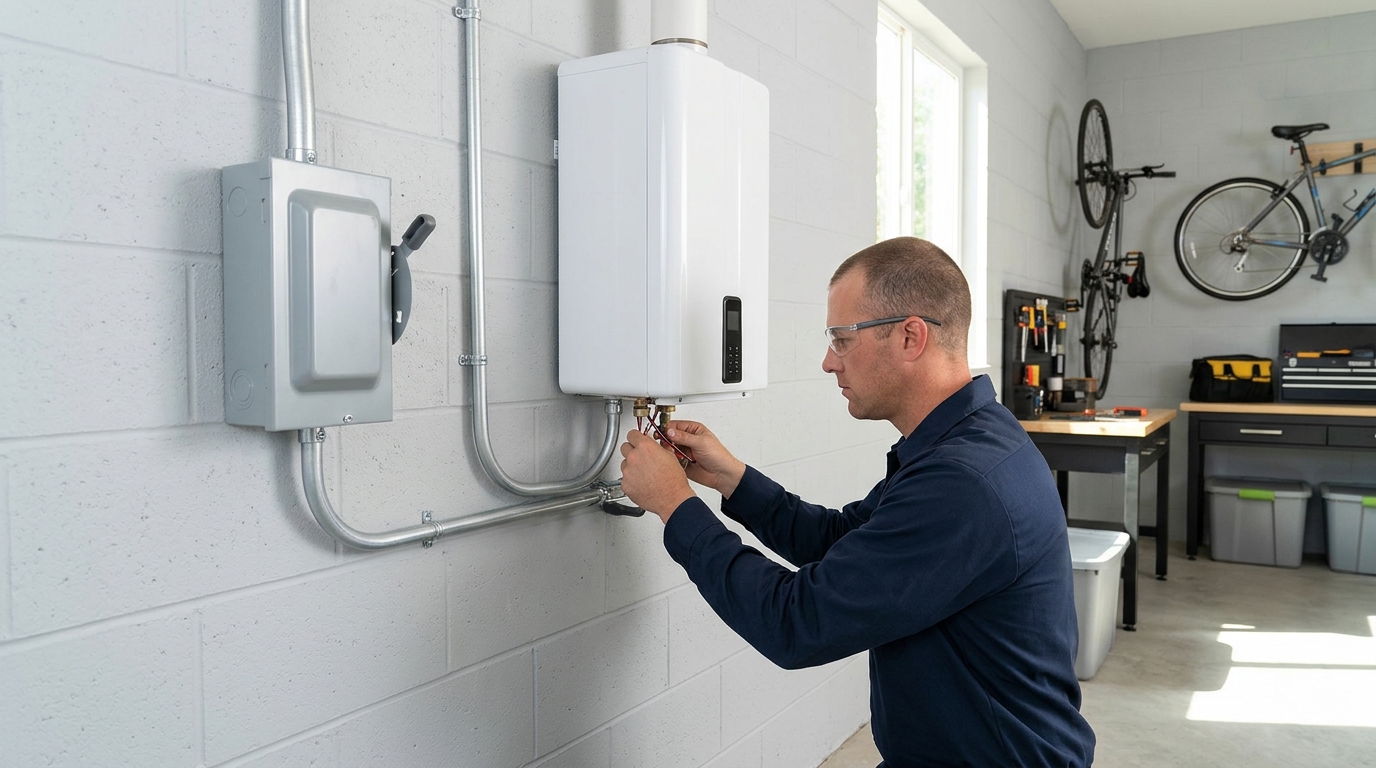
TL;DR: Tankless water heater electrical requirements depend on fuel type and unit size. A gas unit needs only a small control circuit, while an electric unit needs one or more dedicated 240 volt circuits, often 40 to 120 amps total, plus a nearby disconnect. Siesta Key and Sarasota homes also need a panel load check and a corrosion resistant disconnect enclosure because of salt air. Call Siesta Key Electric at (941) 799-2279 for a free estimate before you buy a unit.
Tankless water heater electrical requirements surprise a lot of Sarasota homeowners. Many people shop for a tankless unit expecting a simple swap for their old tank. The water side of the swap is often easy. The electrical side is where the project can stall.
An electric tankless water heater does not sip power the way a tank style heater does. It heats water instantly, on demand, which means it pulls a large amount of current the moment someone turns on a faucet. That current has to come from somewhere, and for most Sarasota homes, the existing panel was never built with that load in mind.
Add in Siesta Key’s salt air and humidity, and the electrical side gets one more layer. The disconnect box and wiring near a water heater need to handle a coastal environment, not just an inland one. This guide walks through the amperage, panel capacity, permit, and coastal protection questions a homeowner should answer before buying a unit.
What Are the Electrical Requirements for a Tankless Water Heater?
A gas tankless water heater typically needs only a standard 120 volt circuit to power its igniter, fan, and control board. An electric tankless water heater needs one or more dedicated 240 volt circuits sized to the unit, plus a disconnecting means installed within sight of the heater or lockable in the open position.
The exact amperage, wire gauge, and number of circuits depend entirely on the unit’s output rating in kilowatts. A manufacturer’s installation manual always sets the final number, since electric tankless water heaters have no single universal breaker or wire size across brands and models.
This is also the first fork in the road for a Sarasota homeowner. Gas and electric units ask a licensed electrician to do very different work, and that difference changes both the project cost and the timeline.
Gas or Electric Tankless Water Heater: Which Needs Less Electrical Work?
A gas tankless water heater needs far less electrical work than an electric model. Gas units use the home’s existing gas line for heat and only need a small 120 volt circuit for electronic ignition, a fan, and a control board. An electric unit needs a major new circuit, and sometimes several.
That gap exists because gas does the actual water heating in a gas unit. The electrical system only needs to run small components. An electric unit has to generate all of its heat from electricity alone, and heating water instantly takes a lot of power.
For many older Sarasota homes already running close to their panel’s limit, this difference decides which fuel type makes sense. A homeowner who wants electric but has an aging 100 amp panel may need a panel upgrade before the water heater installation even starts. A homeowner who already has gas service, or who is comparing against a standard electric water heater installation, often finds that path is the shorter, less expensive one.
Either way, this decision belongs to a licensed electrician and the manufacturer’s spec sheet, not a guess based on the old tank heater’s wiring.
How Many Amps Does an Electric Tankless Water Heater Need?
An electric tankless water heater can need anywhere from about 40 amps for a small point of use model to well over 100 amps for a whole home unit. A common whole home model rated at 27 kilowatts needs roughly 113 amps at 240 volts, split across three dedicated 40 amp breakers.
That range is wide because electric tankless heaters come in very different sizes. A single bathroom unit asks for far less power than a unit meant to supply an entire house with hot water on demand. Manufacturer specification sheets show models needing anywhere from one 50 amp breaker and one 8 gauge conductor pair, up to three 40 amp breakers feeding three separate conductor sets for the largest whole home units.
A Siesta Key homeowner who wants a true whole home electric tankless system should plan for multiple dedicated circuits, not one. That is a meaningfully bigger ask of an electrical panel than most people expect walking into the decision.
Why Salt Air Changes Where Siesta Key Homes Put the Disconnect
Salt air and humidity speed up corrosion on any exposed electrical connection, and a tankless water heater disconnect is often mounted in exactly the kind of damp, lightly ventilated space where that corrosion happens fastest. Garages, laundry rooms, and utility closets near exterior walls all see more moisture on a barrier island than they would inland.
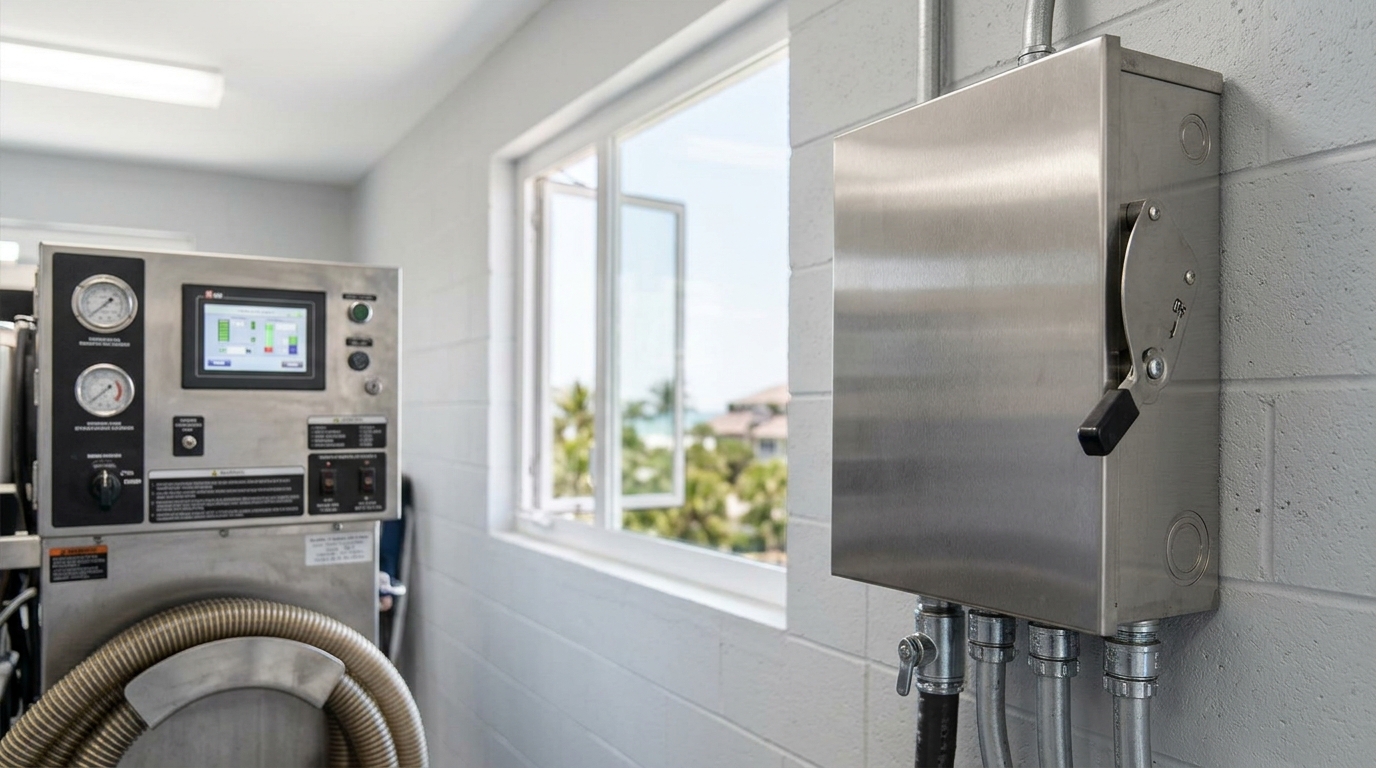
Siesta Key Electric treats the disconnect and junction boxes near a tankless water heater the same way it treats every exposed connection point on a coastal home: with corrosion resistant, marine grade hardware instead of standard indoor components. NEMA 4X rated enclosures are built from stainless steel or non metallic materials specifically to resist salt spray and chemical exposure, unlike a basic NEMA 1 indoor box that offers no real moisture protection at all.
This coastal detail is exactly the kind of thing that gets missed when a general contractor or an out of area electrician handles the installation. Our salt air pillar guide covers the broader pattern: sodium chloride particles accelerate corrosion on copper wiring and panel connections across a Siesta Key home, not just at the water heater. We apply the same marine grade installation standard to a tankless water heater’s disconnect that we use on every exposed connection point, since its high current draw only makes a corroded connection a bigger risk.
Does Your Electrical Panel Have Room for a Tankless Water Heater?
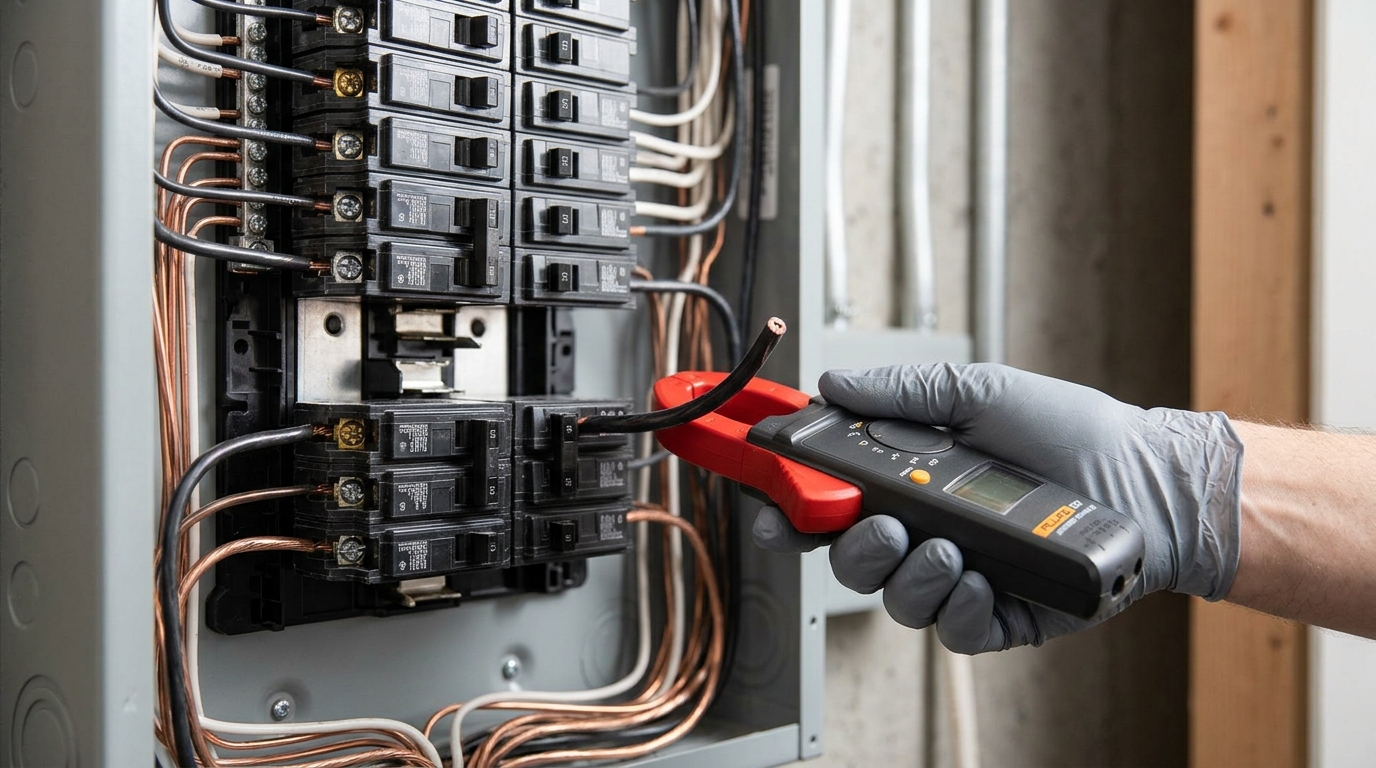
Most Sarasota homes with a 100 amp or larger panel can add a tankless water heater circuit without a full panel upgrade, but only after a licensed electrician runs a real load calculation. That calculation checks the home’s existing lighting, appliance, and HVAC loads against the panel’s total capacity before adding anything new.
A proper load calculation follows NEC 220.83, which gives an alternate method for existing homes that often avoids a full service upgrade by applying reduced demand factors to loads that already exist. When that math does not leave enough room, the options are a service upgrade or a demand metering study that confirms actual peak usage over 30 days.
Homes that already sit close to their panel’s limit, often older Siesta Key properties with a panel from decades ago, are the ones most likely to need an upgrade first. Our guide to the signs you need a panel upgrade and our panel upgrade cost guide both walk through what that project looks like and what it costs in Sarasota.
Do You Need a Permit to Add a Tankless Water Heater Circuit in Sarasota County?
Yes, adding a dedicated electrical circuit for a tankless water heater in Sarasota County requires an electrical permit. Sarasota County enforces the 2020 National Electrical Code under the 2023 Florida Building Code, 8th edition, for all electrical work, including new branch circuits for major appliances.
The code itself also sets a specific safety requirement at the water heater. NEC Article 422 requires a way to disconnect all ungrounded conductors to the appliance at the same time. For smaller appliances, the branch circuit breaker itself can sometimes serve as that disconnect. For a larger electric tankless unit, a separate disconnect switch mounted near the heater is the safer, clearer choice, and it is what our technicians install as standard practice.
Skipping the permit on this kind of work is a real risk, not just a paperwork issue. An unpermitted circuit can complicate a future home sale, a Florida four point insurance inspection, or an insurance claim if that circuit is ever involved in a fire.
What Does It Cost to Wire a Tankless Water Heater in Sarasota?
Wiring a tankless water heater in Sarasota typically runs from a few hundred dollars for a simple gas unit’s control circuit to well over a thousand dollars for a full electric whole home installation with new breakers, conductors, and a disconnect. A panel upgrade, if one is needed first, adds significantly more.
The biggest cost swings come from three factors: whether the unit is gas or electric, whether the existing panel has open breaker spaces and spare capacity, and how far the new circuit has to run from the panel to the water heater’s location. A point of use electric unit under a bathroom sink is a much smaller job than a whole home unit feeding every fixture in the house.
Every estimate from Siesta Key Electric accounts for the coastal hardware this job calls for on a barrier island property, since a cheaper inland quote often leaves that detail out entirely.
Protect Your Investment Before You Buy a Tankless Unit
Tankless water heater electrical requirements come down to three questions: how much power the unit actually needs, whether the existing panel has room for it, and whether every exposed connection can handle Siesta Key’s salt air and humidity. Skipping any one of those questions is how homeowners end up with a return trip and an extra bill.
Gas units ask the least of a home’s electrical system. Electric units, especially whole home models, ask the most, and that is exactly where a coastal specific installation matters most. Marine grade hardware and a proper disconnect protect the investment for years, not just for the first inspection.
Siesta Key Electric has handled this exact decision for homeowners across Siesta Key, Bird Key, St. Armands, and Greater Sarasota County. Call (941) 799-2279 for a free estimate before you buy a tankless unit, so the electrical side is confirmed before the water heater even arrives. During hurricane season, ask about pairing a new tankless circuit with a generator interlock kit review, since a whole home electric unit adds meaningfully to the load a backup generator needs to carry.
Frequently Asked Questions
What electrical requirements does a tankless water heater need?
A gas tankless water heater needs a small 120 volt circuit for its igniter and controls. An electric tankless water heater needs one or more dedicated 240 volt circuits sized to the unit’s kilowatt rating, plus a disconnect installed near the heater, per NEC Article 422.
How many amps does an electric tankless water heater draw?
It depends on the model. A small point of use unit can need as little as 40 amps, while a whole home unit can need over 100 amps split across multiple dedicated breakers. The manufacturer’s manual always sets the exact figure.
Do I need a bigger electrical panel for a tankless water heater?
Not always. A licensed electrician runs a load calculation under NEC 220.83 first. Many homes with a 100 amp or larger panel have enough spare capacity, but older or heavily loaded panels on Siesta Key often need an upgrade before adding a whole home electric unit.
Does salt air affect a tankless water heater’s electrical connections on Siesta Key?
Yes. Salt air and humidity speed up corrosion on any exposed connection, including the disconnect box near a tankless water heater. Siesta Key Electric uses NEMA 4X rated, corrosion resistant enclosures on these installations instead of standard indoor hardware.
Do I need a permit to install a tankless water heater circuit in Sarasota County?
Yes. Sarasota County requires an electrical permit for any new branch circuit, and all work must meet the 2020 NEC under the 2023 Florida Building Code, 8th edition. Skipping the permit can create problems at resale or during a four point insurance inspection.
Need a licensed electrician on Siesta Key? Siesta Key Electric handles home electrical work and commercial electrical service across Sarasota County. Call (941) 799-2279 for a free estimate.