
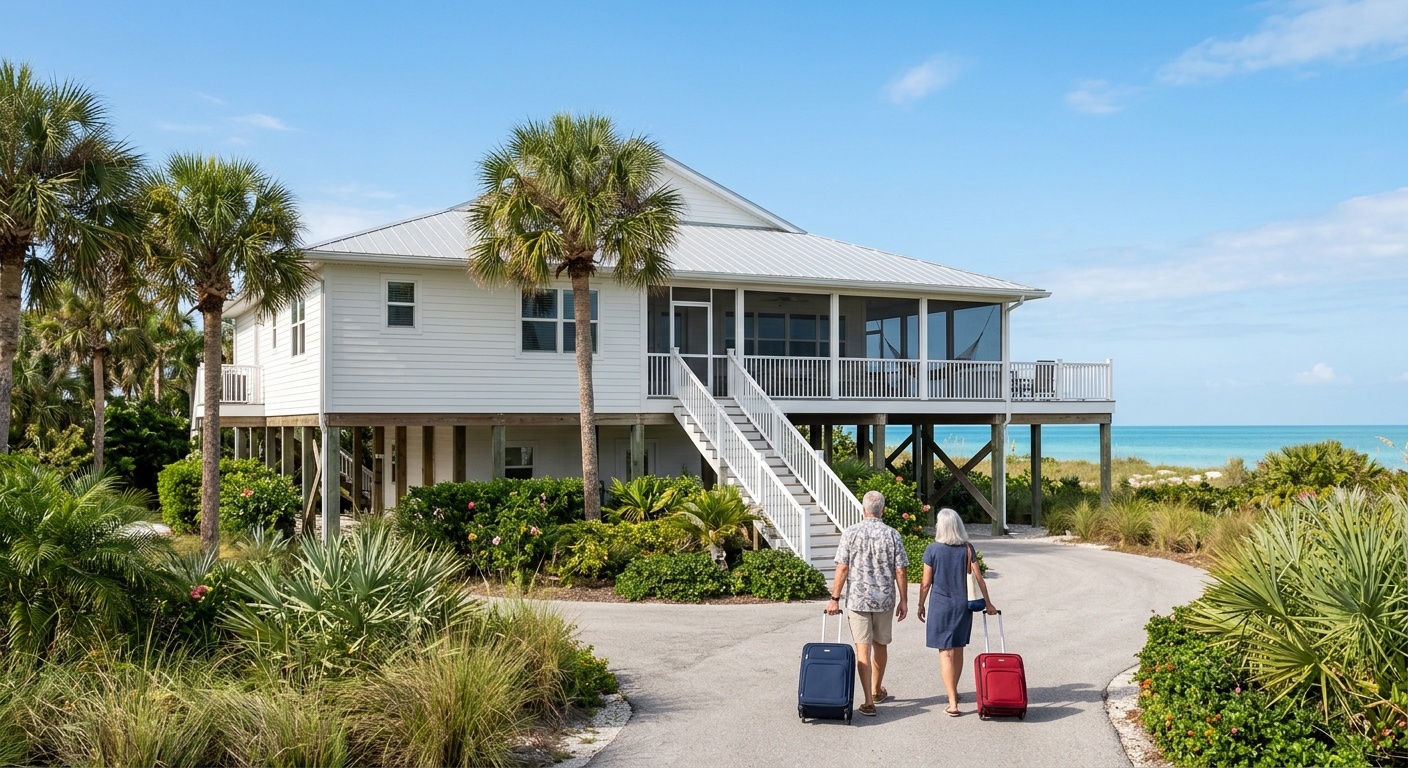
TL;DR: A snowbird home checklist for a Siesta Key property should start with the electrical system. Six months of salt air, humidity, lightning, and storm season can corrode panel connections, trip GFCI outlets, and quietly drain smoke alarms while the house sits closed. Work through the 12 checks below on arrival day. Stop and call an electrician if you smell burning or see water near the panel, and book a professional inspection if the home sat empty all summer.
Your snowbird home checklist probably covers the AC, the water heater, and the mail. On Siesta Key, the electrical system belongs at the top of that list. A barrier island home that sat closed from spring to fall spent the whole hurricane season breathing salt air and Gulf humidity, with nobody inside to notice a tripped breaker or a dead outlet.
Salt particles settle on panel terminals and outdoor outlets, and moisture turns them into a slow acting corrosion film. Florida is also the lightning capital of the United States, according to the National Weather Service in Miami, and a nearby strike can send a surge through an empty house.
Electrical distribution and lighting equipment caused an estimated 32,620 home fires a year from 2015 to 2019, according to NFPA research. Many electrical problems give warning signs first. The goal is to catch them before you fill the house with guests, laundry, and holiday lights.
This guide from Siesta Key Electric covers 12 electrical checks for returning snowbirds, the warning signs that mean stop, and what to do before you head north again in the spring.
What Should Snowbirds Check First When They Return to a Siesta Key Home?
Check the electrical panel before you switch anything on. Look for tripped breakers, rust or white crust on the panel door, scorch marks, and any burning or musty smell. If the panel looks wet or damaged, or you smell burning plastic, leave the main breaker off and call a licensed electrician before you restore power.
Use a flashlight, open the panel door only, and never remove the inner cover yourself. Note which breakers tripped, because a breaker that tripped during a summer storm can point to a damaged circuit.
Next, walk the house and use your nose. A faint electrical smell near outlets, fixtures, or the AC air handler is a reason to stop and call. A closed home also hides small leaks, so look for stains on ceilings near light fixtures and on walls near outlets.
The 12 Point Electrical Checklist for Returning Snowbirds
Work through these checks in order. Together they cover the parts of a coastal electrical system that a hot, empty summer hits hardest.
1. Inspect the Panel for Corrosion and Tripped Breakers
Salt air reaches inside panels through small gaps around the door and the service entrance. Look for green or white powder on visible metal and rust streaks on the door. Our guide on how salt air affects wiring explains why these connections loosen and overheat over time.
2. Test Every GFCI Outlet
Press TEST, confirm the power cuts off, then press RESET. The Consumer Product Safety Commission advises testing GFCIs at least once a month and after any power failure. If you want a refresher first, read our guide on how GFCI outlets work.
3. Test AFCI Breakers
Many newer Sarasota homes have arc fault breakers with a test button in the panel. Press each one, and it should trip right away. A breaker that won’t trip or won’t reset needs a professional look.
4. Test Smoke and Carbon Monoxide Alarms
Press the test button on every alarm. The U.S. Fire Administration recommends testing monthly and replacing the whole smoke alarm every 10 years. Working smoke alarms cut the risk of dying in a home fire in half, according to the NFPA.
Test carbon monoxide alarms too if the home has gas appliances or an attached garage.
5. Check Exterior and Lanai Outlets
Outdoor outlets take the most salt spray. Open each weatherproof cover and look for corrosion, cracked covers, or water inside the box. A cover that no longer seals lets moisture reach the GFCI behind it.
6. Turn On Dock, Pool Deck, and Landscape Lighting
Run every outdoor lighting circuit for at least an hour. Flickering, dead fixtures, or a tripping breaker often point to water in a fixture or a corroded connection. Fixtures near the water need marine grade hardware rated for wet locations.
7. Check the AC Disconnect and Dedicated Circuits
The outdoor AC disconnect box sits in full sun and salt air all summer. Look for rust on the box and make sure the cover still closes. If the AC trips its breaker on startup, shut it off and call for service instead of resetting it again and again.
8. Confirm Pool and Spa GFCI Protection and Bonding
Pool pumps, heaters, and spa equipment should run on GFCI protected circuits. Test the GFCI breakers or outlets for that equipment, and look for corrosion on the copper bonding wire where you can see it. Pool and spa wiring is a job for a licensed electrician, so report any damage instead of touching it.
9. Check the Surge Protector Status Light
Most whole home surge protectors have an indicator light that shows whether protection is still active. A protector can absorb one large lightning surge and stop working, which leaves the house exposed. Our page on whole home surge protection explains how these units work and when to replace them.
10. Test Run the Generator and Transfer Switch
Start a standby generator and let it run under load, or ask your service company to do it. Check the battery, look for corrosion on the enclosure, and confirm the transfer switch moves power over. Our generator maintenance checklist covers the full routine.
11. Look for Water Stains Near Outlets and Fixtures
Summer storms push rain into roofs, soffits, and window frames. Brown stains near a ceiling light or an outlet mean water may have reached the wiring. The National Electrical Manufacturers Association warns that electrical equipment exposed to water can be extremely hazardous if it is powered back on without an evaluation.
12. Reset Timers, Thermostats, and Smart Devices
Outages reset pool timers, irrigation clocks, and lighting timers. Smart thermostats and security systems may also need to reconnect to WiFi.
How Does a Summer of Salt Air and Humidity Affect an Empty Home’s Wiring?
A closed home traps warm, humid air, especially if the AC runs rarely. That moisture mixes with salt carried in from the Gulf and settles on terminals, breakers, and outlet contacts. The film corrodes and loosens connections, which raises resistance and creates heat. The damage builds quietly until a circuit fails or overheats.
This is why the Siesta Key Standard matters. Siesta Key Electric uses corrosion resistant components, marine grade hardware, and sealed connections built for barrier island conditions, not inland ones.
Owners can slow the process too. Keep the AC running at a moderate setting while you’re away so it keeps pulling moisture out of the air. Ask your property manager or a neighbor to open the house and run a quick check after major storms.
Should You Have an Electrician Inspect Your Home After Hurricane Season?
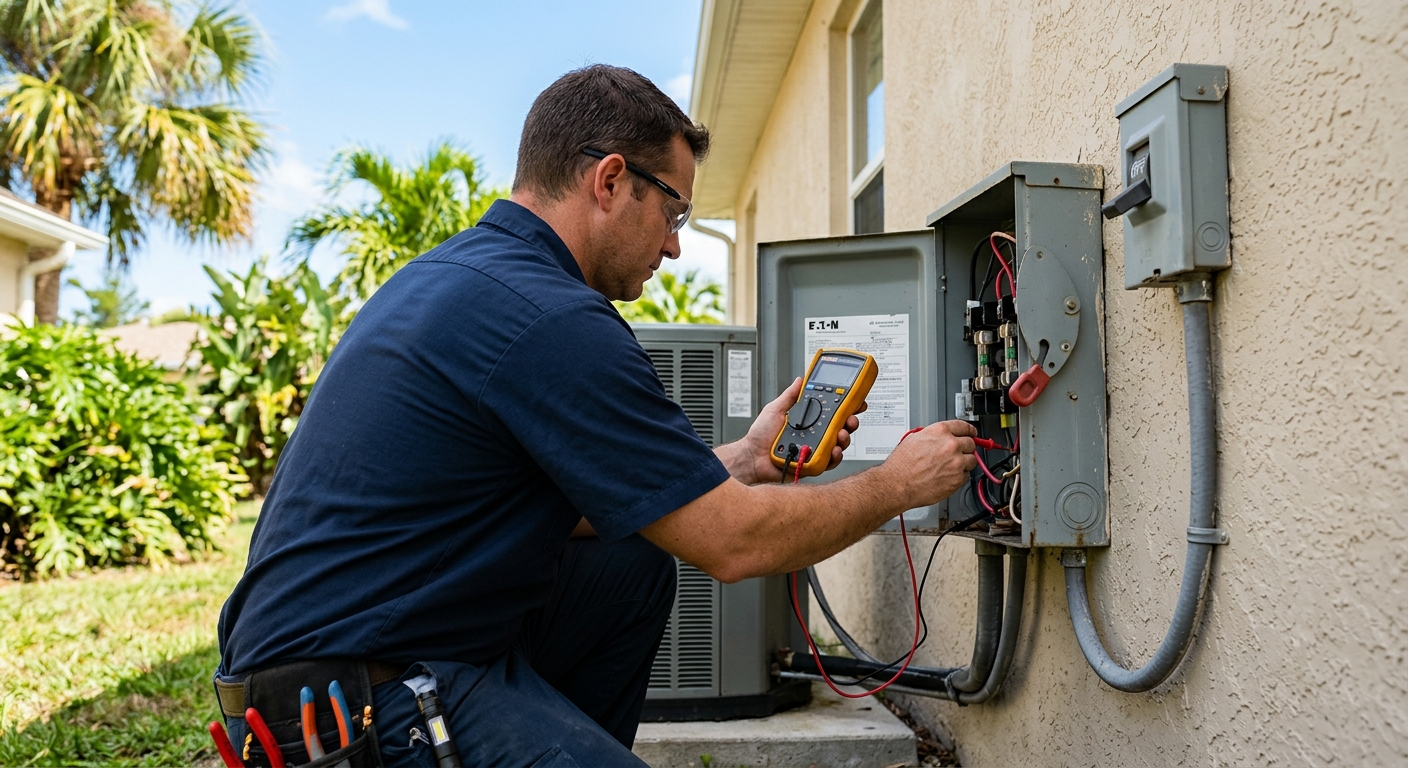
Yes, if the home sat empty through storm season. Atlantic hurricane season runs from June 1 to November 30, according to the National Hurricane Center. Lightning surges, wind driven rain, and long outages can damage wiring without leaving visible signs. A professional inspection catches loose connections and moisture damage before they cause a fire or a failed circuit.
An inspection makes the most sense if the house lost power for a long stretch, if water got inside, or if the panel is original to an older home. Siesta Key Electric checks the panel, grounding, GFCI and AFCI protection, outdoor circuits, and surge protection. You get a clear list of what needs attention and what can wait.
Repairs beyond a simple device swap may need a permit. The Sarasota County Building Division enforces the 2023 Florida Building Code, 8th Edition, and the 2020 National Electrical Code, so a licensed contractor should handle that work.
Which Warning Signs Mean You Should Stop and Call an Electrician?
Stop and call if you notice a burning smell, scorch marks, buzzing from the panel or an outlet, outlets or switch plates that feel warm, lights that flicker across several rooms, or a breaker that trips again right after you reset it. Water near the panel or inside an outlet box is also a reason to stop.
Don’t keep resetting a breaker that trips over and over. A breaker trips to protect a circuit, and forcing it back on can turn a small fault into a fire.
If you’re not sure whether something is urgent, call (941) 799-2279. Siesta Key Electric answers emergency calls on the same line.
Before You Head North Again: Closing Up Your Florida Home for Summer
A few electrical steps before you leave in spring protect the house through another storm season.
- Confirm a whole home surge protector is installed and its status light shows active protection.
- Schedule generator service, and set the generator to exercise weekly if your model supports it.
- Unplug electronics you won’t use, and leave the AC running to control humidity.
- Add smart leak sensors or a monitoring system so you hear about problems from out of state.
- Give a trusted neighbor or property manager a key and your electrician’s number.
How Siesta Key Electric Helps Seasonal and Out of State Owners
Siesta Key Electric works with seasonal owners who can’t be on the island when something goes wrong. We can coordinate access through your property manager or a key holder, send photos of what we find, and quote repairs before any work begins.
Property managers who oversee several homes can bundle seasonal checks into one visit. Learn more on our property manager electrical services page. You can also see the full range of residential electrical services we offer across Siesta Key, Bird Key, St. Armands, and Sarasota.
Get Your Siesta Key Home Ready for the Season
A summer away is hard on a coastal electrical system. Salt air and humidity corrode connections, storms knock out power and send surges through the wiring, and nobody is home to catch the warning signs.
Start with the panel, test every GFCI and smoke alarm, and walk the outdoor circuits before you settle in. If anything smells, sparks, or keeps tripping, stop and call a professional.
Hurricane season runs through November 30, so a post season inspection now protects your home for the rest of the year. Call Siesta Key Electric at (941) 799-2279 or request a free estimate to book your return season electrical check.
Frequently Asked Questions
How long can a Florida home sit empty before the electrical system needs an inspection?
There’s no fixed rule, but a home that sat closed through a full hurricane season is a good candidate. Six months of salt air, humidity, and storm outages can corrode connections without visible signs. Siesta Key Electric recommends a professional check after any summer away, and right away if the home lost power or took on water.
Should I turn off the main breaker when I leave Siesta Key for the summer?
Usually not. The AC needs power to control humidity, which protects the home from mold and corrosion. Many owners instead switch off circuits they won’t use, such as the water heater, and leave the AC, security system, and monitoring devices on. Ask an electrician to label your panel so you know which breakers are safe to switch off.
Why do GFCI outlets trip after a long absence?
Humidity and salt residue can build up inside outdoor and bathroom outlets, and a GFCI can read that as a ground fault. Power outages can also leave GFCIs tripped. The CPSC advises testing GFCIs after any power failure. If a GFCI won’t reset or trips again right away, have it checked.
Do I need to replace my smoke alarms when I return?
Only if they fail the test or are more than 10 years old. The U.S. Fire Administration recommends testing smoke alarms monthly and replacing the whole alarm every 10 years. Check the manufacture date printed on the back of each alarm.
How can I check an electrician’s license in Sarasota?
Florida electrical contractors are licensed through the Department of Business and Professional Regulation. You can look up any license on the DBPR license search. Siesta Key Electric technicians are licensed, insured, and background checked.