
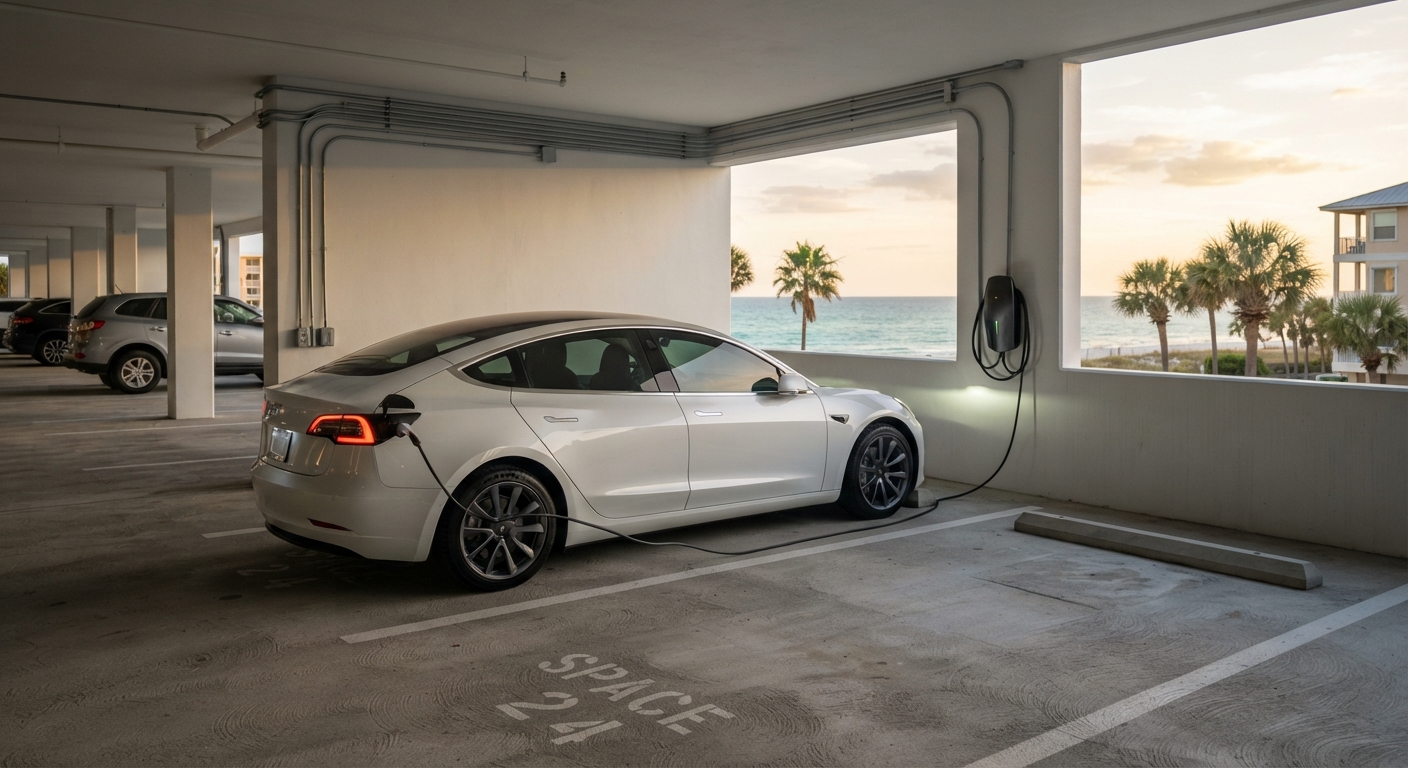
TL;DR: Florida law gives condo owners a real right to install an EV charger in their assigned parking space, and your association cannot say no outright. HOA homeowners on Siesta Key do not have that same dedicated statute, so approval runs through your community’s declaration instead. Either way, coastal exposure changes how the installation should be done. Call Siesta Key Electric at (941) 799-2279 for a free estimate on a condo or HOA compliant install.
EV charger installation for a condo or HOA property in Sarasota comes with a legal layer that a single family home installation does not. If you live in one of the high rise buildings along Siesta Key or Bird Key, you likely park in an assigned or limited common element space, and your association has a say in how a charger gets added there. The good news is that Florida law already answers most of the big questions for condo owners.
HOA communities work a little differently, and getting that distinction wrong is the most common mistake we see. This guide walks through what the law actually says, what your board can still require, and why a charger installed a few hundred feet from saltwater needs different materials than one in a mainland Sarasota garage.
Can a Florida Condo Association Deny Your EV Charger Request?
No. Florida Statute 718.113(9) says a condominium association cannot prohibit a unit owner from installing an EV charger in their designated parking space. This applies to a limited common element space assigned to your unit, and the protection covers the installation itself, not just the request to start one.
The law was written specifically because associations were slowing down or blocking chargers before this statute existed. Now the board’s role is to manage how the installation happens, not whether it happens at all. That is a meaningful difference for any Siesta Key condo owner who has been told to wait for a board vote.
What Restrictions Can Your Condo Board Still Require?
Your board can require a few specific things under the same statute. It can require a licensed and registered electrical contractor, proof of insurance naming the association as an additional insured, and reasonable architectural standards for how the equipment looks.
The board can also require you to pay for the electricity through a separate meter, cover any increase in the building’s insurance premium, and follow the same building codes every other electrical project in the community follows. None of these requirements can be so strict that they effectively block the installation or add unreasonable cost. A licensed electrician who has done this before, not the unit owner, should be the one submitting the application paperwork and code compliance details to the board.
The insurance requirement trips up more owners than any other part of this process. Naming the association as an additional insured usually means adding an endorsement to your homeowner or unit owner policy, which most insurance agents can process in a day or two once they know the coverage amount your board requires. Ask your board for that number before you request a quote, since guessing at it often means calling your insurer twice.
Does the Same Law Protect HOA Homeowners on Siesta Key?
Not in the same way. Florida Statute 720.3075, the law that governs homeowners associations, does not include a dedicated EV charger provision the way Chapter 718 does for condos. This is a distinction most articles on this topic get wrong, since they assume condo protections apply everywhere.
If you own a home in a Siesta Key HOA community rather than a condo unit, your right to install a charger comes from your community’s declaration and architectural review process instead of a specific statute. Most HOA boards will approve a well documented request from a licensed electrician without much friction, but you do not have the same automatic legal backstop a condo owner has. Submitting a clear, code compliant proposal up front is the best way to avoid delays.
How Salt Air and Coastal Exposure Change an EV Charger Installation
A charger installed in an open air carport or an uncovered garage on a barrier island faces conditions a mainland Sarasota installation never sees. Salt laden air corrodes standard conduit fittings, breaker terminals, and charger enclosures faster than most manufacturers account for in their warranties.
We install EV chargers using marine grade electrical hardware: sealed enclosures, stainless steel fasteners, and corrosion resistant conduit rated for coastal exposure. This follows the same approach we use across every exterior installation on Siesta Key, since salt air causes measurable damage to unprotected electrical components over time.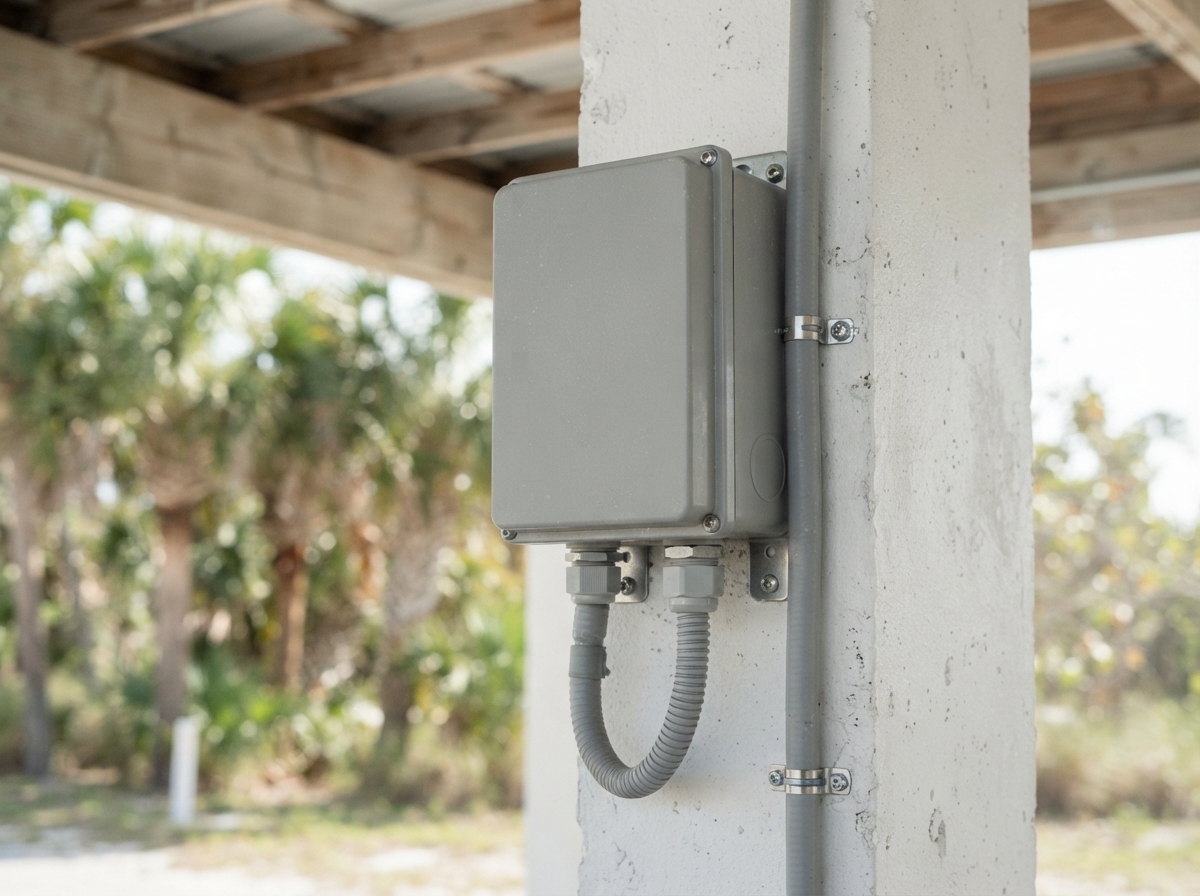
The National Electrical Code’s Article 625 governs electric vehicle charging equipment specifically, and a coastal installation has to meet that code while also standing up to the environment around it.
Choosing the Right Charger for a Shared Parking Structure
Level 1 chargers plug into a standard outlet and add roughly 2 to 5 miles of range per hour, which is too slow for most condo residents who share a single overnight charging window. Level 2 chargers run on a 240 volt circuit and add 10 to 20 miles per hour or more, making them the practical choice for shared parking structures.
Most Level 2 home chargers draw 32 amps continuously, which under NEC 210.19 requires a dedicated 40 amp breaker and circuit rated for that continuous load. That circuit almost always needs to run back to your own unit’s panel or a dedicated submeter, not the building’s common electrical system. This keeps your electricity use separate from the association’s shared expenses and avoids billing disputes down the road.
In a shared garage, that circuit run is often the most expensive part of the job, since conduit has to cross common areas rather than run through your own walls. Our EV charger installation guide covers panel capacity and load calculations in more detail for a typical Sarasota home, and the same principles apply to a condo unit’s dedicated circuit.
What Does EV Charger Installation Cost in a Sarasota Condo or HOA Community?
A condo or HOA installation typically costs more than a comparable single family home install, mainly because of the distance between your parking space and your unit’s panel. Expect an added cost for extra conduit runs, a possible submeter, and the engineering letter some boards require before approving the work.
Base charger and installation costs follow the same range covered in our general EV charger guide, but a condo project often adds $500 to $1,500 for the longer conduit run and any required documentation. A dedicated submeter typically adds another $200 to $600 depending on the utility and the distance from your unit’s existing electrical service.
Getting a firm quote from a licensed electrician before you submit your board application prevents surprises once the work begins. Many boards also want to see this quote as part of the application itself, so pricing the job early actually speeds up approval rather than slowing it down.
What Happens When Several Owners Want Chargers at Once?
Older condo buildings on Siesta Key were not designed with a dozen high draw EV circuits in mind. Once three or four owners request chargers in the same parking structure, the building’s electrical infrastructure often needs a real capacity study, not just individual approvals handled one at a time.
A licensed electrician can run a load calculation on the building’s existing service and tell the board how many chargers the current infrastructure can support safely. Some communities get ahead of this by installing shared conduit and panel capacity for future chargers during a single project, which usually costs less per unit than adding circuits one owner at a time. This kind of planning matters most in the vacation rental and condo heavy stretches of Siesta Key, where turnover and demand for EV charging keep rising.
Boards managing this kind of building wide project often need a licensed commercial electrician rather than a residential one, since a shared parking structure upgrade is treated as commercial electrical work under Florida code. Getting a capacity study done before the first owner asks for a charger saves the board from approving requests one at a time and running out of panel space halfway through.
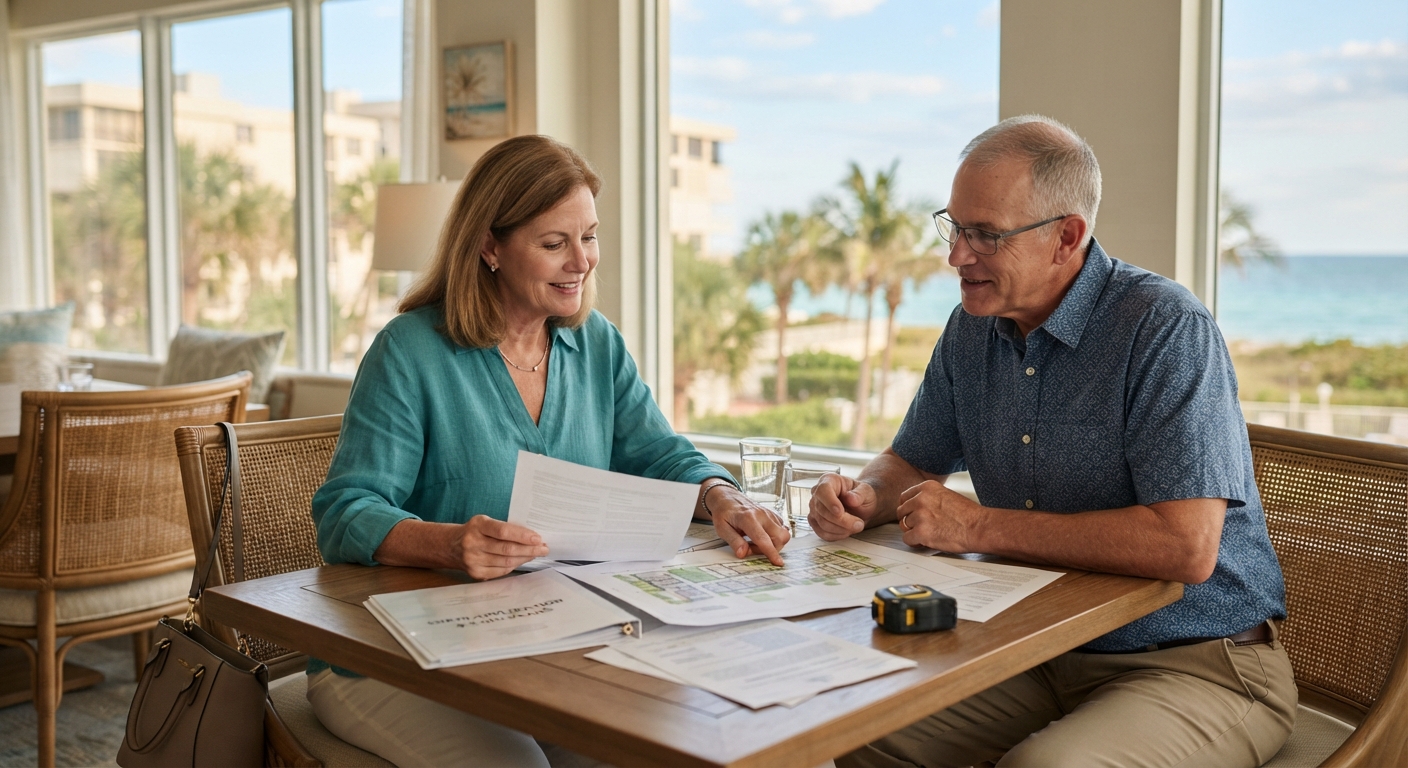
Working With Your Board: A Step by Step Approval Process
Start by requesting your community’s architectural review or EV charger application form, since most associations already have one on file. Have a licensed electrician provide a written proposal that names the equipment, the wiring path, and how the installation meets NEC Article 625 and any state or local codes that apply.
Submit proof of liability insurance if your board requires it, along with the electrician’s license and registration information. Most boards also want a site plan showing exactly where the conduit will run and where the charger will mount, especially in a shared garage where the path crosses common areas.
Once approved, schedule the installation and request a final inspection sign off so there is a clear record the work meets code. Sarasota County requires a permit for this kind of electrical work, and the Sarasota County Building Division can confirm exactly what your project needs before your electrician pulls it.
Keeping this paperwork organized protects you if the association or a future buyer ever asks about the installation. A complete file also speeds up approval for the next owner in your building who wants a charger, since the board already has a working template to follow.
Protecting Your Investment on Siesta Key
A condo or HOA EV charger installation touches legal, coastal, and electrical questions all at once. Florida law gives condo owners real protection, while HOA homeowners need a clean, well documented application instead. Either way, the installation itself needs to survive salt air, humidity, and Gulf Coast storms for years, not just pass inspection once.
Siesta Key Electric handles the full process: reviewing your association’s requirements, submitting code compliant documentation, and installing marine grade equipment built for this environment. If you manage several units or an entire community, our property manager electrical services cover coordinating this kind of work across multiple owners.
Call (941) 799-2279 or request a free estimate for your condo or HOA EV charger installation. As storm season continues through November, ask about surge protection for your new charging circuit at the same time.
Frequently Asked Questions
Can my condo association really say no to my EV charger request in Florida?
No. Florida Statute 718.113(9) prohibits a condo association from banning EV chargers in a unit owner’s designated parking space. The board can set reasonable rules for how it gets installed, but it cannot block the installation itself.
Do HOA communities have the same EV charger protection as condos?
No. Florida’s HOA statute, Chapter 720, does not include the same dedicated EV charger provision that Chapter 718 gives condo owners. HOA homeowners work through their community’s declaration and architectural review process instead.
Who pays for the electricity when I install a charger in a shared garage?
The unit or homeowner pays. Most condo boards require a separate meter for the charger so its electricity cost never gets billed to the association’s shared expenses.
What is the difference between Level 1 and Level 2 charging for a condo unit?
Level 1 uses a standard outlet and adds about 2 to 5 miles of range per hour. Level 2 uses a 240 volt circuit and adds 10 to 20 miles per hour or more, which is why most condo and HOA installations use Level 2 equipment.
Does salt air actually affect EV charger equipment on Siesta Key?
Yes. Salt laden coastal air corrodes standard conduit, breaker terminals, and enclosures faster than manufacturers typically design for. A marine grade installation using sealed enclosures and corrosion resistant hardware holds up far longer in this environment.