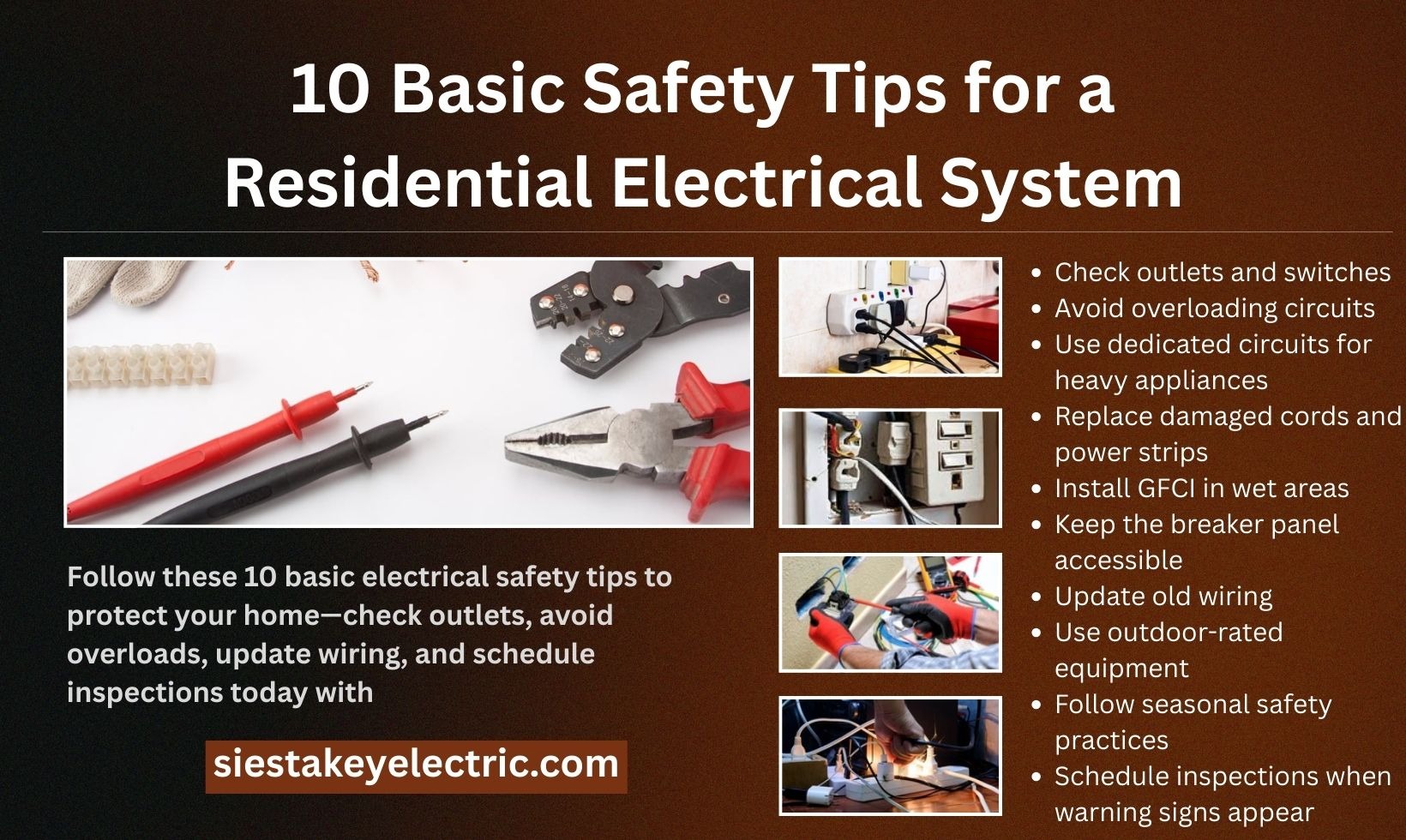
Electrical safety is one of the most critical aspects of maintaining any home. Every year, thousands of residential accidents occur due to outdated wiring, overloaded circuits, and simple negligence. Small oversights can lead to serious hazards including electrical fires, shocks, and permanent damage to appliances.
At SiestaKeyElectric.com, we focus on educating homeowners in Siesta Key and Sarasota County about practical electrical safety measures. By following 10 essential residential electrical safety tips, you can prevent emergencies, protect your family, and ensure your home’s electrical system is safe, reliable, and efficient.
This guide is actionable, with easy-to-read tables, checklists, and real-life examples to help homeowners implement these safety practices immediately.
Why Electrical Safety Matters in Modern Homes
Homes today rely heavily on electricity for lighting, appliances, HVAC systems, smart devices, and electric vehicles. Older wiring systems, often installed decades ago, were not designed to handle modern electricity demands.
Key Risks Include:
- Overloaded circuits leading to frequent breaker trips
- Outdated or damaged wiring
- Improperly installed devices
- Damage to sensitive electronics
Florida homeowners face unique challenges:
- Salt air and high humidity accelerate corrosion in outlets, wiring, and panels
- Frequent storms and lightning increase surge risks
- Coastal homes often experience voltage fluctuations during heavy storms
Taking preventive measures significantly reduces the chance of electrical accidents while ensuring your home meets current electrical codes.
Quick Electrical Safety Checklist
Here is a practical checklist to help homeowners prioritize electrical safety:
Safety Area |
Key Checks |
Recommended Action |
| Outlets | Loose, warm, or discolored | Replace immediately |
| Breakers | Frequent trips or flickers | Schedule professional inspection |
| Electrical Panel | Age 25+ years | Consider panel upgrade |
| Cords | Frayed, cracked, or exposed | Replace immediately |
| Wet Areas | No GFCI protection | Install GFCI outlets |
| Smoke Detectors | Dead batteries or untested | Test monthly & replace batteries |
| Surge Protection | None installed | Install whole-home surge protector |
This table highlights the most urgent checks homeowners can take immediately.
Understanding Electrical Load and Its Risks
Modern homes have a variety of appliances with varying electrical demands. From refrigerators and air conditioners to smart TVs, pool pumps, and EV chargers, electrical loads can quickly exceed the capacity of older circuits.
High-Demand Devices Include:
- Air conditioners
- Electric water heaters
- Pool pumps
- Electric vehicle chargers
- High-efficiency HVAC systems
Plugging multiple high-wattage devices into the same circuit can cause repeated breaker trips. This puts additional stress on wiring and the breaker panel, increasing the chance of electrical fires.
Example: In one Sarasota home, a family added an EV charger without upgrading the panel. This caused repeated breaker trips and melted wiring, which could have led to a fire if not caught by a professional inspection.
Top 10 Electrical Safety Tips for Your Home
Here are the most important safety practices for homeowners:
1. Avoid Overloading Circuits
Overloaded circuits are a leading cause of breaker trips and electrical fires. Spread high-wattage appliances across multiple circuits. Avoid daisy-chaining multiple power strips.
- Homes with older panels may require breaker box upgrades or new electrical panel installation.
- High-demand appliances like ovens, HVAC units, and EV chargers should have dedicated circuits.
- Using circuit meters can help you monitor load levels for each breaker.
2. Replace Damaged or Frayed Cords Immediately
Frayed or cracked cords are a common source of shock and fire hazards. Never use tape or attempt DIY repairs on damaged cords.
- Replace worn cords completely
- Inspect cords for heat buildup or exposed wires regularly
- Ensure appliance cords are rated for the device’s wattage
3. Install GFCI Outlets in Wet or Moist Areas
Ground Fault Circuit Interrupters (GFCI) prevent electrical shocks in moisture-prone areas:
- Kitchens, bathrooms, garages, laundry areas, and outdoor outlets
- Pool equipment zones and spas
- Retrofitting homes with GFCI outlets is cost-effective and greatly increases safety
Case Example: A poolside outlet in a Siesta Key home caused frequent shocks before installing GFCI protection. Retrofitting prevented potential injury.
4. Schedule Regular Electrical Inspections
Routine inspections catch small issues before they become emergencies. Licensed electricians can identify:
- Loose or exposed wiring
- Overloaded circuits
- Corrosion or moisture damage
- Violations of electrical codes
Homes over 20 years old, or those that have undergone renovations, should schedule inspections every 2–3 years.
5. Keep the Electrical Panel Accessible
Breaker panels must remain unobstructed. Clear labeling ensures quick response during emergencies.
- Obstructed panels delay action in urgent situations
- Label each breaker clearly for faster troubleshooting
- Keep the panel door closed but accessible to reduce dust and corrosion
6. Use Whole-Home Surge Protection
Voltage spikes from storms, lightning, and grid fluctuations can damage electronics and appliances.
- Whole-home surge protectors protect sensitive devices, HVAC systems, and home automation equipment
- In Siesta Key, where storms are frequent, surge protection is critical
- Combine surge protection with proper grounding for maximum safety
7. Never Use Extension Cords as Permanent Wiring
Extension cords are temporary solutions only. Long-term use increases fire risk.
- Hire a licensed electrician for permanent outlet installation
- Avoid running cords under carpets, doors, or through walls
- Always use cords rated for the appliance’s wattage
8. Test Smoke Detectors Monthly
Smoke detectors provide critical early warnings for electrical fires.
- Test detectors monthly
- Replace batteries annually
- Interconnected alarms increase protection for larger homes
9. Upgrade Outdated Wiring
Older homes may have aluminum wiring, knob-and-tube systems, or fuse boxes.
- Upgrading to modern copper wiring and circuit breakers ensures safety for high-demand appliances
- Reduces fire risk and improves overall reliability
- Consider upgrading the panel when adding new high-wattage devices
10. Hire Licensed Professionals for Electrical Work
DIY electrical work may seem cost-saving, but improper wiring, undersized breakers, or incorrect connections create serious hazards.
- Licensed electricians ensure code compliance
- They can perform breaker box upgrades or new panel installations safely
- Professional work protects insurance coverage and your family
Common Electrical Mistakes Homeowners Make
Many accidents happen due to simple mistakes:
- Ignoring tripped breakers
- Using multiple adapters in one outlet
- Attempting DIY panel work
- Skipping inspections
- Using non-certified devices
Avoiding these mistakes is key to maintaining a safe home environment.
Florida-Specific Electrical Safety Considerations
Florida homes face unique risks:
- High humidity and salt air accelerate corrosion in panels and outlets
- Lightning storms increase surge risks
- Older wiring degrades faster due to coastal conditions
Professional inspections by SiestaKeyElectric.com address these issues proactively, ensuring safety and long-term reliability.
Electrical Load vs. Safety Risk
Electrical Load (Amps) |
Common Risks |
Recommended Action |
| <15A | Minimal risk | Routine inspection |
| 15–20A | Occasional trips | Check circuit balance |
| 20–30A | Overloaded circuits | Consider panel upgrade |
| 30+ A | High risk | Professional assessment required |
Understanding your home’s electrical load helps prevent overloads and protects your family.
How Preventive Maintenance Reduces Fire Risk
Electrical fires often start inside walls due to:
- Loose terminals
- Overheated wiring
- Overloaded breakers
- Improper grounding
Routine inspections catch these problems early, preventing fires and costly repairs.
Long-Term Benefits of Electrical Safety Practices
Following these practices provides:
- Reduced emergency repair costs
- Extended electrical system longevity
- Compliance with insurance requirements
- Higher property value
- Safer, more reliable home performance
Preventive maintenance is an investment in safety and peace of mind.
Protect Your Home with Professional Upgrades
For older homes or high electricity demand, professional inspection and upgrades are essential:
- Comprehensive safety evaluations
- Preventive maintenance
- Panel upgrades and breaker box replacements
- Emergency repair support
Homeowners can rely on SiestaKeyElectric.com for inspections, upgrades, repairs, and long-term safety solutions.
Schedule Your Electrical Safety Inspection Today
Don’t wait for an accident. Contact us for a full home electrical inspection:
- Protect your family
- Reduce fire risk
- Ensure efficient, code-compliant electrical systems
Frequently Asked Questions
Q1. How often should a home electrical system be inspected?
Ans: Homes over 20 years old should be inspected every 2–3 years. After renovations or storm damage, inspections should be immediate.
Q2. What causes most residential electrical fires?
Ans: Overloaded circuits, outdated wiring, frayed cords, and DIY mistakes are common causes.
Q3. Are surge protectors necessary in Florida?
Ans: Yes. Lightning and storms make surge protection critical for coastal homes.
Q4. How do I know if my wiring is outdated?
Ans: Signs include flickering lights, warm outlets, tripping breakers, or aluminum wiring. Professional inspection confirms the condition.
Q5. Can homeowners perform their own electrical upgrades?
Ans: Minor tasks like replacing light fixtures are okay, but major electrical work should always be handled by licensed professionals.