
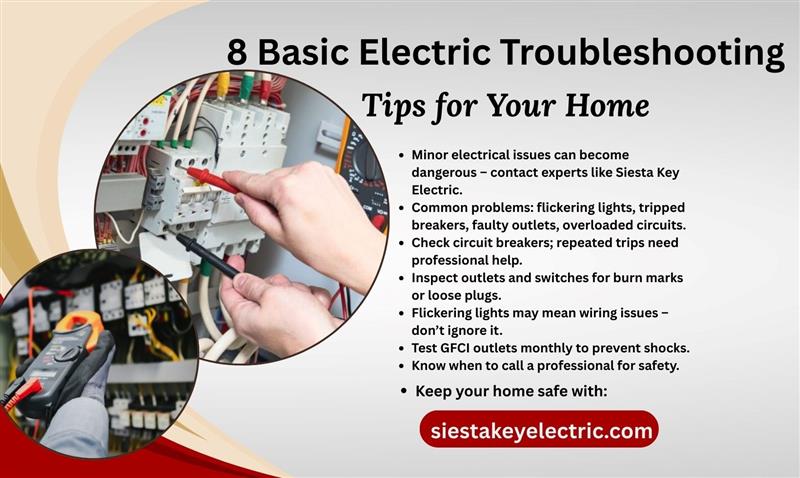
8 basic electric troubleshooting tips for your home
Electrical problems in your home can be stressful, inconvenient, and sometimes dangerous. Knowing basic electricity troubleshooting can save you time, protect your appliances, and prevent minor issues from turning into major repairs. Whether you’re a DIY enthusiast or just want to understand your home’s electrical system better, these 8 basic electric troubleshooting tips for your home will guide you step by step.
In this guide, we’ll cover practical, safe, and expert-approved electric troubleshooting tips for your home, helping you handle everyday electrical issues with confidence.
Understanding Common Electrical Problems in Your Home
Before diving into solutions, it’s important to understand that even minor electrical issues can grow into bigger problems, which can be dangerous. Always contact an expert like Siesta Key Electric, who can handle any issue safely and in a professional way
- Flickering lights
- Tripped breakers
- Non-functional outlets
- Overloaded circuits
- Appliances not working
These issues can stem from faulty wiring, aging components, or simple overloads. Understanding the root cause is the first step toward solving issues safely and effectively.
On Siesta Key and along the Sarasota coast, salt air and humidity speed up a lot of these problems. Corrosion inside outlets and breaker panels can cause the exact symptoms above, tripped breakers, warm outlets, and flickering lights, even in wiring that is only a few years old. If you’re troubleshooting the same issue over and over, corrosion from coastal exposure is worth ruling out before you assume it’s a one-time glitch.
1. Check Your Circuit Breakers
One of the simplest ways to troubleshoot is to inspect your circuit breakers. A tripped breaker can cut power to certain areas of your home.
How to troubleshoot electrical problems:
- Locate your breaker panel.
- Look for breakers in the “off” position or midway.
- Reset the breaker by flipping it fully off and then back on.
If the breaker trips repeatedly, it indicates a persistent electrical issue that may require professional attention.
2. Inspect Your Outlets and Switches
Loose or damaged outlets are a common cause of electrical problems in home.
- Turn off the main power before inspecting.
- Check for burn marks or unusual smells.
- Ensure switches click properly and outlets hold plugs firmly.
Regular inspection helps in basic electrical troubleshooting techniques and prevents potential hazards.
3. Test Light Fixtures and Bulbs
Flickering lights are often mistaken for a serious issue, but sometimes, a bulb replacement solves the problem.
- Use bulbs of the correct wattage.
- Ensure connections are tight.
- If flickering continues, inspect the wiring in the fixture for loose connections.
This step is important for fixing issues in every home.
4. Examine Appliances for Overloads
Overloading circuits is a frequent cause of these issues.
- Unplug multiple high-power appliances running on the same circuit.
- Identify appliances that cause the breaker to trip.
- Consider redistributing appliances to different circuits.
This ensures your home remains safe and prevents electrical problems in the home from escalating.
5. Check GFCI Outlets
Ground Fault Circuit Interrupters (GFCIs) are essential for bathrooms, kitchens, and outdoor areas. They prevent electrical shocks.
- Test GFCI outlets monthly by pressing the “test” button.
- Reset using the “reset” button if needed.
GFCIs are crucial in diagnosing electrical problems related to water and moisture.
6. Inspect Wiring Connections
Loose or exposed wiring can cause intermittent problems or fire hazards.
- Turn off power at the main breaker.
- Check wiring behind outlets and switches.
- Tighten any loose connections carefully.
7. Use a Voltage Tester Safely
A voltage tester helps you identify live wires, broken circuits, or faulty outlets without risk.
- Always wear insulated gloves.
- Test wires before touching or replacing components.
- This tool is essential in how to diagnose electrical problems accurately.
8. Know When to Call a Professional
Some problems are beyond simple DIY solutions, such as frequent breaker trips, burning smells, or flickering in multiple circuits.
- Safety first: Do not attempt to fix complex issues without expertise.
- Contact licensed electricians for inspection and repair.
Even the most thorough basic electric troubleshooting tips for your home can only go so far experts ensure your system is safe, code-compliant, and reliable.
Final Thoughts
Mastering basic electricity troubleshooting helps you handle small electrical issues safely and prevents serious hazards. By following these 8 basic electric troubleshooting tips for your home, you can maintain a reliable and safe electrical system.
Remember, when in doubt, professionals are your best option. Follow these expert tips, and don’t hesitate to contact certified electricians for a full home inspection.
Visit siestakeyelectric.com
Call now at (941) 799-2279 to schedule your professional electrical inspection and keep your home safe!
FAQs
1. What are the most common electrical problems in home?
Ans: Common problems include flickering lights, tripped breakers, faulty outlets, overloaded circuits, and appliance malfunctions.
2. How can I troubleshoot electrical problems safely?
Ans: Always turn off the main power before inspecting wiring, use insulated tools, and test connections with a voltage tester. Only attempt DIY fixes for minor issues.
3. Can I fix flickering lights on my own?
Ans: Yes, if it’s caused by a loose bulb or fixture. For repeated flickering or multiple affected lights, call a professional to inspect the wiring.
4. How often should I inspect outlets and GFCI switches?
Ans: Check GFCI outlets monthly and perform a general inspection of outlets and switches every 6–12 months to catch minor issues early.
5. When should I call a licensed electrician?
Ans: If breakers trip frequently, you notice burning smells, damaged wiring, or any signs of fire hazards, call a licensed electrician immediately.