
TL;DR: Knob and tube wiring shows up in Sarasota homes built before the 1940s, and Florida insurers treat it as a serious red flag. Most carriers will not write a policy on a home with active knob and tube, and the system has no ground wire and cannot handle modern insulation safely. A full rewire typically costs between twelve thousand and twenty five thousand dollars, though smaller homes can run less. Call Siesta Key Electric at (941) 799-2279 for a free estimate and a clear path to passing your next inspection.
Knob and tube wiring replacement cost is the first question most Sarasota homeowners ask once an inspector or insurance agent flags the system in their walls. The honest answer is that it almost always means a full rewire, not a patch job, and the price depends on how much of the home still carries the original wiring.
This outdated system once ran through ceilings and walls across the country, including some of Sarasota’s older neighborhoods. It is not inherently explosive sitting still in a wall. The real problem shows up the moment someone covers it with insulation, splices it incorrectly, or asks it to carry more power than it was ever built for.
Siesta Key Electric is a family owned, licensed electrical contractor serving Siesta Key, Bird Key, St. Armands, and Greater Sarasota County. We inspect and replace knob and tube wiring to the Siesta Key Standard, built for Florida’s humidity and salt air, not just mainland conditions.
What Is Knob and Tube Wiring?
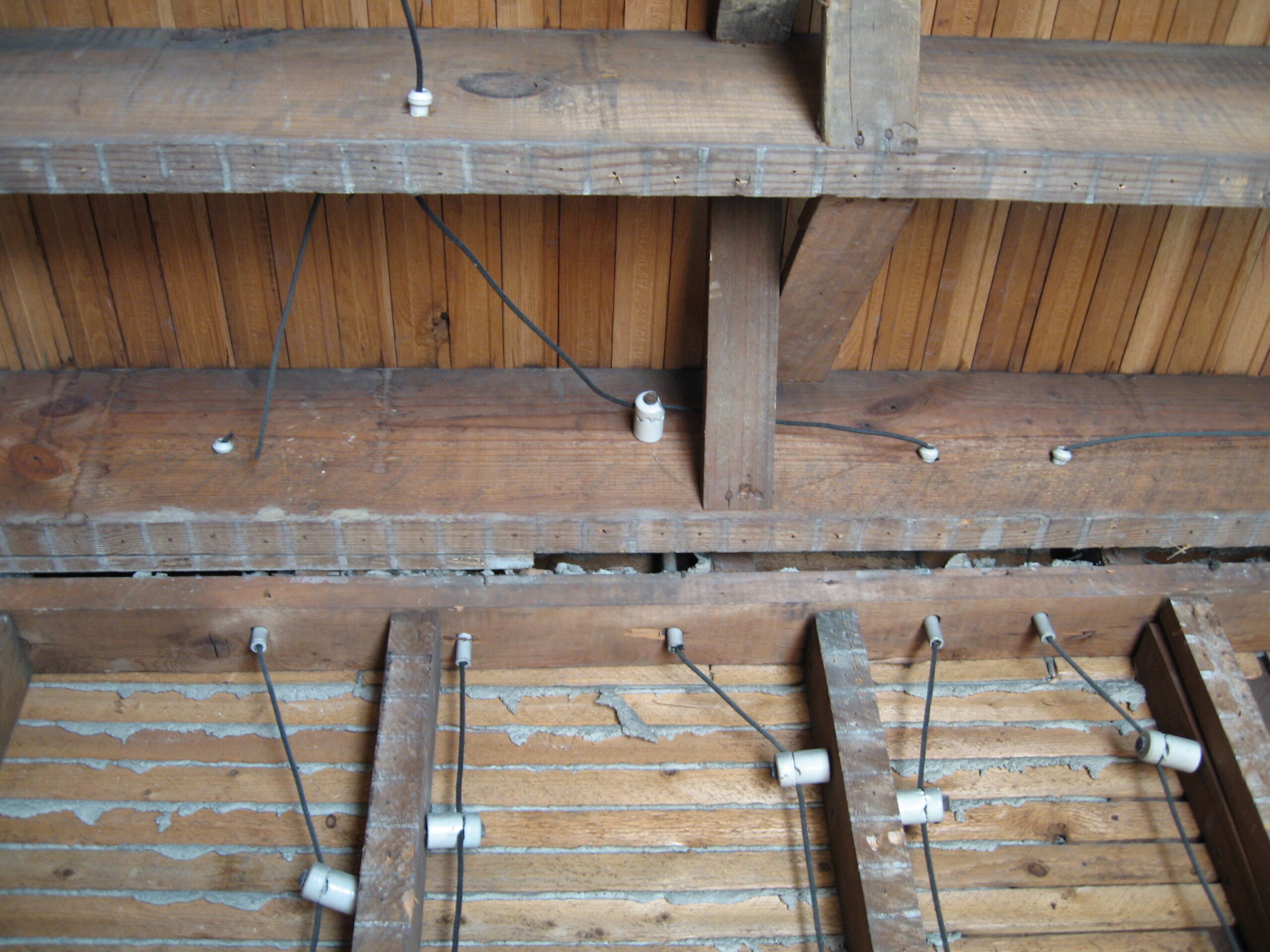
Knob and tube wiring is an early electrical system that ran two separate insulated wires through ceramic knobs and tubes instead of a single sheathed cable. Builders used it across the United States from about the 1880s through the 1940s, and some Sarasota homes from that era still have sections of it in attics or wall cavities.
Each wire sat separated from framing by a ceramic knob, with ceramic tubes protecting wires that passed through joists and studs. The design relied on open air around the wire to shed heat, according to the International Association of Certified Home Inspectors.
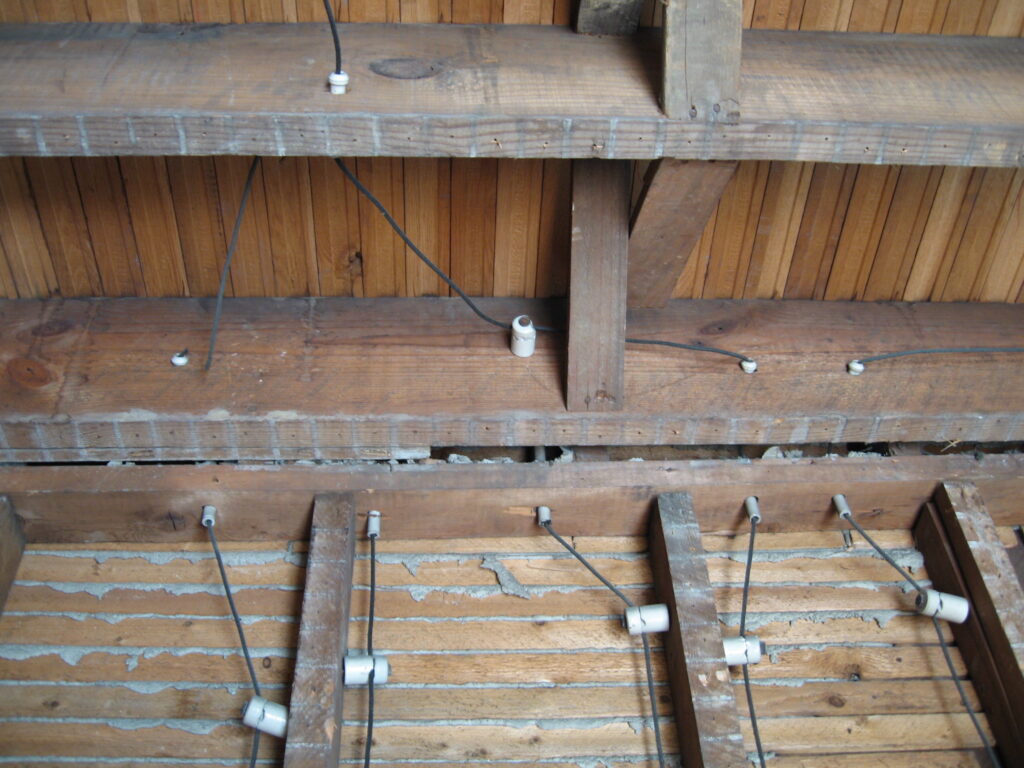
That open air design is exactly why modern renovations cause problems. Attic insulation, drywall, and spray foam were not part of the original plan.
Many Sarasota homes from this era have been added onto, remodeled, or partially rewired over the decades. That means a house can have modern circuits throughout most of the home and still have a forgotten run of knob and tube feeding one room, a garage, or an old sunroom. An electrician who finds one section should always check the rest of the home before signing off on anything.
Is Knob and Tube Wiring Dangerous?
Knob and tube wiring is not automatically dangerous if it is undisturbed, properly fused, and never covered with insulation. The danger grows when insulation traps heat around the wire, when a previous owner used an oversized fuse, or when someone splices it with modern cable using the wrong connector.
The system has no ground wire, so it cannot safely power three prong appliances or many modern electronics. That alone rules it out for kitchens, bathrooms, and laundry rooms under current practice.
Covering knob and tube wiring with insulation blocks the open air cooling the design depends on, and heat builds up inside the wall or attic. Regulatory summaries of the code based on NEC Article 394, such as the one published by Electrical License Renewal, require a licensed electrician to certify the wiring is free of damage and limit overcurrent protection to breakers or Type S fuses, never old style Edison base fuses. Foam insulation is barred outright near this wiring under those same provisions.
Why Florida’s Humidity and Salt Air Make Old Wiring Riskier
Sarasota’s climate is harder on old wiring than a drier inland state. The cloth and rubber insulation used on knob and tube conductors was never designed for decades of Gulf Coast humidity.
A peer reviewed review of cable insulation aging mechanisms found that humidity raises the risk of hydrolysis in wire insulation, and that salt exposure in coastal areas speeds up that breakdown even further, according to a 2025 study published in MDPI’s review of electrical cable insulation degradation. Insulation that is already decades old starts from a weaker position than a new installation.
On Siesta Key and the barrier islands, that moisture reaches attics, garages, and exterior walls year round. We cover the broader pattern in our guide to how salt air affects electrical systems.
Cloth insulation that is already cracked or brittle from age has even less room to handle Florida’s humidity swings. That combination is one more reason a Sarasota home with old wiring deserves a faster response than the same wiring might get in a cooler, drier climate.
Does Florida Homeowners Insurance Cover Knob and Tube Wiring?
No. Most Florida homeowners insurance carriers, including Citizens Property Insurance, will not write or renew a policy on a home with active knob and tube wiring. A licensed electrician’s full rewire to copper is typically the only fix insurers accept.
A 2025 report from We Shop Insurance, an agency working with numerous carriers across the state, put it plainly: no standard Florida carrier will write a home with active knob and tube wiring. The same report lists wiring issues among the most common reasons for declined or non renewed policies once a four point inspection flags them.
That four point inspection is the moment most Sarasota owners first learn they have a problem. Our guide to what a Florida 4 point inspection checks walks through every electrical item on that form, including wiring type.
Cloth covered wiring from a slightly later era faces similar scrutiny, though a small number of carriers may accept it if it is well documented and in clearly sound condition.
How Electricians Replace Knob and Tube Wiring
A full rewire removes the old two wire system and replaces it with modern grounded copper cable, new outlets, and updated connections at the panel. There is no partial fix that satisfies most insurers or current best practice.
The process starts with an inspection to map every run of old wiring in the home, since knob and tube often hides in sections an owner never expected, like above a dropped ceiling or behind a later addition. From there, an electrician pulls new cable, connects it at the panel, and patches any drywall or plaster that had to come down.
Permits and inspection sign off are standard parts of the job in Sarasota County, which currently enforces the 2020 National Electrical Code under the 2023 Florida Building Code, 8th Edition. On the coast, we also use sealed, corrosion resistant boxes and connectors anywhere salt air can reach a junction, matching the same approach we use on every panel and outlet upgrade.
Most owners can stay in the home during the work, though a room may lose power for part of a day while new circuits go in. We walk through the full scope before starting, including which walls or ceilings need to open up, so there are no surprises partway through the job.
Knob and Tube Wiring Replacement Cost in Sarasota
A full knob and tube wiring replacement in a Sarasota home typically runs from twelve thousand to twenty five thousand dollars, based on the cost range Florida insurers and electricians report for a complete rewire. Smaller homes or homes with only a few remaining circuits of old wiring can cost less.
That figure matches the range cited in the We Shop Insurance report on Florida wiring issues, and it lines up with what a full rewire generally costs once drywall repair and panel work are included. Several factors move the price within that range:
- How much of the home still has the original wiring versus wiring already updated in a past renovation
- How easy it is to reach wiring in the attic, crawlspace, and walls
- Whether the electrical panel also needs an upgrade to support modern circuits
- Drywall, plaster, and paint repair after the new cable goes in
Our guide to home rewire cost in Sarasota breaks down full rewire pricing in more detail, including panel upgrade costs that often come up at the same time.
How to Tell If Your Siesta Key or Sarasota Home Has Knob and Tube Wiring
Look for ceramic knobs and tubes on exposed wiring in the attic, basement, or crawlspace, along with cloth covered wire and a home built before the 1940s. Never pull insulation back or open a panel yourself, since any exposed wire could still be live.
Homes with additions or partial updates can have knob and tube in only one section, so a clean panel does not rule it out. A home inspector or electrician checking for it will look in the attic first, since that is where it is most often left exposed and visible.
Warning signs worth calling about include frequent breaker trips on an older circuit, outlets that feel warm, or lights that flicker for no clear reason. Our guide on warning signs you need a full house rewire covers these in depth, and many of the same signs also show up with aluminum wiring, another common issue in older Sarasota homes.
The safest way to know for certain is a professional inspection. Our residential electrical safety inspection checks wiring type, panel condition, and every connection an insurer is likely to ask about.
Protect Your Home Before the Next Storm or Inspection
Knob and tube wiring rarely announces itself until an insurance inspection or a home sale forces the issue. By then, the timeline is usually tight. Three points matter most for Sarasota homeowners:
- Active knob and tube wiring makes a Florida home very difficult to insure, and a documented rewire is the fix carriers expect.
- Humidity and salt air add extra wear to insulation that is already decades past its original design life.
- Replacement cost typically falls between twelve thousand and twenty five thousand dollars, depending on home size and access.
Storm season adds one more reason not to wait. Power surges and outages put extra strain on circuits that were never built for today’s electrical load. Call Siesta Key Electric at (941) 799-2279 or request a free estimate, and we will inspect your wiring, document the findings for your insurer, and give you a clear plan.
Related reading: See our guide on what a Florida 4 point inspection checks for the other items insurers review alongside wiring.
Frequently Asked Questions
Can I keep knob and tube wiring if I never cover it with insulation?
Leaving it exposed in an open attic reduces one risk, but most Florida insurers still decline to cover a home with any active knob and tube wiring, covered or not. A full rewire is almost always the practical answer if you want standard coverage.
Is knob and tube wiring illegal in Florida?
No. Existing knob and tube wiring is not illegal to leave in place, but insurers may refuse or cancel a policy over it, and any new work must follow current code. New installations using this method are not permitted today.
How long does a full knob and tube wiring replacement take?
Most homes take a few days to about two weeks, depending on size and how much drywall or plaster repair the job needs afterward. A licensed electrician can give you a firm timeline after an inspection.
Will my homeowners insurance drop me immediately if an inspection finds knob and tube wiring?
Policies vary by carrier, but a four point inspection that flags active knob and tube wiring commonly leads to a non renewal notice rather than an instant cancellation. That gives you a window to schedule a rewire and provide documentation before the policy ends.
Does salt air make knob and tube wiring worse than it would be inland?
Yes. A peer reviewed review of cable insulation aging found that humidity raises the risk of hydrolysis and that coastal salt exposure speeds up insulation breakdown even further. Combined with decades of normal wear, that leaves less margin for error in a Sarasota attic than in a drier climate.