
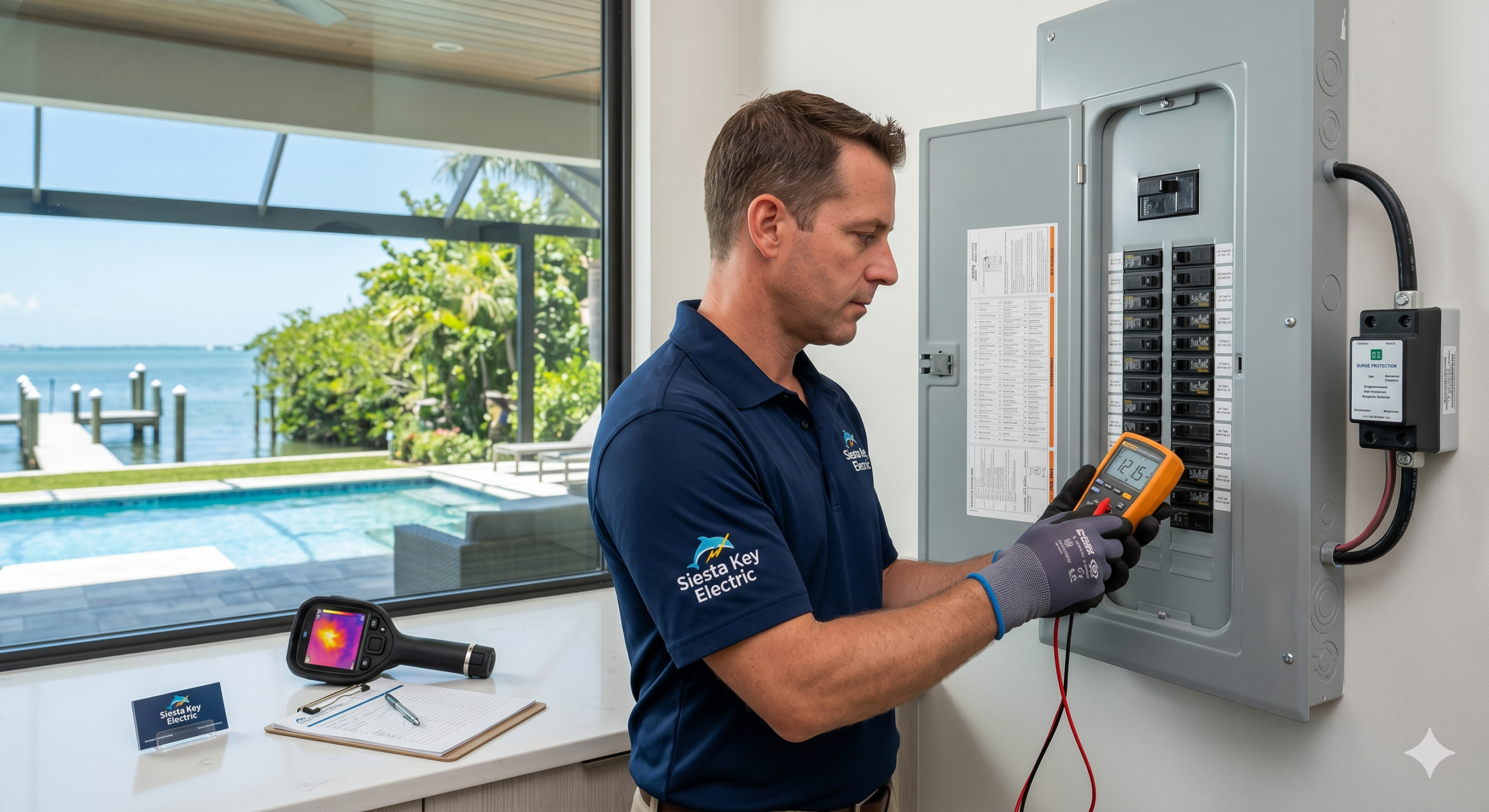
Living in Sarasota means dealing with salt air, humidity, and lightning. These factors wear down your wiring faster than in other climates. A residential electrical safety inspection identifies hidden corrosion, outdated panels, and fire hazards before they become emergencies. For Siesta Key homeowners, this isn’t just maintenance; it is essential protection for your property and your family.
Life on the Key Demands a Safer Standard
The beauty of a sunset at Turtle Beach or a stroll through The Village is why we love calling the Sarasota area home. However, that same salty breeze that feels so good can be a nightmare for your home’s electrical system. In coastal environments, “island time” is a luxury, but electrical neglect is a danger.
According to recent 2026 data from Electrical Safety First, accidental electrical fires remain a leading cause of property damage in residential areas. In Florida, the stakes are even higher. Between heavy tropical downpours and the constant “salt creep” that eats away at copper and aluminum, your wiring faces a daily battle. A residential electrical safety inspection is your best defense against the invisible threats hiding behind your drywall.
What is a residential electrical safety inspection?
Answer Capsule: A residential electrical safety inspection is a comprehensive review of your home’s entire electrical system. A licensed electrician examines the permanent wiring, panels, and devices to ensure they meet the National Electrical Code (NEC). In coastal areas like Sarasota, this also includes checking for salt-corrosion and proper grounding.
When you book an inspection with Siesta Key Electric, we don’t just look at your outlets. We perform a deep dive into the “heart” of your home. We check the main service panel, look for signs of overheating, and ensure your system can handle the modern load of high-end appliances and EV chargers.
According to the National Fire Protection Association (NFPA), many home fires are caused by electrical distribution or lighting equipment. An inspection catches these issues by verifying that your circuit breakers are the right size and that your grounding system hasn’t been compromised by the sandy, porous soil common in Bird Key and Casey Key.
How often should a Florida home have an electrical inspection?
Answer Capsule: Experts recommend a professional electrical inspection every 3 to 5 years for most homes. However, if you live in an older home in Sarasota or a waterfront property on Siesta Key, an annual inspection is advised due to the high risk of salt-air corrosion and tropical storm impacts.
While the Electrical Safety Foundation (ESFI) suggests a general timeline of 10 years for new builds, Florida residents must be more proactive. The intense humidity here can cause wires to expand and contract, which loosens connections over time.
If you have recently purchased an older home near Sarasota mainland or haven’t had your panel opened in over five years, it is time for a check-up. We often find that homes built just a decade ago are already showing signs of significant wear on their exterior components due to the proximity to the Gulf of Mexico.
What does an electrician check during a safety inspection?
Answer Capsule: The inspection covers the electrical service panel, circuit breakers, grounding systems, and every outlet and switch. Electricians specifically look for frayed wiring, overloaded circuits, and the presence of GFCI protection in “wet” areas like kitchens, bathrooms, and outdoor lanais.
Our team follows a rigorous checklist based on the CPSC Safety Standards. We start at the source: your main breaker panel. We look for “hot spots” using thermal imaging, which can signal a loose wire before it starts a fire.
We also pay special attention to whole-home surge protection. In the “Lightning Capital of the World,” a single strike can fry your electronics and compromise your wiring. During an inspection, we ensure your surge protectors are functional and correctly installed to protect your investment. We also verify that all outlets in your kitchen and bathrooms are GFCI protected, which is a critical life-saving requirement in the National Electrical Code.
Why salt air is a threat to your home’s electrical system
The same salt spray that makes our air feel fresh is highly conductive and corrosive. Over time, salt particles settle on outdoor fixtures, including your dock and lanai lighting. This leads to a process called electrolysis, which can eat through metal housings and wire insulation.
When salt accumulates, it can create a path for electricity to “arc” or jump between terminals. This causes short circuits and can melt plastic components. During our inspections, we check for “green” copper, which is a tell-tale sign of oxidation. We advocate for high-quality, corrosion-resistant electrical components that are specifically rated for the harsh conditions of the Florida coast.
Can an inspection help with my Florida homeowners insurance?
Answer Capsule: Yes. Many Florida insurers require a “4-Point Inspection” or a specialized electrical safety report to maintain coverage, especially for homes over 25 years old. Proving your system is up to code can prevent policy cancellations and may even lower your premiums.
The insurance market in Florida is currently very strict. According to the Florida CFO’s office, insurers are looking for any reason to mitigate risk. An outdated electrical panel, such as a Federal Pacific or Zinsco, can lead to an immediate denial of coverage.
By having Siesta Key Electric perform a detailed inspection, you get a professional report that you can provide to your agent. This shows that your home is well-maintained and meets modern safety standards. It provides a level of documentation that “DIY” checks simply cannot offer.
Warning signs that you need an emergency inspection
You should not always wait for your scheduled interval to call a professional. If you notice any of the following, you should contact a Siesta Key emergency electrician immediately:
-
Flickering Lights: This often indicates a loose connection in your panel or at the utility pole.
-
Warm Wall Plates: If a switch or outlet feels hot to the touch, there is an active fire hazard behind the wall.
-
Burning Smells: An “ozone” or plastic-burning smell is a sign of melting insulation.
-
Frequent Breaker Trips: Your breakers are designed to trip when a circuit is overloaded, but frequent tripping means the system is failing to meet your power needs.
Room-by-Room Electrical Safety Checklist
A complete residential electrical inspection evaluates the unique electrical requirements of different areas throughout the home.
Area |
Inspection Focus |
| Kitchen | GFCI outlets, appliance circuits, load distribution |
| Bathroom | GFCI protection, moisture-resistant fixtures |
| Laundry Room | Dedicated circuits for washer and dryer |
| Bedrooms | AFCI protection, outlet spacing, switch operation |
| Living Areas | Outlet placement, lighting circuits, safety devices |
| Garage | GFCI outlets, lighting, dedicated circuits |
| Outdoor Areas | Weatherproof covers, GFCI protection, landscape lighting |
Kitchen Inspection
Kitchens typically contain some of the highest electrical demands in a home. Inspectors verify proper countertop outlet spacing, GFCI protection, dedicated appliance circuits, and safe load distribution.
Bathroom Inspection
Bathrooms require special attention due to moisture exposure. Electrical inspections confirm proper GFCI protection, dedicated circuits, and safe fixture installation.
Laundry Room Inspection
Large appliances such as washers and dryers place significant demands on electrical systems. Inspectors verify proper circuit sizing and appliance connections.
Bedrooms and Living Areas
Inspectors evaluate outlet spacing, AFCI protection, lighting operation, and overall code compliance within occupied living spaces.
Garage and Outdoor Areas
Outdoor electrical components are exposed to weather, moisture, and environmental conditions. Inspections verify weatherproof protection, GFCI functionality, and safe installation practices.
Common Reasons Electrical Inspections Fail
Even relatively minor electrical issues can result in inspection failures or recommendations for corrective work.
Some of the most common problems include:
- Ungrounded outlets
- Two-prong outlets in older homes
- Overloaded circuits
- Missing outlet cover plates
- Burn marks around outlets or switches
- Corrosion inside electrical panels
- Double-tapped breakers
- Improper wiring connections
- Unlabeled circuits
- Missing GFCI protection where required
Identifying and correcting these issues early can improve safety while increasing the likelihood of passing future inspections without delays.
What Happens After the Inspection: Repairs and Upgrades
A thorough inspection may identify items that need correction before your home is fully code-compliant or safe.
Common findings in Sarasota coastal homes include corroded panel terminals that need replacement, outdated panels that lack AFCI breaker protection required by the current Florida Building Code, the absence of whole-home surge protection, and outdoor outlets that lack proper weatherproof covers or GFCI protection.
Siesta Key Electric provides a written inspection report with clear explanations of every finding. We separate safety-critical repairs, code-required corrections, and recommended upgrades so you can prioritize appropriately.
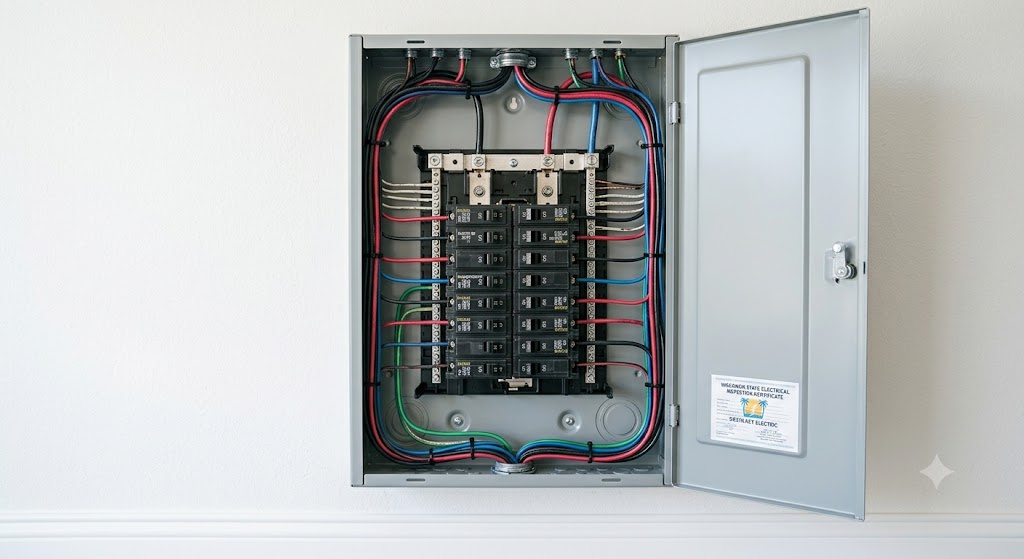
For panels approaching the end of life, we often recommend combining the inspection with an electrical panel upgrade to bring the home fully up to current NEC standards with marine-grade components.
All repair and upgrade work is performed by licensed, insured technicians trained in Florida coastal building codes.
We carry all required permits and document completed work for your records, which is particularly valuable for vacation rental owners and property managers who need documentation for insurance purposes.
Conclusion: Peace of Mind for Your Sarasota Home
Your home is your sanctuary, and in a place as beautiful as Sarasota, it is also a significant investment. Don’t let hidden electrical issues threaten the safety of your family or the integrity of your property. Whether you are in a high-rise on Bird Key or a bungalow in The Village, a residential electrical safety inspection is a small price to pay for total peace of mind.
At Siesta Key Electric, our licensed and insured electricians understand the unique needs of coastal living. We combine professional expertise with neighborly service to keep our community bright and safe.
Contact Siesta Key Electric today to schedule your residential electrical safety inspection and ensure your home is ready for whatever the Florida weather brings.
Frequently Asked Questions
How long does a typical home electrical inspection take? A standard inspection usually takes between 1.5 to 3 hours. The time depends on the size of your home and the complexity of your electrical system, such as outdoor lighting or pool equipment.
Do I need to be home for the electrician? Yes, we require an adult to be present. The electrician needs access to your main panel, which is often inside, as well as various outlets and switches throughout every room in the house.
What is the difference between a home inspection and an electrical safety inspection? A general home inspection gives a broad overview of the entire property. An electrical safety inspection is a specialized, deep-dive into the wiring and components performed by a licensed expert to find hidden hazards a general inspector might miss.
Will the electrician fix things during the inspection? The inspection itself is for discovery and reporting. If we find minor issues, we can often fix them on the spot with your permission, but larger repairs or panel upgrades will require a separate service appointment and estimate.
Is an inspection required to sell my home in Sarasota? While not always legally required by the state, most buyers will request one as part of their due diligence. Having an inspection report ready can actually speed up the sale process and build trust with potential buyers.
Can I get an electrical inspection before buying a vacation rental property on Siesta Key? Yes, and we strongly recommend it. Siesta Key vacation rental properties often have high electrical loads from HVAC, pool equipment, hot tubs, and tenant use. A pre-purchase inspection reveals any deferred maintenance, code violations, or corrosion-related damage before the sale closes. It also gives you a clear picture of what upgrades may be needed to meet Florida short-term rental requirements. Call (941) 799-2279 to schedule a pre-purchase inspection.