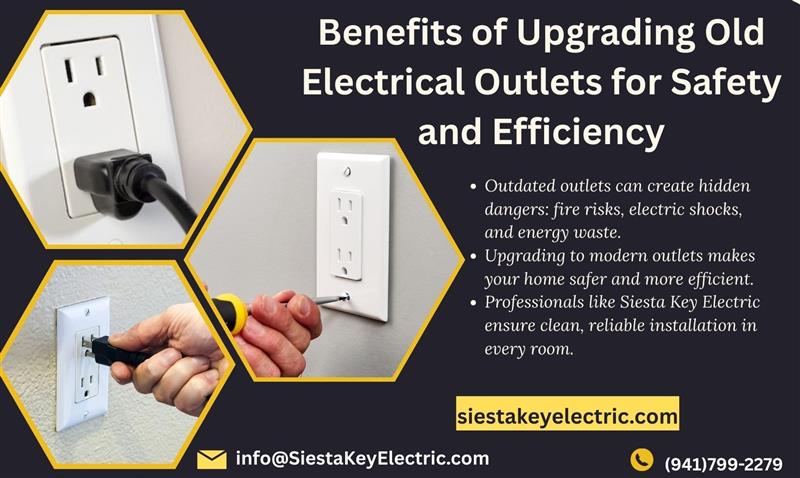
Most homeowners only think about electrical outlets when something stops working. But outdated outlets quietly create safety risks, energy waste, and unnecessary stress in daily life. That’s exactly why understanding the Benefits of Upgrading Old Electrical Outlets for Safety and Efficiency is more important than ever. Modern homes run on more devices, higher power demands, and stricter safety expectations and your outlets need to keep up.
This guide explains how upgraded outlets protect your home, improve power stability, support new technology, and make everyday living safer and more efficient. By the end, you’ll know exactly when and why outlet replacement becomes a smart decision for your home.
Why Old Outlets Become Unsafe Over Time
Electrical outlets may look simple on the outside, but inside, they contain metal parts, contact points, and internal tension components that wear down. Years of plugging and unplugging appliances weakens them. Older homes often still rely on:
- Two-prong, ungrounded outlets
- Loose or wiggly receptacles
- Cracked or discolored faceplates
- Outdated wiring behind the walls
These aging components can’t handle today’s electronics, which draw more consistent and sometimes higher power. Heat buildup, sparks, and loose connections become far more common. And in extreme cases, outdated outlets can contribute to electrical fires, something no homeowner should take lightly.
The Safety Risks You May Not Notice
Many people ignore early warning signs because outlets continue “working.” But functionality doesn’t equal safety. Old outlets can create:
1. Fire Hazards
Loose connections cause arcing a tiny spark that forms between gaps in damaged wiring. This is one of the top causes of home electrical fires.
2. Electric Shock Risks
Without proper grounding or GFCI protection, even a small surge or fault can send shock through appliances, especially in kitchens, bathrooms, and outdoor areas.
3. Overheating
Warm outlets, dark stains, or buzzing sounds signal dangerous heat buildup.
4. Damage to Electronics
Unstable power supply shortens the lifespan of TVs, chargers, refrigerators, and computers.
Safety upgrades don’t just add protection they eliminate silent problems most homeowners never realize exist.
Modern Outlets That Transform Home Safety
Today’s outlets are smarter, stronger, and far safer than older models. Upgrading gives your home access to technologies designed specifically to prevent accidents.
GFCI Outlets
Essential for kitchens, bathrooms, garages, and outdoor areas. They instantly cut power when moisture or faults are detected.
AFCI Outlets
Prevent electrical fires by detecting arc faults inside walls before they become dangerous.
Tamper-Resistant Outlets
Perfect for homes with children; built-in safety shutters block objects from being inserted.
USB & USB-C Outlets
Make charging devices faster and free up socket space.
Smart Outlets
Work with timers, voice control, and energy monitoring.
The difference between a 20-year-old outlet and a modern one is not small; it’s an upgrade in how your home protects itself.
How Upgraded Outlets Improve Efficiency
The Benefits of Upgrading Old Electrical Outlets for Safety and Efficiency extend beyond safety they also help your home run better and waste less power.
- New outlets provide cleaner, more stable power flow
- Better contact points reduce energy loss
- Modern materials stay cooler and handle higher loads properly
- Smart outlets help reduce standby energy consumption
- Dedicated outlets prevent overload and support high-demand appliances
This isn’t just about saving money, it’s about giving every device in your home the power it was designed to receive.
Signs Your Home Needs an Outlet Upgrade
If you notice any of the following, it’s time to act:
- Outlets feel warm to the touch
- Plugs fall out loosely
- You see sparks during plugging
- Breakers trip frequently
- Outlets are yellowed, cracked, or burnt
- Your home still has two-prong sockets
- Appliances randomly shut off
These symptoms suggest real electrical stress and upgraded outlets solve most of them instantly.
Choosing the Right Outlet for Each Room
Different areas of your home require different protections:
- Kitchen: GFCI for all countertops
- Bathroom: GFCI near any water source
- Bedrooms: AFCI for fire prevention
- Living Room: AFCI + surge-supporting outlets
- Outdoor Spaces: Weather-resistant GFCI
- Kids’ Rooms: Tamper-resistant outlets
This approach brings your home closer to modern electrical standards, without overwhelming you with technical details.
DIY vs Professional Outlet Upgrades
While some homeowners attempt DIY outlet changes, the risks are significant. Outlet upgrades involve grounding, load balancing, code compliance, and ensuring the correct circuit protection. A small mistake can lead to outages, shocks, or fire hazards.
That’s why many families rely on Siesta Key Electric for safe and clean outlet replacement. A quick evaluation ensures your home receives exactly the right type of modern outlet in each space installed correctly the first time.
From Sparks to Safety: Transform Your Home with Modern Outlets
Upgrading your electrical outlets is a smart choice, and understanding the Benefits of Upgrading Old Electrical Outlets for Safety and Efficiency can protect your home from fire risk, prevent electric shocks, support modern appliances, reduce energy waste, and increase overall convenience. With trusted specialists like Siesta Key Electric, this upgrade becomes a straightforward, stress-free investment for your home’s future.
Ready for Safer, More Efficient Outlets?
If your outlets feel loose, outdated, or unreliable, this is the right time to switch to modern, safer, and more efficient options. Thousands of homeowners choose Siesta Key Electric for fast, reliable, and clean electrical upgrades and your home deserves the same confidence.
Call our team today! Our technicians are pros for installation,
maintenance, and upgrades of electrical systems and fixtures!
FAQs
Q1. How often should electrical outlets be replaced?
Ans: Most outlets last 12–20 years. However, if you see signs of wear, discoloration, loose plugs, or frequent tripping, replacement is needed sooner.
Q2. Do all homes need GFCI outlets?
Ans: Any area exposed to moisture kitchens, bathrooms, laundry rooms, garages, and outdoor spots requires GFCI protection to prevent shock.
Q3. Can upgrading outlets help my appliances last longer?
Ans: Yes. Modern outlets provide stable power, which prevents overheating and extends the lifespan of devices like refrigerators, TVs, and chargers.
Q4. Are two-prong outlets still safe to use?
Ans: No. They lack grounding and create higher shock and fire risks. Replacing them with grounded outlets improves safety dramatically.
Q5. What’s the difference between GFCI and AFCI outlets?
Ans: GFCI protects against shock caused by water or faults. AFCI protects against electrical fires caused by hidden arc faults inside walls. Both are important in different areas of the home.