When working with household electrical systems every day, one pattern becomes clear quickly: most electrical failures begin with small but overlooked circuit problems. Heavy appliances demand stable circuits, proper wiring, and the correct load capacity. When any one of these is compromised, failures start showing up in the form of tripping breakers, overheating outlets, or appliance malfunction. Understanding the Common Issues with Appliance Circuits and How to Prevent Them is essential for keeping your electrical system safe, efficient, and code-compliant.
This guide walks through the real-world problems electricians find during inspections and repairs, and how homeowners can prevent costly electrical failures.
Common Issues with Appliance Circuits
In residential environments, Common Issues with Appliance Circuits usually appear due to load miscalculations, aging wiring, poorly installed circuits, or a simple lack of dedicated breakers. Many homes were built before modern appliances required higher amperage, so the electrical infrastructure struggles to keep up.
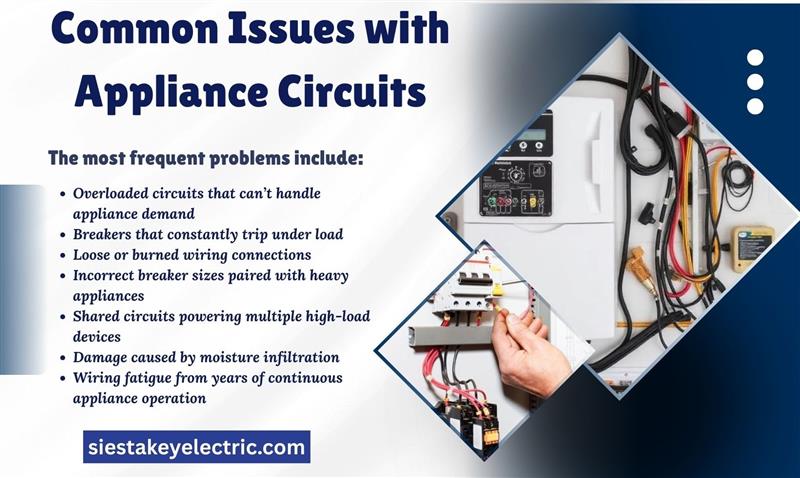
The most frequent problems include:
- Overloaded circuits that can’t handle appliance demand
- Breakers that constantly trip under load
- Loose or burned wiring connections
- Incorrect breaker sizes paired with heavy appliances
- Shared circuits powering multiple high-load devices
- Damage caused by moisture infiltration
- Wiring fatigue from years of continuous appliance operation
These problems often escalate when appliances like microwaves, refrigerators, HVAC units, dishwashers, or dryers draw more current than the circuit can handle. Professional residential services ensure your home circuits are properly sized and protected.
Signs Your Appliance Circuit Has a Hidden Problem
Most circuit issues start quietly. A trained electrician notices symptoms long before a major failure happens, but homeowners can look for these warning signs:
- Lights dimming when appliances start
- A breaker that resets but trips again under load
- Outlets or plugs feeling warm
- Buzzing or clicking noises behind outlets
- A burning smell near panels or appliances
- GFCI outlets tripping repeatedly
- Appliances running inconsistently or shutting off unexpectedly
Any of these signs indicate a stressed or loose circuit. Ignoring it can lead to costly repairs, so trusted professionals at SiestaKeyElectric.com can fix it before it worsens.
What Causes These Appliance Circuit Failures?
Circuit failures aren’t random—they’re almost always tied to a specific cause. The most common reasons include:
- Improper appliance amperage requirements
- Outdated electrical panels that can’t support modern loads
- Aluminum wiring that expands and contracts, loosening over time
- Shared outlets powering multiple heavy appliances
- Undersized breakers unable to handle high-current devices
- Incorrect wiring installed during renovations or DIY work
- Arc faults caused by damaged insulation
- Voltage drop due to long wire runs or poor connections
Understanding the root cause helps ensure repairs are accurate, safe, and fully code-compliant.
Heavy Appliance Loads: The Most Common Electrical Problems
Large appliances place constant strain on circuits. This section addresses the Common Issues with Appliance Circuits that electricians see most in high-load environments:
- Refrigerators: overheating outlets, vibration-loosened wiring
- Microwaves: frequent breaker tripping due to shared circuits
- Dishwashers: moisture-related wiring damage
- Dryers: improper 240V connections or burned terminals
- HVAC units: inadequate breaker sizing and surge damage
- Ovens: undersized wiring unable to handle heat and load
A dedicated, properly sized circuit prevents almost all of these issues. Without one, circuits degrade faster, appliances work harder, and safety risks increase.
How to Prevent Appliance Circuit Problems (Step-by-Step)
Electrical prevention is always more affordable than electrical repair. An expert approach includes:
- Use dedicated circuits for microwaves, refrigerators, dishwashers, dryers, and HVAC systems.
- Upgrade outdated panels to support modern amperage levels.
- Install AFCI and GFCI protection where code requires it.
- Replace older outlets with commercial-grade, high-durability models.
- Ensure proper grounding and bonding, especially in kitchens and laundry areas.
- Avoid using extension cords for any appliance.
- Inspect wiring annually to identify heat damage, loose connections, or corrosion.
- Use whole-home surge protection to protect electronics and motors.
Following these practices significantly reduces the risk of circuit breakdowns and fire hazards.
Professional Solutions to Avoid Recurring Circuit Problems
When repairing appliance circuits, an electrician focuses on precise diagnostics rather than guesswork. Solutions may include:
- Mapping circuits to eliminate overloaded lines
- Rewiring circuits with the correct gauge and insulation type
- Upgrading to higher-amperage breakers
- Replacing damaged connections, terminals, and outlets
- Correcting polarity issues
- Adding new dedicated lines for high-demand appliances
- Installing smart monitoring breakers
- Ensuring full NEC compliance
Working with a licensed team like Siesta Key Electric ensures all work meets safety standards and operates reliably.
Pro Tips From Electricians to Keep Your Appliance Circuits Safe
Here are advanced recommendations from an electrician’s perspective for preventing Common Issues with Appliance Circuits:
- Install load-monitoring breakers for heavy appliance circuits
- Upgrade appliances over 10–12 years old
- Avoid running multiple high-load devices at the same time
- Replace any outlet showing heat discoloration
- Verify all kitchen and laundry circuits match NEC requirements
Circuit reliability improves instantly when these practices are applied by professionals such as Siesta Key Electric.
Keep Your Home Safe with Expert Appliance Circuit Care
Handling heavy appliances safely requires understanding the Common Issues with Appliance Circuits and How to Prevent Them. Whether it’s overloaded lines, worn wiring, or incompatible breakers, the earlier these problems are addressed, the safer your home remains. For inspections, repairs, or upgrades, contacting a qualified team like Siesta Key Electric ensures the job is done correctly the first time.
For expert diagnostics, professional circuit upgrades, and safe long-term electrical solutions, schedule your service with Siesta Key Electric today. Your home deserves electrician-level precision and protection.
FAQs
1. Why do my appliance circuits keep tripping?
Ans: Frequent tripping often happens because of overload, loose wiring, or a breaker that’s too small for the circuit. It’s one of the most common problems homeowners face with appliance circuits..
2. Can a bad outlet damage my appliance?
Ans: Yes. Loose or overheated outlets can cause voltage drops or surges that harm internal appliance components.
3. How do I know if I need a dedicated circuit?
Ans: Any appliance with high amperage—dryer, microwave, HVAC, dishwasher—needs its own circuit to prevent overheating or breaker damage.
4. Is the burning smell near an appliance a serious issue?
Ans: Absolutely. This usually indicates overheated wiring or failing insulation and should be inspected immediately.
5. Who should I call if I suspect circuit problems?
A licensed electrician should handle diagnostics and repairs. For accurate troubleshooting and safe solutions, schedule service with Siesta Key Electric.