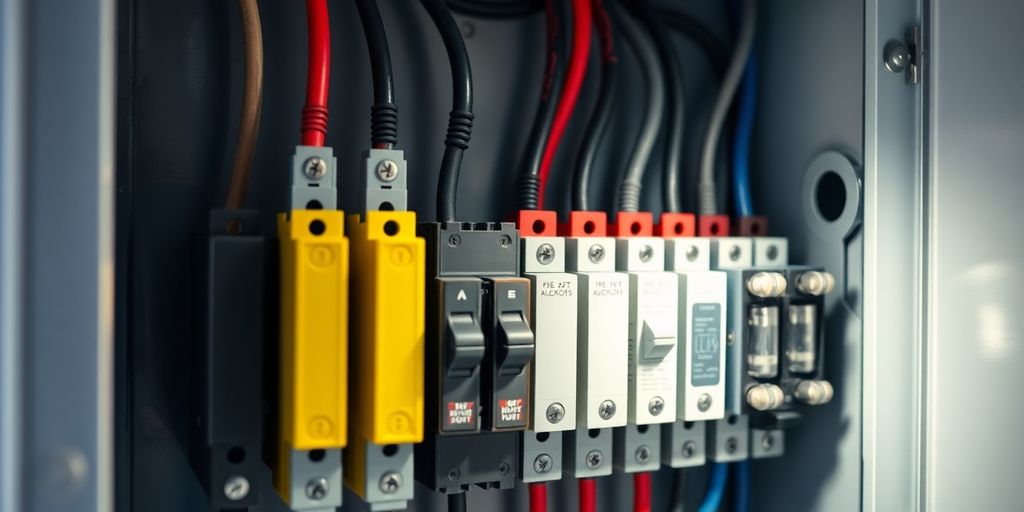
Electricity powers everything in your home — from lighting and appliances to security systems and smart devices. However, without proper circuit protection, the question of “Breakers vs Fuses What’s Safer for Your Home” becomes very important. Overloaded circuits, short circuits, and wiring faults can cause overheating, equipment damage, and even house fires.
At SiestaKeyElectric.com, we help homeowners understand modern electrical protection systems and upgrade outdated panels for safer performance. One of the most common questions we hear is:
Are circuit breakers safer than fuses?
The short answer: yes in most homes today, circuit breakers offer more protection, convenience, and long-term value. But understanding why requires looking at how each device works and what role it plays in your electrical system.
Let’s break it down clearly.
Quick Comparison: Circuit Breakers vs. Fuses
| Feature | Circuit Breakers | Fuses |
| Reusability | Resettable after tripping | Must be replaced after blowing |
| Safety Level | Higher protection with modern features | Basic overload protection only |
| Response to Faults | Fast and precise detection | Very fast but one-time protection |
| Maintenance | Minimal maintenance required | Requires keeping spare fuses |
| Cost Over Time | Lower long-term cost | Higher due to repeated replacements |
| Advanced Protection | Supports GFCI & AFCI safety devices | No advanced safety features |
| Convenience | Easy reset with a switch | Manual replacement needed |
| Best Use Case | Modern residential electrical systems | Older homes or specific equipment |
Why Circuit Protection Matters in Every Home
Your electrical wiring is designed to carry a specific amount of current. When too much electricity flows through a circuit, the wires heat up. If this continues, insulation can melt, appliances can fail, and sparks can ignite nearby materials.
Proper circuit protection stops power flow before damage occurs.
Without it, your home faces:
- Increased fire risk
- Damaged electronics
- Shock hazards
- Costly wiring repairs
Circuit protection devices act as your electrical system’s first line of defense.
What Is a Circuit Breaker?
A circuit breaker is a reusable safety switch inside your electrical panel. It monitors the current flowing through a circuit and automatically shuts off power when the load becomes unsafe.
How Circuit Breakers Work
When current exceeds the breaker’s rating:
- Internal sensors detect the overload or short circuit
- The breaker “trips” and disconnects the circuit
- Power stops immediately
- After fixing the issue, you reset the breaker manually
This resettable design makes breakers practical and cost-effective.
Advantages of Circuit Breakers
Circuit breakers are the standard in modern homes for several reasons.
- They can be reset instead of replaced
- They offer faster response to faults
- Many include advanced protection features
- They reduce long-term maintenance costs
- They clearly show which circuit has the problem
Newer breakers also include:
- Ground Fault Circuit Interrupters (GFCI)
- Arc Fault Circuit Interrupters (AFCI)
These features detect electrical hazards that traditional fuses cannot.
Disadvantages of Circuit Breakers
No system is perfect. Breakers have a few downsides.
- Higher upfront installation cost
- Older breakers may wear out over time
- Professional installation is recommended
However, modern panels minimize these issues, making breakers the preferred choice in residential electrical systems.
What Is a Fuse?
A fuse is a one-time safety device used in older electrical panels. Inside each fuse is a thin metal strip that melts when excessive current flows through it.
How Fuses Work
When electrical current exceeds the fuse rating:
- The metal strip heats up
- It melts and breaks the circuit
- Power stops instantly
- The fuse must be replaced
This simple mechanism is reliable but not reusable.
Advantages of Fuses
Despite being older technology, fuses have some benefits.
- Very simple construction
- Reliable response to overcurrent
- Low initial cost
- Easy to understand
Because they operate by melting metal, they rarely fail to activate.
Disadvantages of Fuses
Fuses create several safety and convenience issues.
- Must be replaced after each blow
- Wrong replacement can cause fire risk
- No advanced protection features
- Not designed for modern electrical loads
Many homeowners also make the dangerous mistake of installing higher-amp fuses to stop frequent blowouts. This bypasses protection entirely.
Breakers vs. Fuses Comparison Table
Here’s a quick side-by-side breakdown for homeowners.
| Feature | Circuit Breakers | Fuses |
| Reusable | Yes | No |
| Reset Required | Flip switch | Replace device |
| Response Speed | Fast | Very fast |
| Advanced Protection | Yes (GFCI/AFCI) | No |
| Long-Term Cost | Lower | Higher |
| Safety Level | Higher | Basic |
| Best For | Modern homes | Older panels |
From a safety standpoint, breakers clearly offer more protection in today’s electrical environments.
Which Is Safer for Your Home?
For most residential properties, circuit breakers are the safer choice.
Modern homes use more electricity than ever before. Between HVAC systems, kitchen appliances, EV chargers, and home offices, electrical demand continues to grow.
Circuit breakers provide:
- Better detection of faults
- Faster shutdown of dangerous circuits
- Protection against arc faults and ground faults
- Easier troubleshooting and maintenance
This combination significantly reduces fire risk.
In fact, many insurance companies and inspectors now recommend replacing old fuse panels entirely for better safety and compliance. At SiestaKeyElectric.com, we provide full residential electrical services, carefully designed to meet your every home safety and repair need while ensuring reliable, long-term performance.
How Modern Electrical Loads Are Changing Home Safety Needs
Homes today use far more electricity than they did even 15 years ago. High-efficiency HVAC systems, induction cooktops, gaming setups, electric vehicle chargers, and smart home automation all increase demand on your electrical panel.
Older fuse panels were never designed to support these loads continuously. Even early breaker panels may struggle with modern usage patterns.
When circuits run near capacity for long periods, heat builds up behind walls. This is one of the most common causes of electrical fires in older homes.
Upgrading protection devices ensures your wiring, outlets, and appliances operate within safe limits. It also prepares your home for future upgrades instead of forcing emergency repairs later.
When Should You Upgrade From a Fuse Box?
If your home still uses fuses, upgrading should be considered if:
- Your panel is over 30 years old
- Breakers trip frequently
- Lights flicker when appliances run
- You plan to renovate or add circuits
- You install high-power devices
At this stage, a panel upgrade isn’t just convenience — it’s a safety investment.
Halfway through many electrical evaluations, our professional residential electrical team often finds that outdated panels are limiting performance and increasing safety risks. Upgrading not only improves home safety but also supports modern electrical loads, enhances system efficiency, and helps maintain your property’s long-term value.
Practical Differences Between Circuit Breakers and Fuses
| Homeowner Factor | Circuit Breakers | Fuses |
| What Happens During Overload | Breaker trips and shuts power off | Fuse wire melts and stops power |
| What You Do Next | Simply reset the breaker switch | Replace the blown fuse with a new one |
| Risk of Incorrect Replacement | Very low | High if wrong fuse rating is used |
| Time to Restore Power | Seconds | Several minutes (if fuse is available) |
| Suitability for Modern Appliances | Excellent | Limited compatibility |
| Fire Prevention Capability | Strong, with modern protection options | Basic protection only |
| Long-Term Reliability | High with proper installation | Depends on correct fuse usage |
| Ideal For | Modern homes, renovations, upgrades | Old panels or temporary setups |
Benefits of Upgrading to Circuit Breakers
Upgrading your panel provides multiple long-term benefits.
Safety Improvements
Modern breakers detect dangerous faults earlier and shut down circuits faster.
Electrical Capacity
New panels handle higher loads without overheating.
Insurance & Inspection Benefits
Updated panels often improve inspection outcomes and insurance eligibility.
Convenience
Resetting breakers is faster than replacing fuses.
Home Value
Modern electrical systems increase property appeal.
For homeowners planning upgrades, this is one of the most impactful improvements available.
Additional Safety Tips for Homeowners
Regardless of your panel type, follow these best practices.
-
- Never overload outlets
- Avoid extension cords for permanent use
- Replace damaged wiring immediately
- Schedule periodic electrical inspections
- Install surge protection devices
Electrical safety is not just about equipment — it’s about maintenance and awareness.
Choosing the Right Electrical Partner
Electrical systems are complex, and upgrades should always be handled professionally. Licensed electricians can evaluate load requirements, panel condition, and wiring safety before recommending improvements.
If you’re unsure whether your panel is safe, professional inspection is the smartest first step.
Reliable electrical protection keeps your home powered, efficient, and safe. That’s why SiestaKeyElectric.com focuses on inspections, panel upgrades, and safe circuit solutions that prevent problems before they happen.
Future-Proofing Your Home’s Electrical System
Electrical demand will only increase as technology evolves. Planning ahead ensures your home can support upgrades like:
- Solar power integration
- Battery backup systems
- Electric vehicle charging
- Smart appliances
- Home automation networks
Installing modern breakers and upgrading panels today prevents costly rewiring later. It also improves efficiency and reduces the chance of unexpected outages.
Future-ready electrical systems are now considered a major selling point in residential property markets.
Modern Protection Means Safer Living
While fuses once served homes well, circuit breakers now offer superior safety, convenience, and long-term performance. With today’s electrical demands, modern protection isn’t just recommended, it’s essential.
If your home still uses fuses or your breakers trip frequently, it may be time to evaluate your electrical panel.
Protect your home before problems start. Schedule a professional electrical inspection today and ensure your panel is ready for modern power demands. Safe wiring isn’t optional, it’s essential.
Frequently Asked Questions
Q1. Are circuit breakers always safer than fuses?
Ans: In most modern homes, yes. Breakers provide advanced protection and are easier to maintain.
Q2. Is it dangerous to keep using a fuse box?
Ans: Not necessarily, but older fuse systems may not handle modern electrical loads safely.
Q3. How often should an electrical panel be inspected?
Ans: Every 3–5 years, or sooner if you notice tripping breakers, flickering lights, or burning smells.
Q4. Can I replace a fuse with a higher amp rating?
Ans: No. Doing so removes protection and can cause electrical fires.
Q5. How do I know if I need a panel upgrade?
Ans: Frequent outages, renovations, or new high-power appliances are strong indicators.