
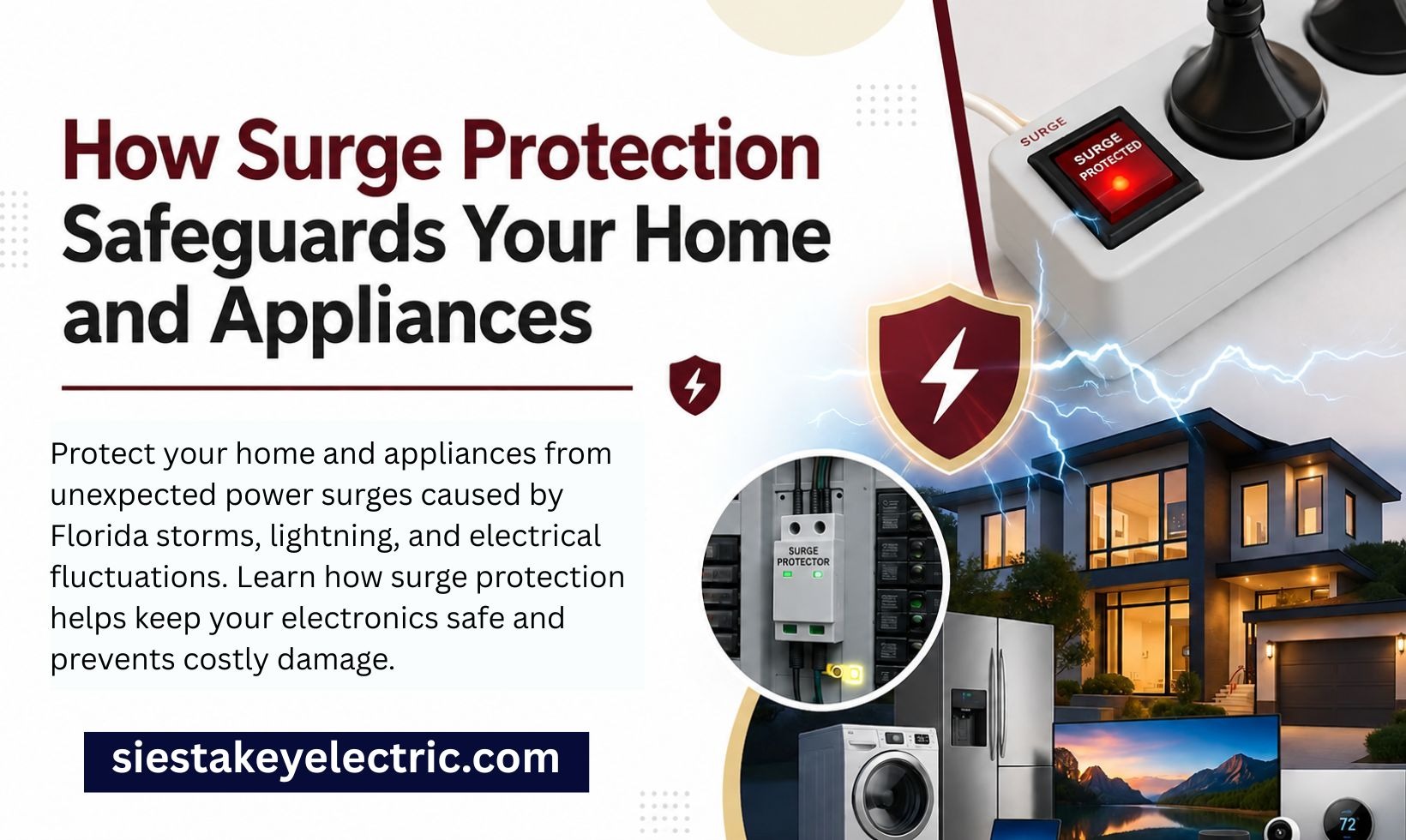
Modern homes depend on electricity to power everything from refrigerators and HVAC systems to smart devices, entertainment systems, and home offices. But in Florida, where lightning storms, tropical weather, and sudden power outages are common, one unexpected power surge can instantly damage thousands of dollars worth of appliances and electronics.
Many homeowners in Siesta Key and Sarasota do not realize that even small electrical surges can slowly weaken sensitive devices over time. A sudden voltage spike can destroy televisions, computers, air conditioning systems, and smart home equipment while also creating serious electrical safety risks. That is why Surge Protection Safeguards Your Home and Appliances by helping prevent unexpected electrical damage and improving overall system safety.
At SiestakeyElectric.com, we help homeowners protect their property from costly electrical damage with reliable surge protection solutions. Surge protection devices work by redirecting dangerous excess voltage away from your home’s electrical system, helping safeguard appliances, extend equipment lifespan, and prevent expensive repairs caused by Florida power surges and lightning-related electrical spikes.
What Is a Power Surge?
A power surge is a sudden increase in electrical voltage flowing through a home’s wiring system. Standard household electrical systems in Sarasota, Florida typically operate at around 120 volts. When voltage rises significantly above this level, it can overload circuits, damage connected devices, and create serious electrical risks for Florida homeowners.
A power surge is a sudden increase in electrical voltage that can damage appliances, electronics, and home wiring. Electronics such as computers, televisions, refrigerators, and HVAC systems are particularly vulnerable to voltage fluctuations.
Some common signs that a power surge may have occurred include:
- Devices suddenly shutting off
- Flickering lights
- Burnt outlets or electrical smells
- Appliances malfunctioning after a storm
Repeated surges can slowly degrade electronic components, even if the damage is not immediately noticeable.
Common Causes of Power Surges in Homes
Understanding the causes of power surges helps homeowners in Sarasota, Florida take preventive measures before costly damage occurs. Electrical spikes can originate from several sources both inside and outside the home, especially during severe storms and coastal weather conditions common across Florida.
Lightning Strikes
Lightning is one of the most powerful causes of electrical surges. During storm season, Florida lightning risks increase significantly, especially when lightning strikes near power lines or utility poles. The surge can travel through electrical wiring and reach homes connected to the grid.
In Florida, hurricane season, lightning storms, tropical weather, coastal humidity, and power grid fluctuations can all increase the risk of electrical surges. Homes in Siesta Key and Sarasota are especially vulnerable to sudden voltage spikes caused by severe weather and unstable power conditions.
Utility Grid Switching
Power companies occasionally switch electrical loads between grids to manage energy demand. These switching operations may create temporary voltage spikes that travel through distribution lines.
Large Appliance Cycling
Appliances that require large amounts of power, such as air conditioners or refrigerators, can create internal surges when they turn on and off. These surges may affect other electronics connected to the same circuit.
Faulty Wiring
Old or damaged wiring can cause irregular electrical flow. Poor connections, outdated electrical panels, or overloaded circuits may lead to small but frequent surges.
Power Outages and Restorations
When power returns after an outage, the sudden surge of electricity flowing back into the system can create a spike that damages electronics.
How Surge Protectors Keep Your Appliances Safe
Protecting Your Home and Electronics with Surge Protection by Understanding How Surge Protectors Work
A surge protector works by redirecting excess voltage away from connected devices. When voltage rises above a safe level, the surge protector diverts the extra electricity into the grounding wire, preventing it from reaching appliances.
This protective mechanism ensures that electrical spikes do not overload sensitive components in devices such as:
- Computers and laptops
- Televisions and entertainment systems
- Refrigerators
- Washing machines
- HVAC systems
- Smart home devices
Without surge protection, these appliances could experience overheating, internal circuit damage, or complete failure.
Types of Surge Protection Systems
Not all surge protection devices are the same. Homeowners can choose from several types depending on their level of protection needs.
Whole-House Surge Protectors
Whole-house surge protectors are installed directly into the main electrical panel. These systems provide reliable whole-house surge protection Sarasota homeowners can depend on by preventing large voltage spikes from entering the electrical circuits.
They are particularly effective against external surges caused by lightning strikes, power outages, or utility grid issues.
Power Strip Surge Protectors
Power strip surge protectors resemble standard extension cords but include internal protection components. They are commonly used to safeguard electronics such as computers, televisions, and gaming consoles.
Point-of-Use Surge Protectors
These smaller devices protect individual appliances or outlets and are commonly used in surge protector installation Florida services. They provide an additional layer of defense for high-value equipment such as computers, televisions, and smart home devices.
Type of Surge Protector |
Installation Location |
Level of Protection |
Best For |
|
| Whole-House Surge Protector | Electrical panel | Highest protection | Entire home electrical system | |
| Power Strip Surge Protector | Wall outlet | Moderate protection | TVs, computers, entertainment systems | |
| Point-of-Use Surge Protector | Individual outlet | Basic protection | Small electronics |
Using a combination of these devices provides the most comprehensive protection for household electronics.
Appliances That Need Surge Protection the Most
Certain household appliances are more vulnerable to electrical surges due to their complex electronic components.
Refrigerators
Modern refrigerators contain control boards and sensors that regulate temperature and energy efficiency. Voltage spikes can damage these components and cause cooling failures.
HVAC Systems
Heating and cooling systems rely on sophisticated electronics to operate efficiently. A surge can damage compressors, motors, and control circuits.
Washing Machines and Dryers
Smart washers and dryers include digital control panels that are sensitive to electrical fluctuations.
Televisions and Home Entertainment Systems
High-definition televisions and sound systems contain delicate microchips that can fail instantly if exposed to a voltage spike.
Computers and Smart Devices
Computers, routers, and smart home devices store valuable data and rely on stable electricity for operation.
Protecting Smart Home Devices from Power Surges
Smart homes rely on devices like smart thermostats, security cameras, voice assistants, and automated lighting. These technologies contain sensitive electronic components that can be easily damaged by voltage spikes.
A sudden power surge can disrupt communication between connected devices or even cause them to stop working completely. In some cases, system settings or stored data may be lost.
Installing proper surge protection helps keep smart devices running safely. Whole-house surge protectors combined with outlet surge protectors provide strong protection for modern connected homes.
Benefits of Installing Whole-House Surge Protection
Installing a whole-house surge protector through professional surge protection installation in Siesta Key provides several important advantages for homeowners.
Benefit |
Description |
| Appliance Protection | Prevents voltage spikes from damaging expensive electronics |
| Increased Safety | Reduces risk of electrical fires caused by power surges |
| Longer Appliance Lifespan | Minimizes internal component wear from electrical fluctuations |
| Financial Savings | Avoids costly appliance replacements and repairs |
| Peace of Mind | Provides consistent electrical protection during storms and outages |
Whole-house surge protection acts as the first line of defense against incoming voltage spikes.
Signs Your Home Needs Surge Protection
Many homes operate without adequate surge protection. However, several warning signs may indicate the need for additional protection.
- Frequent flickering lights
- Appliances shutting down unexpectedly
- Tripped circuit breakers
- Burn marks on outlets or plugs
- Electronic devices failing prematurely
Homes with older electrical systems or those located in areas with frequent storms are particularly vulnerable.
Best Practices for Effective Home Surge Protection
Effective surge protection requires more than a basic power strip. A layered protection strategy helps protect your home from both large external surges and small internal voltage spikes.
Installing a whole-house surge protector at the electrical panel is the first step. Adding point-of-use surge protectors for electronics like computers and televisions provides extra protection.
Surge protection devices should also be inspected regularly. If they absorb multiple surges over time, their protection level may decrease, so replacing them when needed is important.
Professional Surge Protector Installation
Although some surge protection devices can be plugged into outlets, installing a whole-house surge protector requires professional electrical expertise.
Licensed electricians evaluate the home’s electrical panel, grounding system, and wiring conditions before installing the device. Proper installation ensures the surge protector can safely redirect excess voltage without damaging the electrical system.
Professional installation also ensures compliance with local electrical codes and safety standards.
Real-World Examples of How Surge Protection Prevents Damage
Power surges happen more often than most homeowners realize. Lightning storms, power outages, and utility grid changes can all create sudden voltage spikes.
For example, a nearby lightning strike can send a surge through electrical lines and into homes. Without surge protection, appliances like refrigerators, televisions, and HVAC systems could be damaged instantly.
Even small daily surges caused by appliances cycling on and off can slowly weaken electronic components. Surge protection devices absorb these spikes and keep electrical systems operating safely.
Environmental Benefits of Installing Surge Protection
Surge protection extends appliance lifespan, reducing electronic waste and lowering environmental impact. Fewer appliance failures mean less manufacturing and disposal pollution.
Protect Your Home with Professional Surge Protection Solutions
Modern households rely on a growing number of electronic devices. From smart thermostats to home entertainment systems, these technologies require stable and reliable electricity.
Understanding how surge protection safeguards your home and appliances highlights the importance of protecting electrical systems from unexpected voltage spikes. By installing surge protection devices and maintaining a properly grounded electrical system, homeowners can prevent costly damage and extend the life of valuable appliances.
Protect your home and appliances from costly electrical damage with professional surge protection solutions from SiestakeyElectric.com. Schedule your free electrical inspection today and keep your family and electronics safe from unexpected power surges.
For trusted surge protection solutions and expert guidance, contact us today!
Frequently Asked Questions
Q1.Do surge protectors protect against lightning strikes?
Ans: Surge protectors can reduce the impact of lightning-related surges by redirecting excess voltage. However, extremely powerful lightning strikes may still cause damage, which is why whole-house surge protection is recommended.
Q2.How long do surge protectors last?
Ans: Most surge protectors last between 3 and 5 years depending on the number of surges they absorb. Regular inspection and replacement help maintain reliable protection.
Q3.Is whole-house surge protection worth installing?
Ans: Yes. Whole-house surge protection protects all electrical circuits in the home, reducing the risk of appliance damage and electrical fires.
Q4.Can small power surges damage appliances?
Ans: Yes. Even small, repeated surges can slowly degrade electronic components over time and reduce the lifespan of appliances.
Q5.What appliances should always be connected to surge protection?
Ans: Computers, televisions, refrigerators, HVAC systems, gaming consoles, and smart home devices should always have surge protection to prevent electrical damage.