
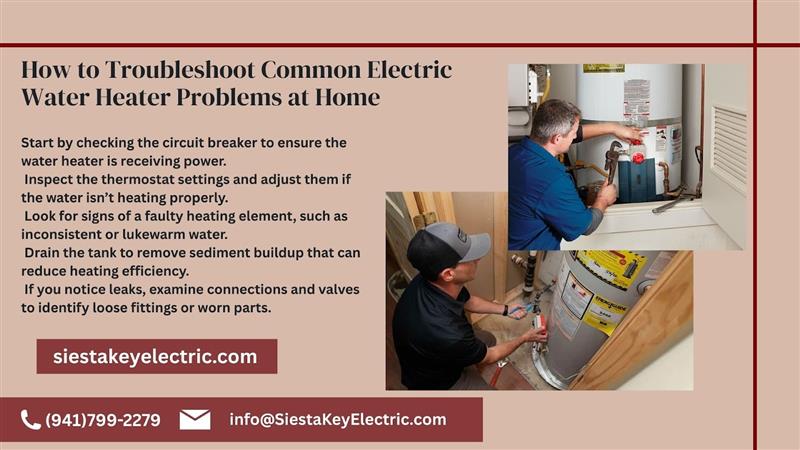
Dealing with an electric water heater that suddenly stops working can disrupt your entire routine: no hot showers, no warm water for dishes, and no comfort. The good news? Many of the issues homeowners face are fixable with safe, step-by-step checks. I’ll walk you through How to Troubleshoot Common Electric Water Heater Problems at Home, explain why these problems happen, and help you know when it’s time to call a professional at Siesta Key Electric for advanced repairs.
Before touching any part of your water heater, remember:
Safety comes first
Always turn off the circuit breaker connected to your water heater, and verify using a voltage tester that the unit is not energized.
Understanding How Your Electric Water Heater Works
A typical electric water heater has:
- Upper & lower heating elements: responsible for heating the water
- Thermostats: controlling temperature levels
- High-limit switch: a safety reset button
- Dip tube: directs cold water to the bottom
- Anode rod: prevents corrosion
- T&P valve: releases pressure when needed
Knowing how these components work helps you diagnose the exact cause behind insufficient, inconsistent, or no hot water.
Common Electric Water Heater Problems and Expert Fixes
1. No Hot Water at All
This is the most common issue.
Possible causes:
- Tripped circuit breaker
- Burnt heating element
- Faulty high-limit switch
- Loose wiring
How to troubleshoot:
- Check your breaker panel → reset if tripped.
- Press the reset button on the upper thermostat.
- Remove the access panels and check for burnt wiring or insulation damage.
- If the unit still doesn’t turn on, the heating element likely needs replacement.
If breakers repeatedly trip, call Siesta Key Electric immediately this indicates an electrical short and needs prompt attention for expert residential service.
2. Not Enough Hot Water
Warm water that runs out quickly normally points to the lower heating element.
Troubleshooting steps:
- Remove the lower access panel.
- Test the element with a multimeter for continuity.
- Flush the tank to remove sediment (a major cause of reduced hot water).
3. Water Too Hot (Scalding)
Water that’s dangerously hot is caused by thermostat malfunction or high-limit switch failure.
Fix:
- Turn off power
- Adjust both thermostats to 120–125°F
- If water still overheats, replace the faulty thermostat
Overheating is a safety hazard and requires prompt attention.
4. Water Heater Leaks
Early diagnosis prevents expensive damage.
Common leak sources:
- T&P valve
- Loose inlet/outlet pipes
- Drain valve
- Corroded tank
If the tank itself is leaking, replacement is the only safe solution.
5. Strange Noises (Popping & Rumbling)
This typically means sediment buildup around the heating elements.
Solution:
- Turn off electricity
- Drain the tank completely
- Flush with clean water
- Refill and restart
If noise persists, elements may be overheating from scale buildup.
6. Discolored, Rusty, or Smelly Hot Water
This usually indicates:
- A failing anode rod
- Bacteria in the tank
- Internal corrosion
Replace the anode rod and flush the tank.
If rust continues, the tank may be corroding internally.
Step-by-Step Electric Water Heater Troubleshooting Guide
This is where true expertise matters. Professional technicians follow this exact diagnostic flow:
- Power verification: Breaker → wiring → voltage output
- Element testing: Continuity + resistance check
- Thermostat calibration: Upper and lower units
- High-limit switch reset
- Tank inspection: Sediment, rust, pressure
- Leak analysis: Valves, fittings, tank seams
- Performance testing: Recovery rate and temperature stability
Accurate testing prevents unnecessary part replacement and ensures long-term safety.
That’s why homeowners across the area rely on Siesta Key Electric for reliable diagnostics and repair.
When to Call a Professional Electrician
DIY troubleshooting is helpful, but certain signs mean STOP immediately:
- Burning smell from wiring
- Breaker keeps tripping
- Water leaking from the bottom of tank
- No hot water despite resets
- Scalding water that ignores thermostat changes
- Rust chunks in water
- Aged heater (10+ years)
At this stage, only a licensed electrician should continue work to avoid electrical shock or serious hazards.
Preventive Maintenance Tips to Avoid Future Breakdowns
A few simple habits keep your heater lasting years longer:
- Flush tank once a year
- Replace anode rod every 2–3 years
- Insulate hot water pipes
- Check thermostats annually
- Inspect for leaks every 3–6 months
This routine reduces energy use, prevents overheating, and extends the system’s lifespan.
Final Expert Advice
Now that you understand How to Troubleshoot Common Electric Water Heater Problems at Home, you’re better prepared to identify early warning signs and handle basic issues safely.
But remember electric water heaters involve high voltage, high temperatures, and pressure systems. When things look beyond simple troubleshooting, trust the certified professionals at Siesta Key Electric for immediate, reliable service.
Need Fast, Safe, and Professional Water Heater Repair?
If your electric water heater is still not working after these steps, don’t wait for damage to spread.
Call Siesta Key Electric today for expert repair, inspection, or installation services.
Your comfort and safety are our top priority.
FAQs
Q1. Why is my electric water heater not heating water?
Ans: Possible causes include a tripped breaker, burnt heating elements, faulty thermostat, or a failed high-limit switch.
Q2. How often should I flush my electric water heater?
Ans: Once a year is recommended to prevent sediment buildup and improve efficiency.
Q3. Why does my water smell bad?
Ans: Bacteria in the tank or a worn-out anode rod can cause foul odors. Flushing and rod replacement usually fix it.
Q4. Is 125°F a safe temperature setting for my heater?
Ans: Yes, 120–125°F is the optimal balance between comfort, safety, and energy efficiency.
Q5. When should I replace my electric water heater?
Ans: Most last 8–12 years. If the tank is leaking or rusting, replacement is necessary.